
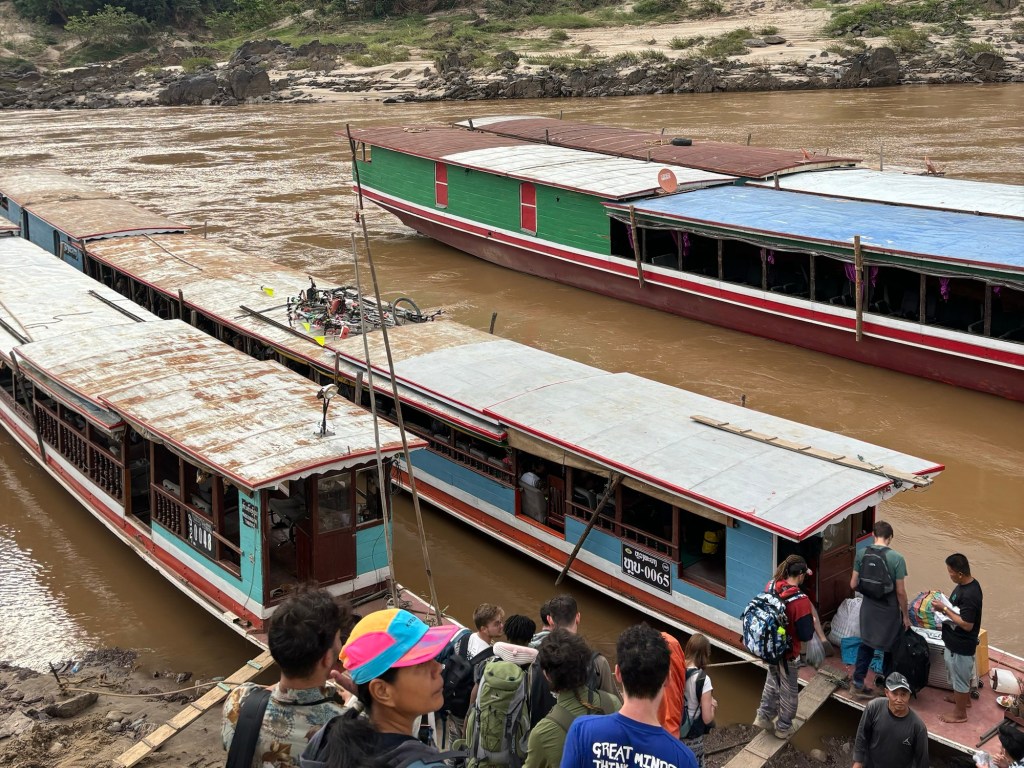
Sometimes, it’s more about the journey than the destination, and traveling from northern Thailand into Laos (or vice versa) fully embodies that sentiment. For adventurous travelers exploring Southeast Asia, the slow boat from Thailand to Laos offers a one-of-a-kind experience that highlights the beauty of the Mekong River and the camaraderie of fellow wanderers.
Whether you’re traveling through Laos or simply passing through on your way to Vietnam, the slow boat journey is a must-do adventure. It’s worth noting, however, that this is not a luxury experience—it’s rustic, scenic, and social, making it an unforgettable chapter of your travels. While you can fly into Luang Prabang or Vientiane, flights to and from Laos are often expensive. Opting for the slow boat is not only more affordable but also offers a deeper cultural immersion.

In this guide, I’ll walk you through the slow boat journey, how to plan for it, and why it’s an essential part of any Southeast Asia itinerary. If you’re heading to northern Laos, keep reading for a detailed account of this once-in-a-lifetime adventure.
Starting in Chiang Rai: Preparation and Planning
Many travelers begin their journey in Chiang Rai, a laid-back city in northern Thailand known for its stunning temples and relaxed vibe. Staying a night or two in Chiang Rai is the perfect way to prepare for the trip. This also gives you time to arrange transportation to the Laos border and beyond.
While it’s possible to organize the trip independently, booking a package through your accommodation or a tour company is highly recommended. Doing so streamlines the process and saves you the hassle of coordinating multiple transfers. Most packages include transportation from Chiang Rai to Luang Prabang, including border crossings and the slow boat journey.
During my trip, I stayed at Baan Mai Kradan Hostel in Chiang Rai—a clean, modern, and welcoming spot with free breakfast and private or dorm-style rooms. I booked a full package to Luang Prabang via the slow boat for 1,690 THB (around $50 USD). While prices vary slightly depending on where and when you book, most packages fall within this range.
Day 1: From Chiang Rai to Pakbeng
The journey begins early—very early. At 5 a.m., you’ll be picked up from your accommodation and driven about 1.5 to 2 hours to the Thai-Laos border. Here, you’ll go through immigration to exit Thailand, then hop on a bus to the Laos border.
The Laos Visa Process
Getting a visa for Laos is straightforward but requires preparation. Visas cost around $40 USD and must be paid in Thai Baht or crisp U.S. dollars. They are very particular about the condition of the bills—no folds, creases, or rips. Additionally, you’ll need a passport-sized photo and some extra cash for small service fees.
Once you’ve completed the paperwork and received your visa, you’ll officially cross into Laos. From there, a tuk-tuk will take you to the riverside, where you’ll board the slow boat. Many tour packages include a packed sandwich for the journey, and you’ll have the opportunity to exchange money or purchase a local SIM card before setting off.
Boarding the Slow Boat

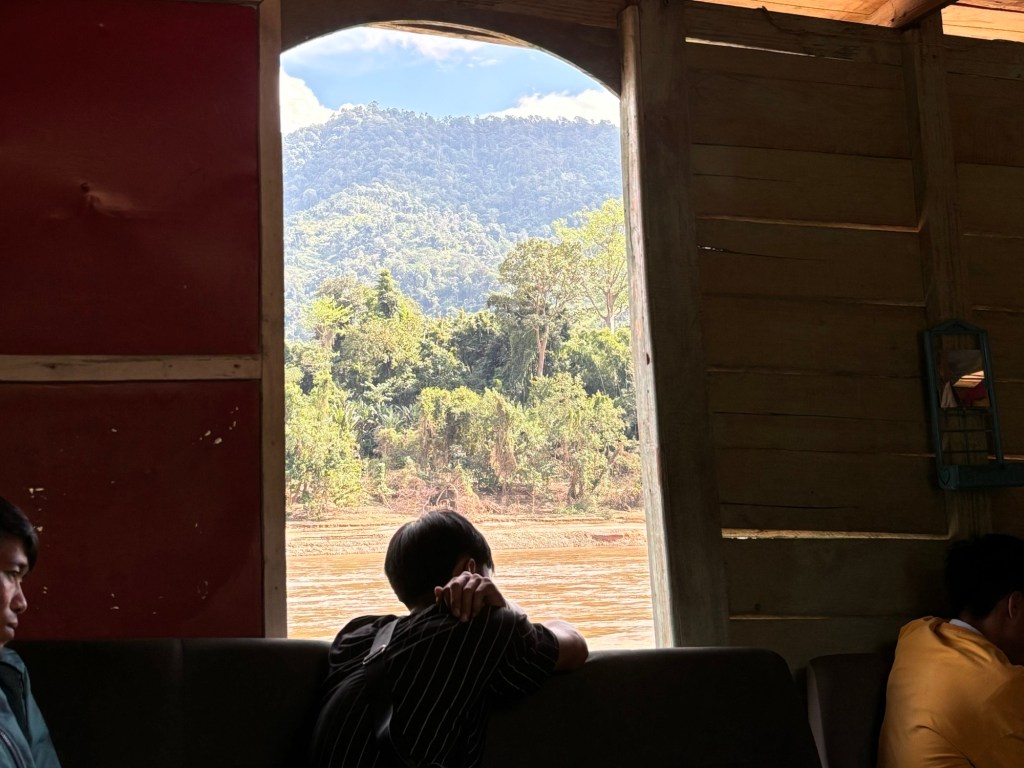
At around 10 a.m., you’ll board the slow boat—a long, narrow vessel with a basic setup of van seats and an open-air section at the back. While the boat itself isn’t luxurious, the experience is unparalleled. The first leg of the journey is about six hours, winding down the Mekong River through breathtaking scenery.
The boat offers simple snacks and drinks for purchase, but it’s wise to bring your own food and water. The highlight of the ride isn’t the amenities—it’s the people and the views. The slow boat is a hub for travelers from all over the world, making it a fantastic social experience. You’ll meet dozens of fellow adventurers heading to Luang Prabang, many of whom you’ll likely bump into throughout your time in Laos.
Overnight in Pakbeng
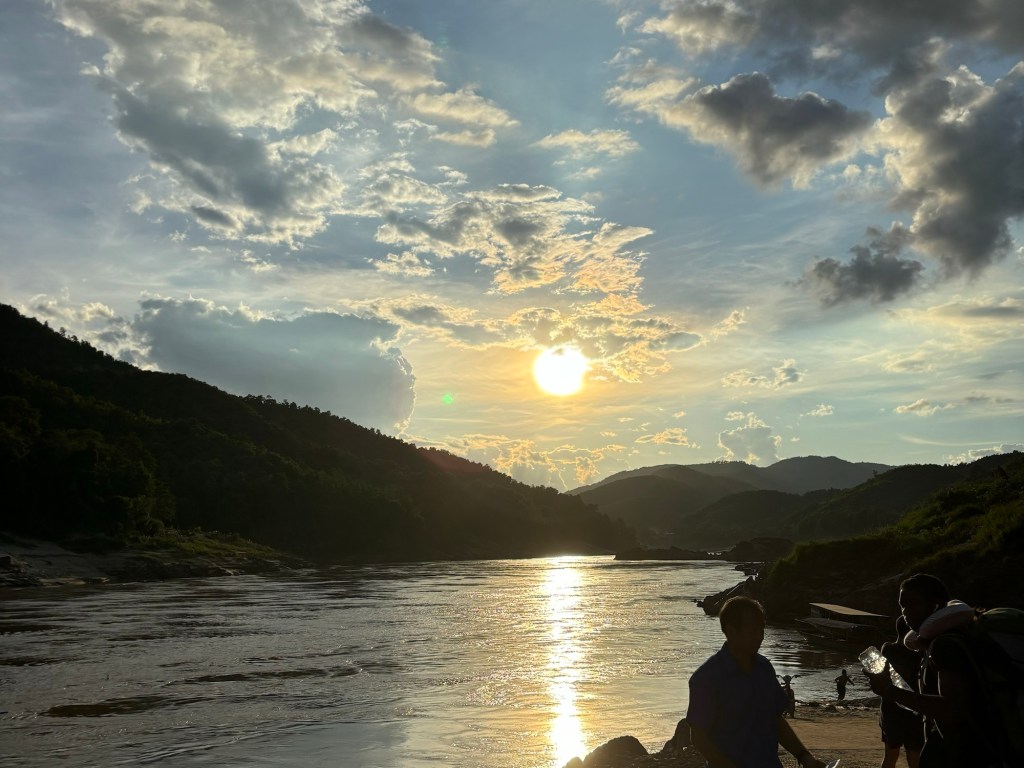
By late afternoon, the boat arrives in Pakbeng, a tiny village nestled along the Mekong River. Here, you’ll find basic accommodations, including guesthouses that range from private rooms to dormitories. Most travelers wait to book accommodation upon arrival, as there are plenty of options.
We found a dorm room for about $5 USD per person, complete with air conditioning, WiFi, and towels. The village itself is small but charming, with a few restaurants, an ATM, and shops selling snacks and sandwiches. After dinner with new friends, it’s time to rest up for another day on the water.
Day 2: Pakbeng to Luang Prabang
The second day begins with stocking up on snacks and drinks from local shops before heading back to the boat. It’s a good idea to arrive early to secure a good seat—especially if you want to avoid sitting near the motor, which can be quite loud.
Another Day on the Mekong
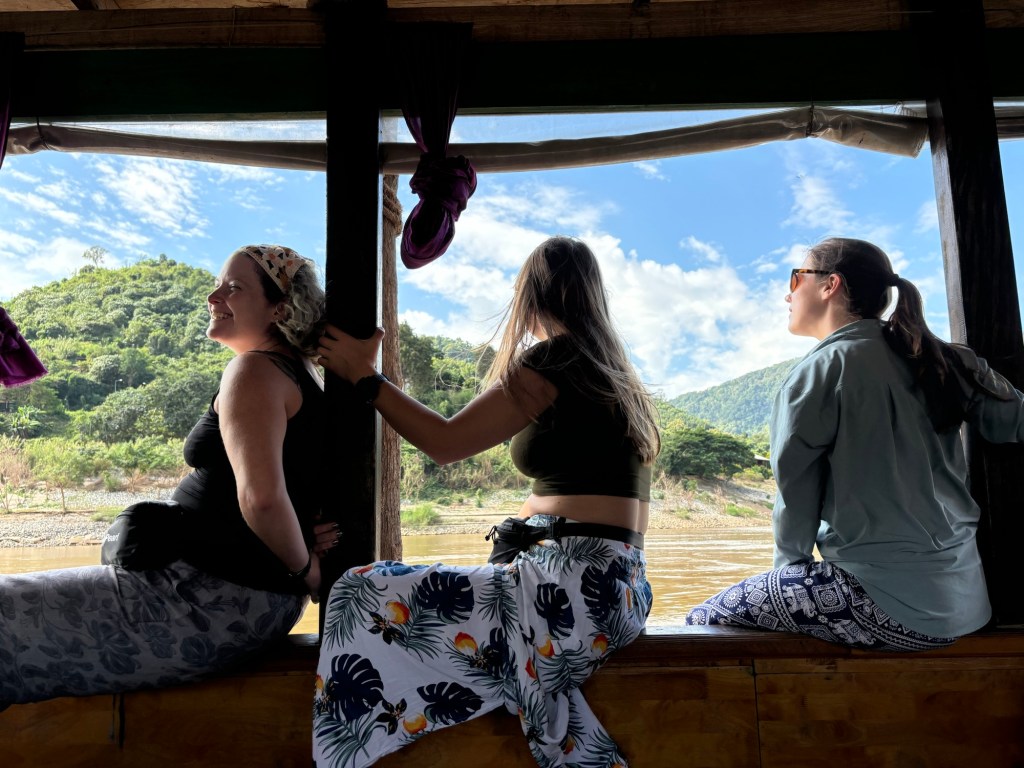
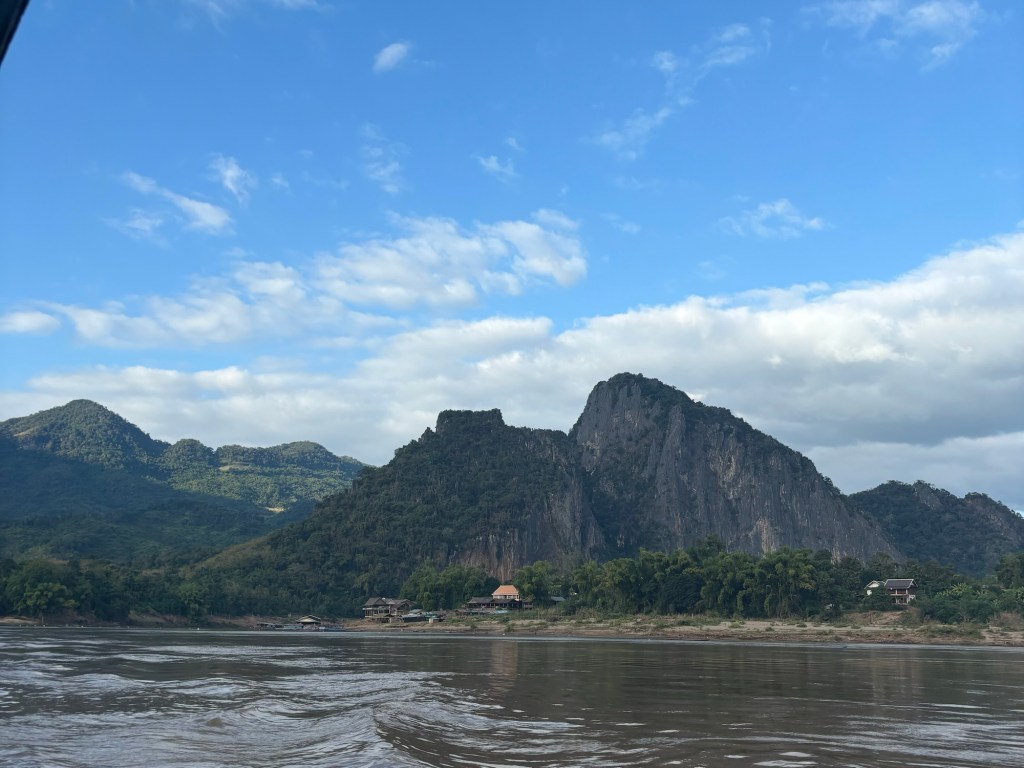
The second leg of the journey lasts about 7.5 hours, continuing through lush landscapes and remote villages. The scenery is mesmerizing, with dense forests, towering cliffs, and glimpses of daily life along the riverbanks.
At certain points, the boat stops to pick up passengers or allow villagers to sell goods on board. Children from nearby villages may come aboard asking for food or snacks, offering a humbling glimpse into rural life in Laos.
While the journey can feel long, it’s also incredibly peaceful. With limited cell service, it’s the perfect opportunity to disconnect—read a book, listen to music, or simply take in the surroundings.
Arriving in Luang Prabang
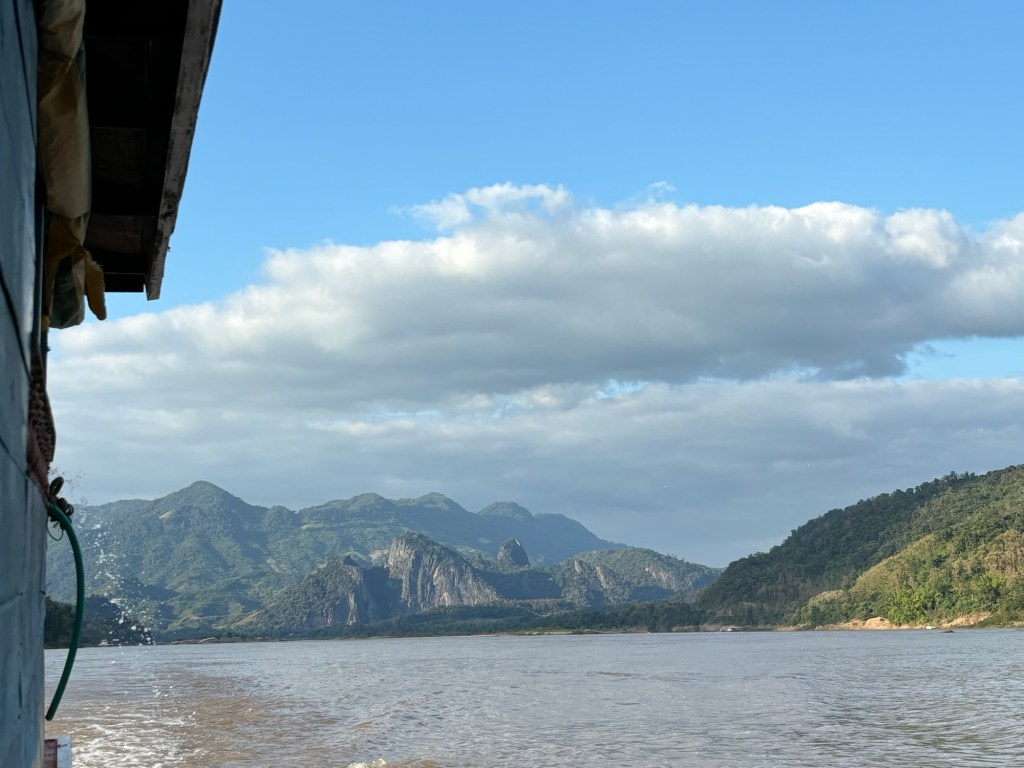
By late afternoon, the boat finally docks in Luang Prabang, a UNESCO World Heritage city renowned for its historic temples, French colonial architecture, and vibrant night markets. From the dock, shared tuk-tuks will take you into the city center, where most accommodations are located.
One of the best parts of the slow boat experience is the connections you’ll make. Many of the people you meet on the boat will end up staying in the same areas, making it easy to find travel companions for further adventures in Laos.
Why the Slow Boat is Worth It
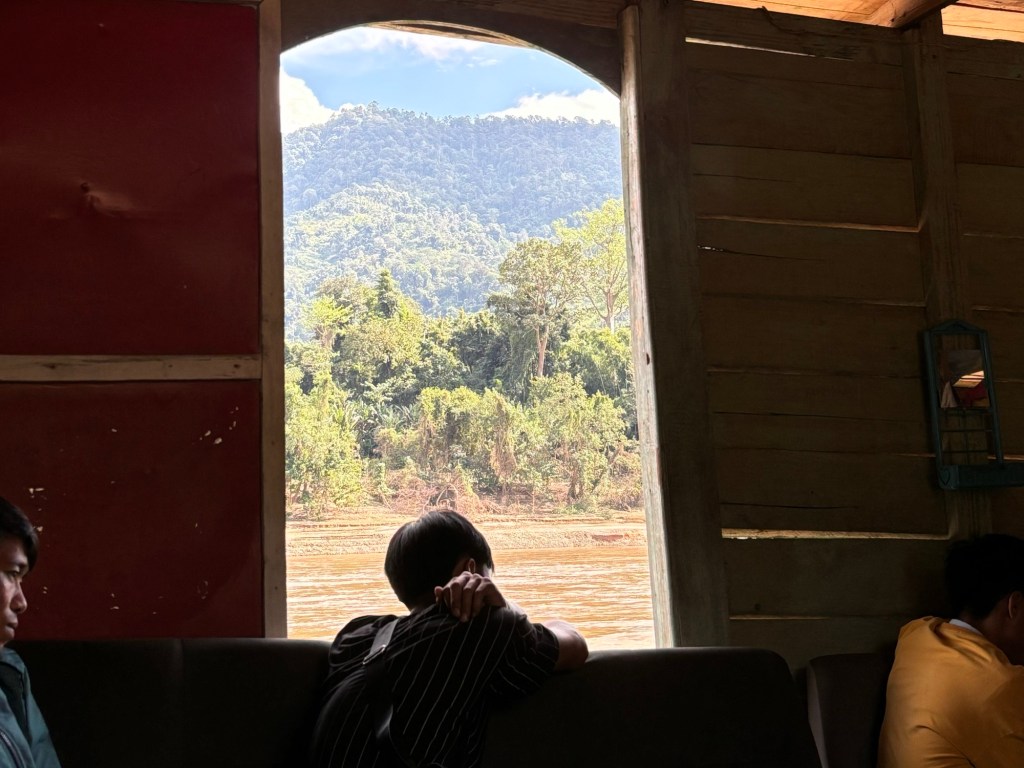
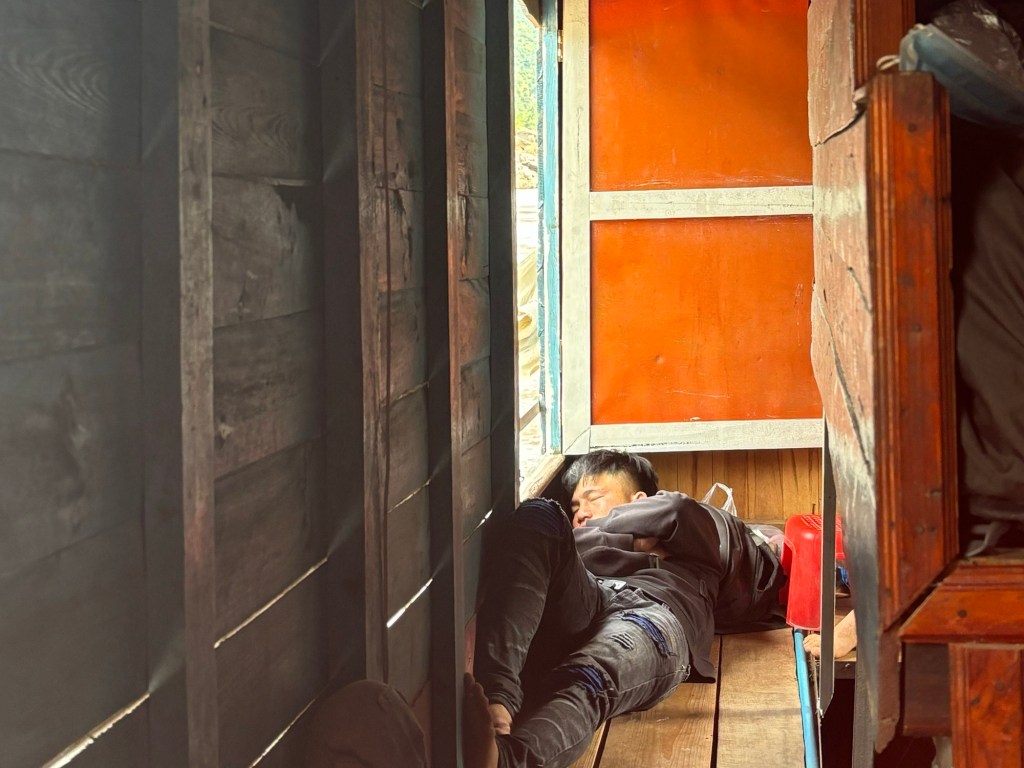
The slow boat isn’t always comfortable—expect heat, noise, and occasional overcrowding—but it’s an experience you’ll never forget. It offers a rare chance to see untouched parts of Laos, from small riverside villages to dense jungle landscapes.
More than that, it’s a social experience that connects you with fellow travelers. Days after arriving in Luang Prabang, I kept running into familiar faces from the boat, sharing meals and planning new adventures together.
If you value unique experiences and don’t mind a bit of discomfort, the slow boat is a must. Bring a good book, some snacks, and an open mind, and you’ll find the journey to be as rewarding as the destination.
Tips for a Smooth Journey
1. Prepare Your Visa: Bring crisp U.S. dollars and a passport photo for the Laos visa.
2. Pack Snacks and Water: Food options on the boat are limited and pricey.
3. Arrive Early on Day 2: To secure a good seat, board the boat early.
4. Stay Social: Use the time to chat with fellow travelers—you’ll likely see them again!
5. Embrace the Experience: The slow boat is about the journey, not luxury.
The slow boat into Laos is more than just a mode of transportation—it’s a rite of passage for travelers in Southeast Asia. From the stunning scenery to the camaraderie of new friends, it’s a journey that will stay with you long after your trip ends.

So if you’re headed to northern Laos, skip the flight and take the slow boat. It’s not just a way to get there—it’s an adventure in itself. Happy traveling!
 Livslifeoncam
Leave a comment