
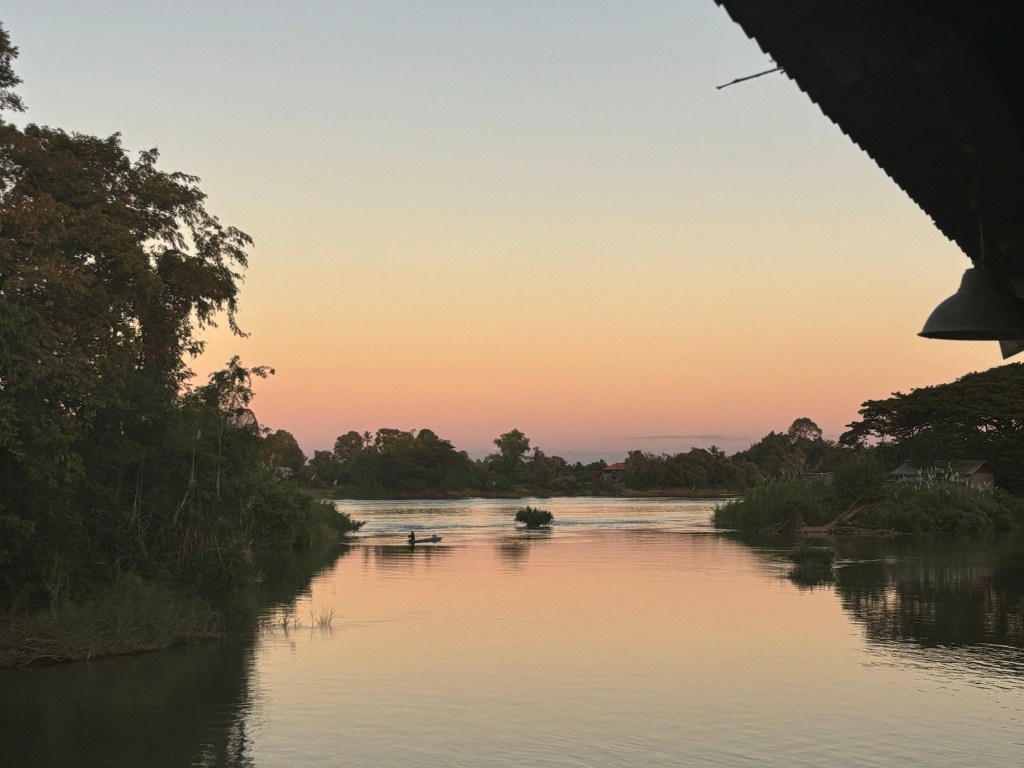
Laos is one of Southeast Asia’s most underrated countries. With stunning landscapes, thrilling adventures, kind-hearted people, and incredible vibes, Laos is a hidden gem. If you find yourself overwhelmed by the crowds of Thailand or tired of over-touristy destinations where the authentic experience is hard to find, you’ll fall in love with Laos. The country is traversed by the Mekong River, which runs through much of Laos, meaning that despite being landlocked, you’ll often find yourself near the water. Laos has a timeless feel to it—while Chinese influence is growing, much of the country still feels like it hasn’t moved forward in the same way as the rest of the world.
This lack of development extends to tourism as well. Laos has not seen the same influx of tourism infrastructure as neighboring countries, making it a bit more challenging to navigate. But this also means it’s an incredibly immersive experience, filled with adventure. After spending 25 days in Laos and falling completely in love with it, I’m excited to share everything you need to know about traveling in this beautiful country, including where to go and how to get around. There’s so much to see, and it’s worth visiting before external influences start to erode the authenticity of Laos.
How Much Time Do You Need in Laos?
Many travelers pass through Laos as a quick stopover between Thailand and Vietnam, visiting the northern cities before continuing their journey. However, I promise you that you’ll be missing out on so much if you don’t explore the southern part of the country as well. In my opinion, three weeks is the perfect amount of time to experience Laos in full. I’ll provide a range of suggested durations for each place in my itinerary, depending on how much time you have in the country. But remember—don’t rush! Laos is a country you’ll want to savor, with so much to offer.
Visa
Most travelers will need a visa to enter Laos. You can either get a visa in advance or opt for a visa on arrival, which is what I did. I arrived at the Thai border, and the process was very easy. All you need is a passport photo, a valid passport, and a clean US dollar (make sure it’s not wrinkled or torn). The cost is $40 USD, and the border officers will ask for a small “service fee” of around 1-3 USD. Overall, the process is straightforward and hassle-free.
Cash
Laos is a largely cash-only country, especially in smaller towns and villages. While you might find some restaurants, hotels, and hostels in larger cities that accept cards, using them often comes with a hefty service fee—usually at least 3%. And more often than not, the card readers may not even be working. For this reason, it’s best to carry cash with you. ATMs are plentiful, and withdrawing local currency (Lao Kip) is easy. However, keep in mind that the currency is quite weak, so you might find yourself carrying a thick stack of bills. Most ATMs will only let you withdraw up to 2 million kip at a time, so you’ll need to make several withdrawals.
Transportation and Roads
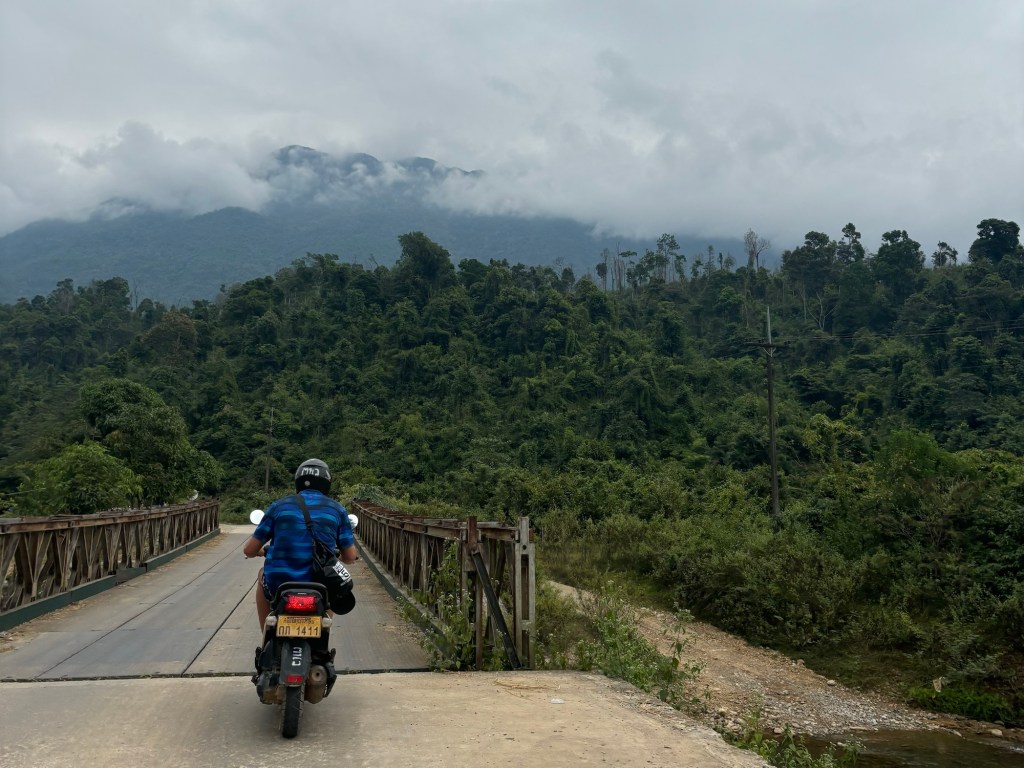
Traveling around Laos requires a mix of trains, buses, and minivans. While transportation options are growing, thanks to Chinese investment, the roads still pose some challenges. The country is the most bombed in history, so many of the roads are in poor condition. Expect bumpy rides, with potholes aplenty. In fact, it adds to the adventurous spirit of the country, but if you’re prone to motion sickness, I recommend bringing medication with you. Despite the rough roads, transportation is relatively easy to book. You can arrange transport at bus stations, hotels, or hostels, and the staff is more than happy to help.
The train system in Laos is improving, and there’s even a bullet train connecting some of the major cities. However, buses and minivans are still the most common form of transportation. Just remember to be prepared for long, sometimes bumpy journeys!
Weather
The best time to visit Laos is between November and March, during the dry season. I highly recommend traveling during this period because the country’s dirt roads can turn into mudslides during the rainy season, making travel challenging. The dry season also offers incredible views, with lush greenery everywhere. Laos tends to be cooler than its neighboring countries, and we enjoyed pleasant temperatures throughout our trip, with daytime highs ranging from 70°F to 85°F, and cooler evenings, especially in the north.
Itinerary
Let’s dive into the perfect itinerary, including tips on how to travel from place to place and my recommendations for where to stay! Keep in mind, I backpacked through Laos, staying in hostels, homestays, and guesthouses. While it’s possible to travel on a larger budget and opt for nicer hotels or bungalows, Laos doesn’t have a huge tourism sector, so don’t expect the same luxury and convenience that neighboring countries offer to tourists.

Starting with how to get into Laos, I traveled from northern Thailand and crossed the border at Chiang Rai. This is a popular route into Laos via the slow boat, and it’s an experience in itself that I highly recommend. It’s a two-day journey down the Mekong River. You’ll spend your days cruising on a long, narrow boat, taking in the riverside villages along the way. The boat is filled with fellow travelers, and you’ll likely meet people who you’ll see throughout your time in Laos. On the first night, you’ll stop at the riverside village of Pakbeng. There’s not much here, other than guesthouses and a couple of restaurants, as it’s just a stopover on the slow boat route. It’s a quick rest, but a fascinating glimpse into a small, local riverside town. The next day, you’ll continue your journey, cruising down the river until you reach Luang Prabang.
Luang Prabang (3-4 days)
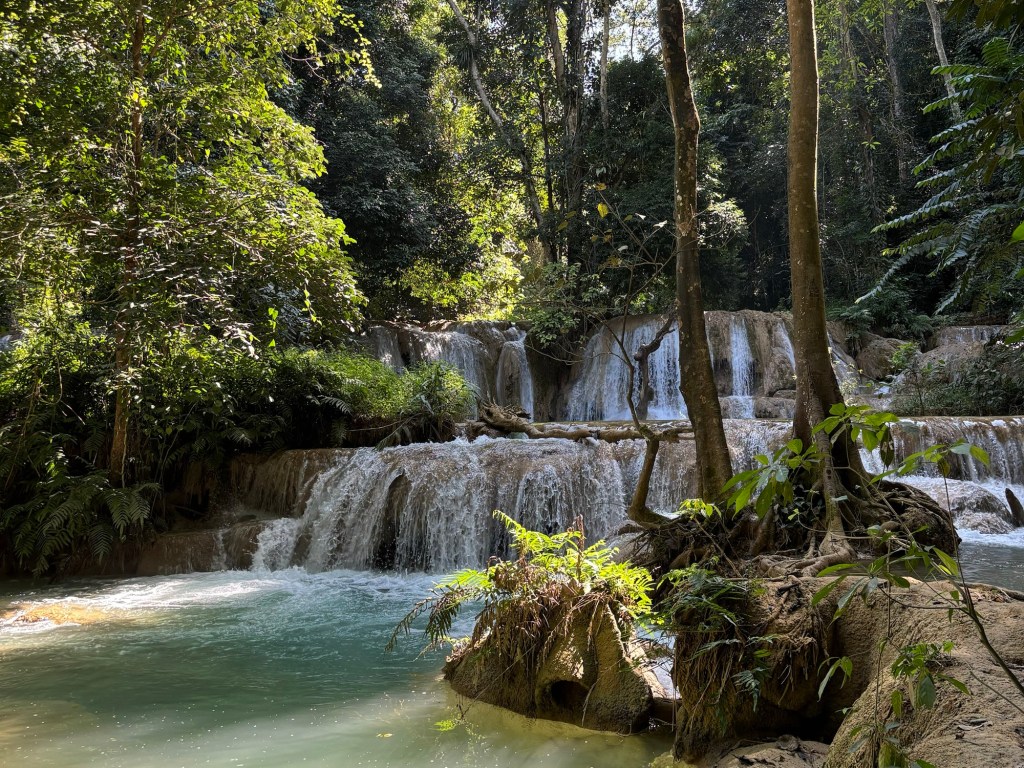
Luang Prabang is a charming northern city with plenty to explore. It boasts a lovely city center with a fantastic night market, numerous restaurants and shops, and excellent places to stay. I stayed at Jam Hostel, which was amazing! They offer a lovely pool, food and drinks, a bar, and great rooms. I recommend renting a bike to explore the area, as there are two stunning waterfalls around 30 minutes to an hour outside of the city. You could easily spend a few days exploring the waterfalls, surrounding areas, and soaking up the local culture.
Nong Khiaw (2-4 days)
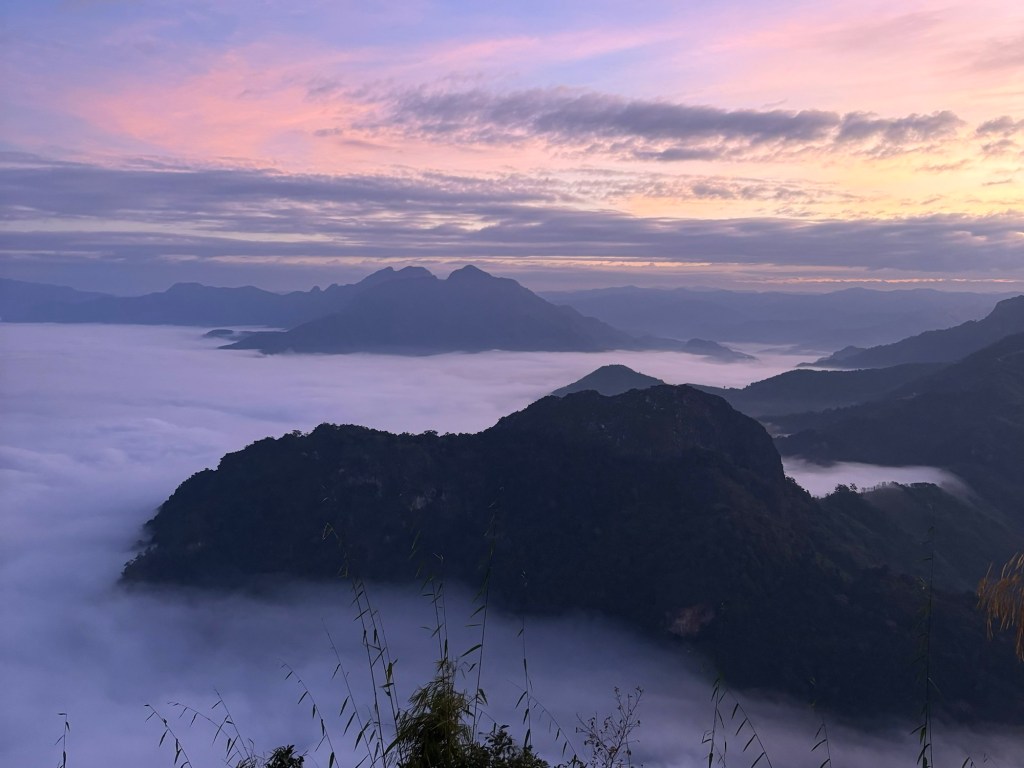
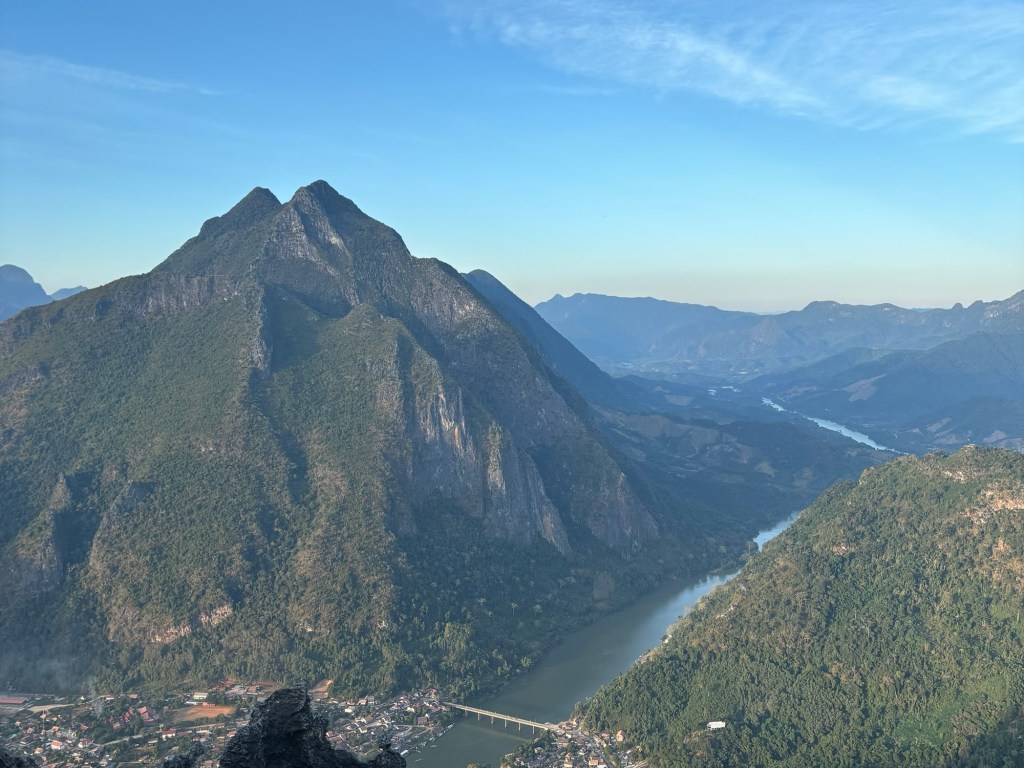
This is one of my favorite places in Laos. Situated about a 4-hour drive from Luang Prabang, this peaceful town is tucked in the mountains of northern Laos. One of my regrets is not staying longer, as the nature here is incredible, and there are so many activities to do. I did a 2-day trekking and camping tour from Luang Prabang, and while we were offered the chance to extend our stay, we had a time constraint. If you have the flexibility, I recommend staying longer. We booked the trek through Sunrise Hostel in Luang Prabang, and I can’t recommend it enough. They transported us by minibus to Nong Khiaw, where we met up with the tour company to gather supplies. We carried small backpacks with necessities and were provided with water and sleeping bags. The hike up the mountain was about 2 hours, and it’s not easy—it’s all uphill, hot, and sticky. But once you reach the top, the views are absolutely worth it. We watched the sunset, had dinner, and stargazed under the Milky Way. The next morning, we woke up to a breathtaking sunrise above the clouds. We were served coffee and breakfast before trekking back down. It was a magical experience. We returned to the town center, had time to explore, and then headed back to Luang Prabang.
After the trek, we stayed another night in Luang Prabang to get organized. I recommend breaking up the journey with another night here, but if you’re in a hurry, you can head directly to Vang Vieng the same day.
Vang Vieng (4-6 days)

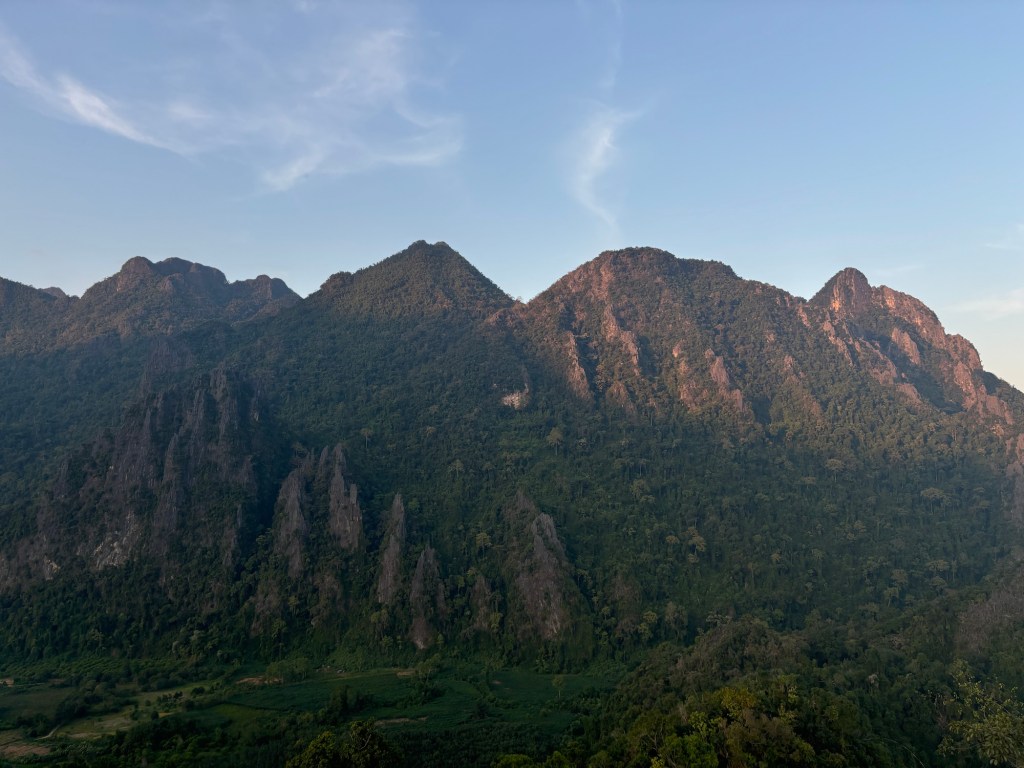
From Luang Prabang, we took the bullet train to Vang Vieng, which only took a little over an hour, compared to the 6-hour bus ride. I highly recommend the train—it’s much quicker and comfortable. Vang Vieng is a popular destination, nestled between stunning mountains and rice fields. It’s full of adventure! You can try paramotoring, hot air ballooning, zip-lining, explore caves, swim in lagoons, or hike. I highly recommend renting a motorbike to get around, as the attractions are spread out. While you can book tours, having the freedom to explore on your own is much more enjoyable. The sunrises and sunsets here are unforgettable, especially when the hot air balloons and paramotors take off. There are a few lagoons worth visiting, particularly Lagoon 1 and Lagoon 3. The Nam Xay hike offers incredible views of the surrounding area. I recommend trying paramotoring or hot air ballooning as well. You can even go tubing or rent a kayak. You could easily spend several days here without running out of things to do. During my stay, I was at Sabai Sabai Hostel, which was affordable and very nice, and then stayed in a riverside bungalow—there are plenty of these bungalows, and they offer a lovely private room with a river view.
Vientiane (1 day)
Next, we traveled to Vientiane, the capital city. We took a 1.5-hour minibus ride from Vang Vieng, and spent the day exploring. There’s not much to see in the capital, but we did visit the COPA Museum, which was interesting and informative about Laos’s history, especially the impacts of the bombs and the ongoing rehabilitation efforts. Apart from that, Vientiane is just a large city by the Mekong. I stayed at Petit Escape Hostel, which was very nice and affordable. I highly recommend it.
Thakhek (4-5 days)

From Vientiane, we took an 8-hour local bus to Thakhek, where we stayed at La Casa Hostel. This is a great place to stay if you’re planning to do the famous Thakhek Motorbike Loop. They offer motorbike rentals and give you a briefing about the loop. We spent the next 4 days exploring the loop, staying in guesthouses and hostels along the way. The loop takes you to waterfalls, caves, and viewpoints, and it’s definitely an experience you won’t want to miss. Check out my full article on the Thakhek loop for more details!
Pakse (1-5 days)

We then took an overnight bus to Pakse, which took about 6 hours. We didn’t stay long, as we wanted to continue south, but there are waterfalls, coffee plantations, and another motorbike loop to explore here if you have the time.
Don Det/4000 Islands (3-4 days)

From Pakse, it’s a few hours in a minibus and then a ferry to Don Det, a peaceful riverside island. It’s the perfect place to relax and unwind at the end of your trip. We spent over a week here, enjoying the laid-back atmosphere, kayaking, and taking it easy. I highly recommend this spot for the perfect end to your journey in Laos, and it’s also a great place to transition into Cambodia if you’re heading that way next.
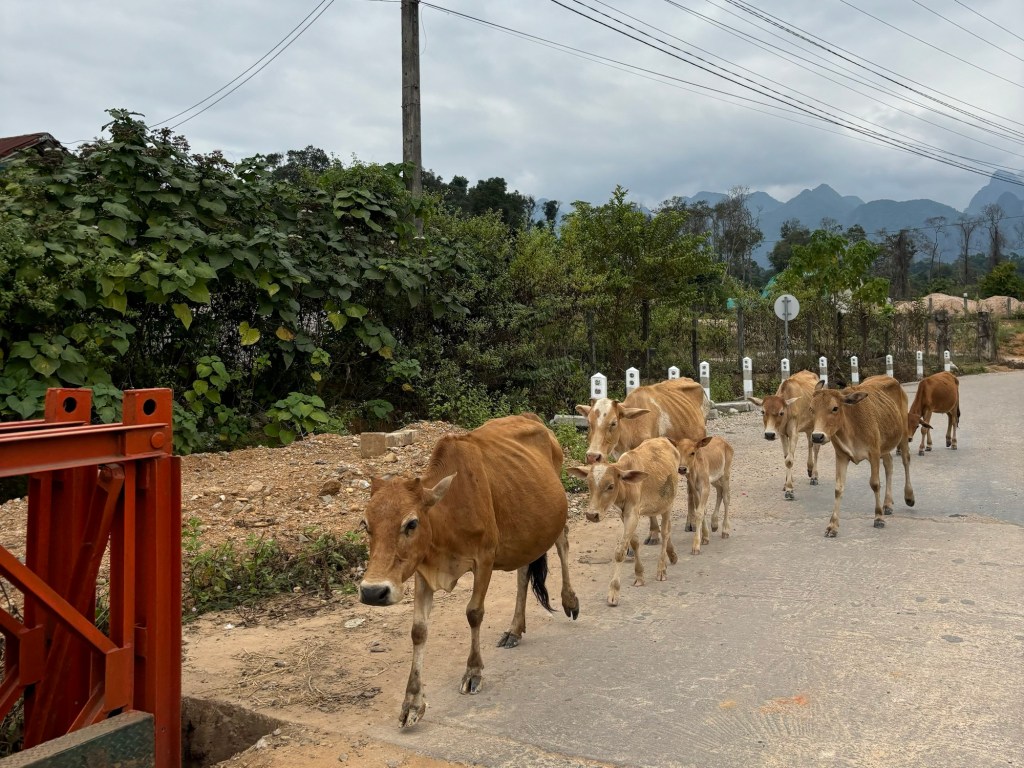
Overall, Laos has become one of my favorite countries. It’s raw, untouched, and absolutely beautiful. There’s so much to see and do here, and I can’t recommend it enough.
 Livslifeoncam
Leave a comment