
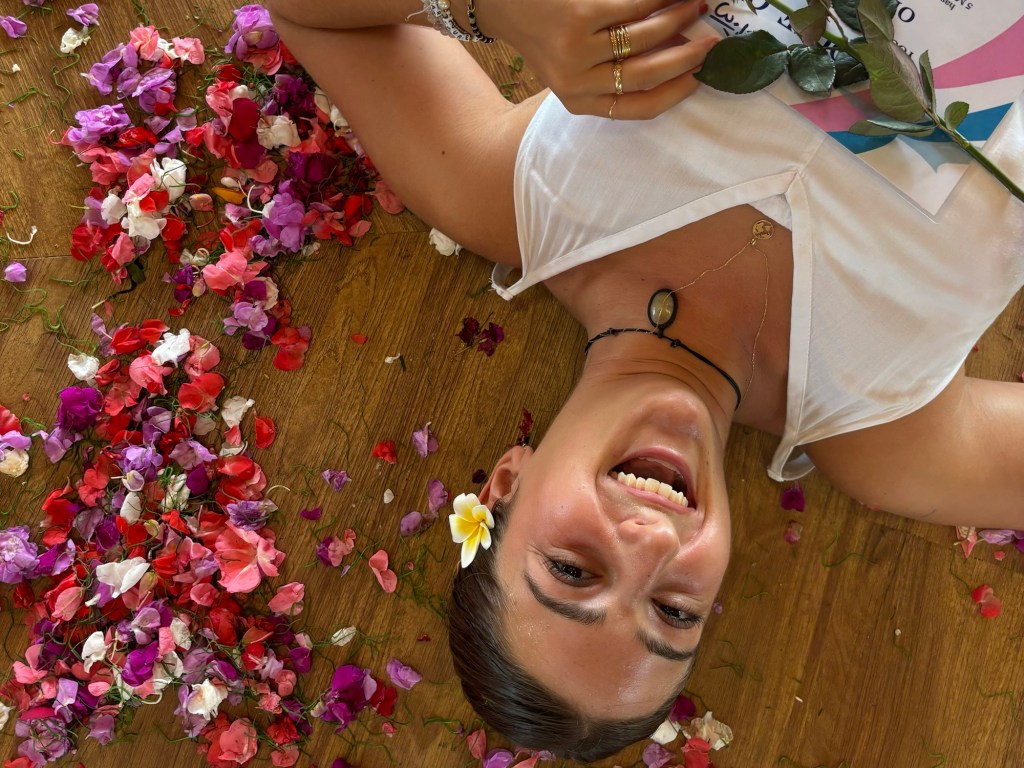
For many years, I knew that I wanted to embark on the journey into the yoga world a bit more deeply and eventually gain the knowledge to become a certified yoga instructor. This desire lingered in the back of my mind for a long time before I finally brought it to life. I spent years contemplating where to do it, when the timing would feel right, and what kind of experience I truly wanted. But after some intense research and a lot of self-reflection, I decided that it would be the perfect way to end my journey in Southeast Asia—in none other than the yoga capital of Southeast Asia: Ubud, Bali.
Now, there are many reasons why I picked Ubud, and many reasons why I chose the school I did. There were also strong reasons why I was only looking for yoga teacher trainings outside of the Western world. So in this article, I want to explain what led me to the training I chose, and why it turned out to be one of the most meaningful decisions of my life.
Choosing House of Om
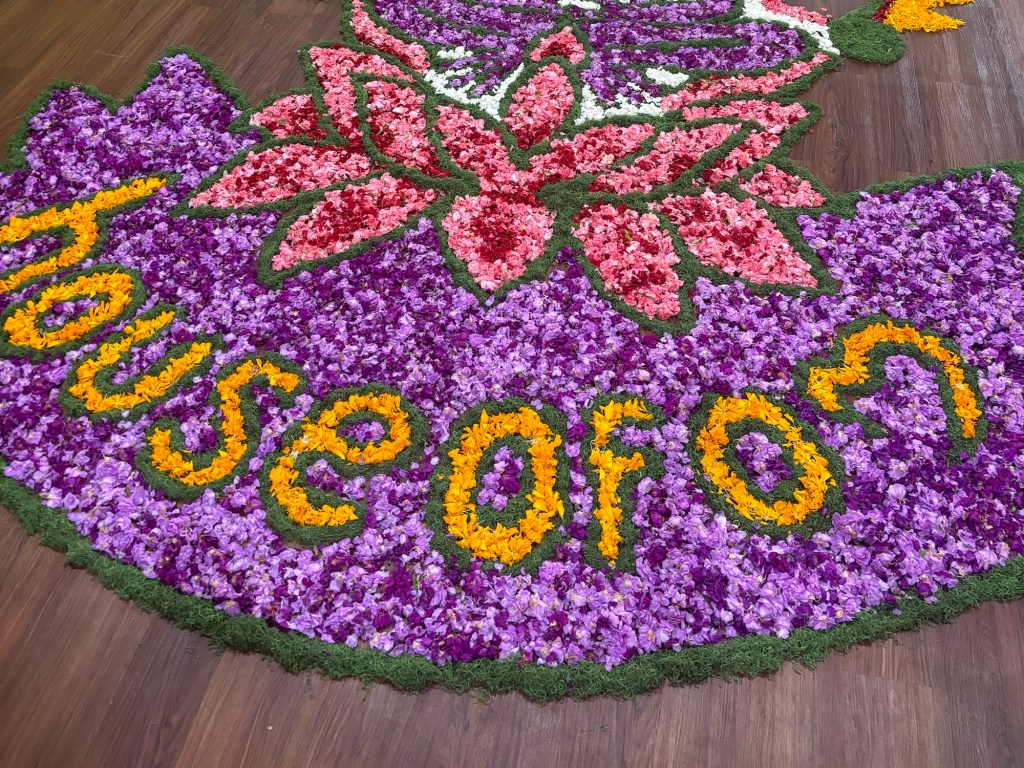
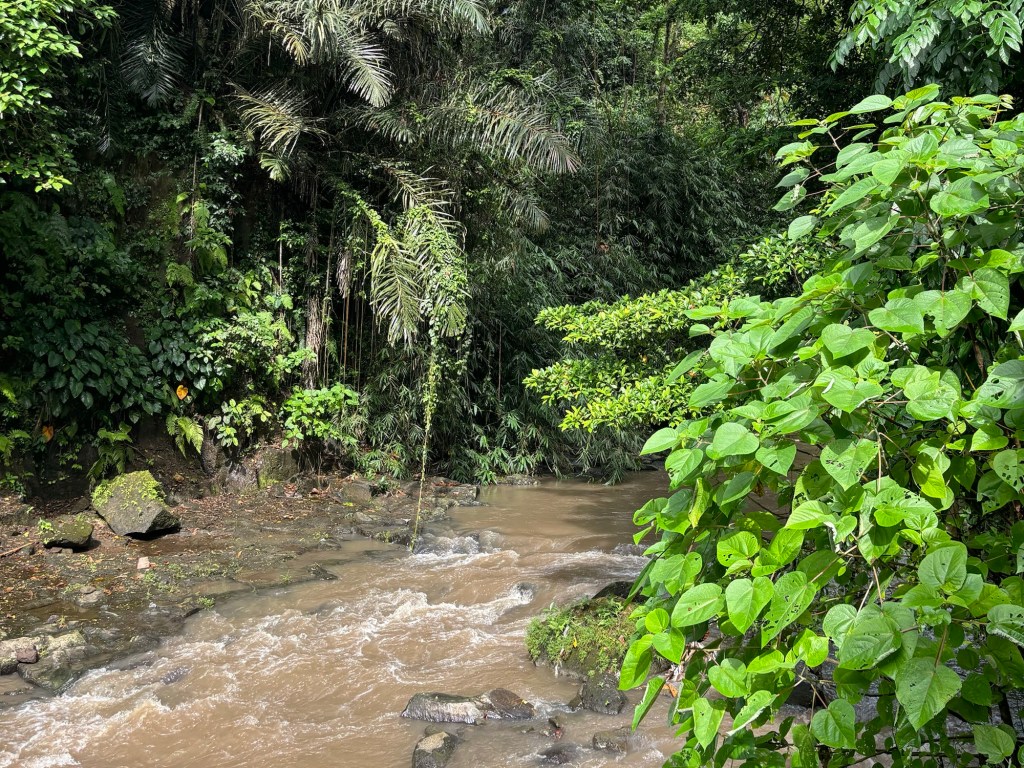
Starting with the simple answer—I chose House of Om in Bali, Indonesia. House of Om has multiple locations in Bali and even one in Rishikesh, India (the birthplace of yoga). I decided to attend their Amhertham location just outside of Ubud because of its proximity to raw and peaceful landscapes, a flowing river, and far fewer distractions than their central Ubud campus. It felt like the perfect in-between place for me—accessible, but deeply connected to nature. I absolutely loved my time there for so many reasons.
But let’s start from the beginning: Why did I decide to do my yoga training in another country—specifically outside the Western world?
Why Bali?
Bali—specifically Ubud—is a true hub for spirituality, conscious living, and community. The Balinese culture, and the energy surrounding it, is beautifully present everywhere you go. From the daily offerings on the sidewalks to the ornate temples hidden in the jungle, everything feels sacred. The traditions, the rituals, and the deeply respectful connection to nature create an incredibly rich atmosphere for any yogi seeking a more profound path.
In Ubud, everything aligns with the intention to heal, connect, and expand. The access to quality, nourishing food is unmatched. The cafes are filled with plant-based, Ayurvedic, and healing menu options. Local warungs (family-run restaurants) serve beautiful, simple Indonesian meals that reflect the culture’s deep respect for balance and nourishment. The food at our training was no exception—it was a fusion of traditional Indonesian cuisine and Ayurvedic principles, always vegetarian, and designed to support our bodies through the intense physical and spiritual work we were doing. It was both grounding and energizing, and it made me feel truly cared for.
You’ll also find yoga studios on every corner, shops filled with crystals, incense, and books on Vedic wisdom, as well as holistic healing centers, herbal medicine, and even spas aligned with chakra healing. All of this makes Bali the perfect place to fully immerse yourself in the practice of yoga—not just as movement, but as a lifestyle.
The Environment That Changed Everything
Something that was repeated to us often during our training was this: Sometimes, you need to move to an environment that supports the life you want to live. That message hit me hard. And throughout the training, I couldn’t stop thinking about how deeply true it was in that very moment.
I truly can’t imagine having done this training in a cold, gloomy, noisy city in the U.S. or Europe. Honestly, it seems almost insane to go so deep into spiritual work—breathwork, mantras, philosophy, and embodiment—while surrounded by chaos, pollution, or urban disconnection. We were chanting mantras while listening to the river flowing behind us. We were practicing pranayama as birds sang in the trees, and we were moving through asana as the warm, jungle breeze gently wrapped around us. The nature held us. The peace supported us. The stillness became a teacher in itself.
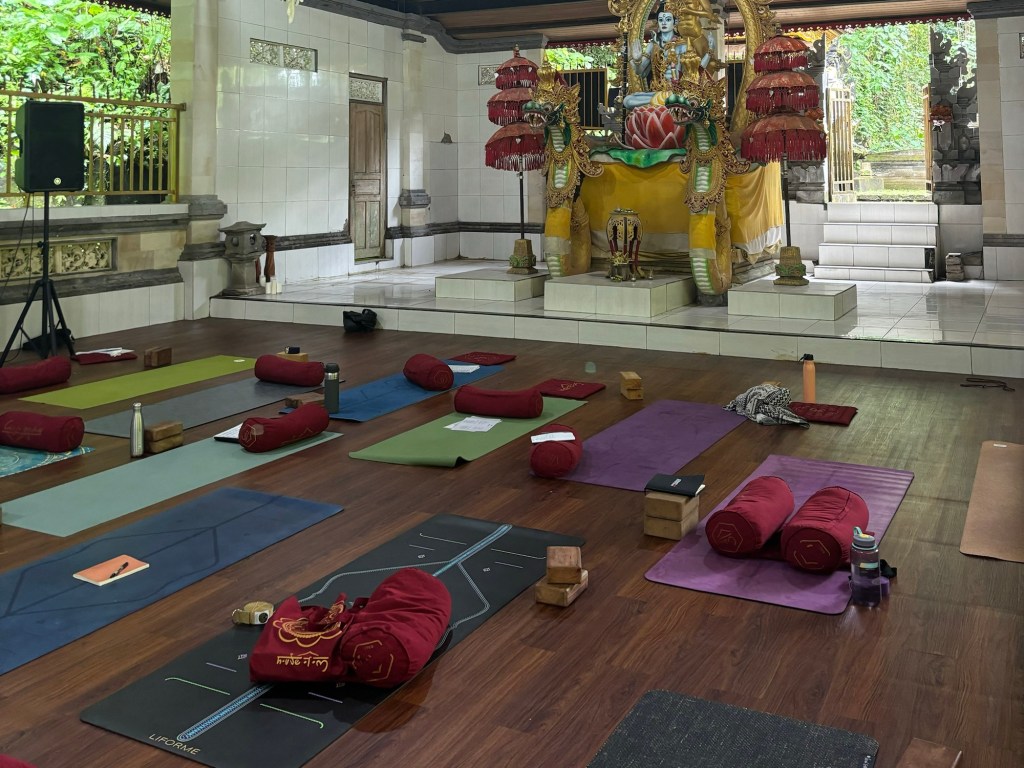
The shalas at Amhertham were open-air and sacred. Built from natural materials like bamboo and wood, they blended seamlessly with the landscape. Practicing in those spaces felt like an offering—like each movement and each breath was connected to something greater than ourselves. They were clean, spacious, and filled with beautiful energy that you could feel the moment you stepped inside.
The Power of Authenticity
And then there’s the authenticity. This was the most important aspect for me. Our teachers came from rich lineages of yoga philosophy and practice. Many of them were from India or had studied extensively under respected Indian or Nepali gurus in Rishikesh, Mysore, and beyond. We weren’t just learning how to cue downward dog—we were learning the roots. We studied the Eight Limbs of Yoga, the history and the intention behind each practice, the deeper meanings behind the mantras, the importance of energy, breath, and discipline.
We sang traditional mantras. We practiced ancient cleansing techniques each morning. We ate pure food. We learned how to hold space and guide people through true transformation—not just a workout. We weren’t there for Instagram photos. We weren’t there to perfect a handstand. We were there to become students of a practice that has existed for thousands of years.
And in that process, I realized just how distorted yoga has become in the Western world
What the West Has Forgotten
Another big reason I chose to do my yoga teacher training abroad—specifically in Bali—is because I wanted to be immersed in a place where yoga still holds deep spiritual and cultural significance. In many Western countries, the practice has been heavily commercialized. Studios can sometimes feel more like boutique fitness centers than spaces for self-discovery. The heart of yoga—its philosophy, breathwork, devotion, discipline, and inner work—is often stripped away or barely touched upon.
The version of yoga that exists in many Western studios is far from what yoga truly is. It’s turned into a commercial, watered-down fitness trend. You’ve got hot yoga in mirrored studios, puppy yoga for the novelty, beer yoga for the laughs, yoga with weights, and even classes with house music and flashing lights. It’s become about the look—the outfit, the mat, the body—rather than the intention. The spiritual essence, the connection to self and breath, often gets lost beneath the marketing.
I didn’t want that. I didn’t want a version of yoga curated for Instagram aesthetics. I didn’t want to graduate with a certificate but no real understanding of what I was teaching. I wanted something deeper—something rooted. I wanted to experience the rituals, the chanting, the silence, and the stillness. I wanted to be taught by people who live and breathe the practice, not just perform it.
Choosing to do my training in Bali gave me that. There’s something about being in a place where the environment itself feels sacred—surrounded by jungle, temples, daily offerings, and a culture that embraces spirit in everyday life. It reminded me that yoga isn’t just a physical practice—it’s a way of living, a lens through which you view the world and yourself.
What’s even more ironic is that in the West, you’ll often pay double the price for a teacher training that offers half the depth. The training I did in Bali was filled with soul, ceremony, discipline, and truth—and it cost significantly less than what many schools charge in the U.S. or Europe. That’s because the priorities are different. In the East, there’s still a sacredness to the practice. There’s still humility. The teachers want you to learn, to understand, and to integrate yoga into your life—not just your workout routine.
There’s also a shared humility in international trainings. Many people come from different backgrounds and corners of the world with the same goal: to learn and grow. That creates a sense of unity that transcends the physical practice. It’s a reminder that yoga is about connection—not just to the body, but to one another, to the earth, and to something greater.
Final Thoughts: A Journey Worth Taking
This training changed me. Not just as a yoga teacher, but as a human being. It reminded me of who I am when I strip away distractions, noise, and ego. It grounded me in my body, reconnected me to my breath, and opened my heart to a way of living that feels so aligned with who I want to be.
If you’re considering doing your yoga teacher training—and especially if you’ve felt disconnected from what you see in the Western yoga world—I can’t recommend enough doing it somewhere like Bali. Go somewhere where yoga is lived, not just taught. Where the land, the food, the people, and the practices support your growth. Where you’re reminded of the sacredness of every breath.
I left the U.S. to find something deeper—and I found it. And now, my purpose is to carry that truth with me, to share it with integrity, and to inspire others to reconnect to the true essence of yoga. Not as a trend, but as a path.
And I would do it again in a heartbeat.
 Livslifeoncam
Leave a comment