
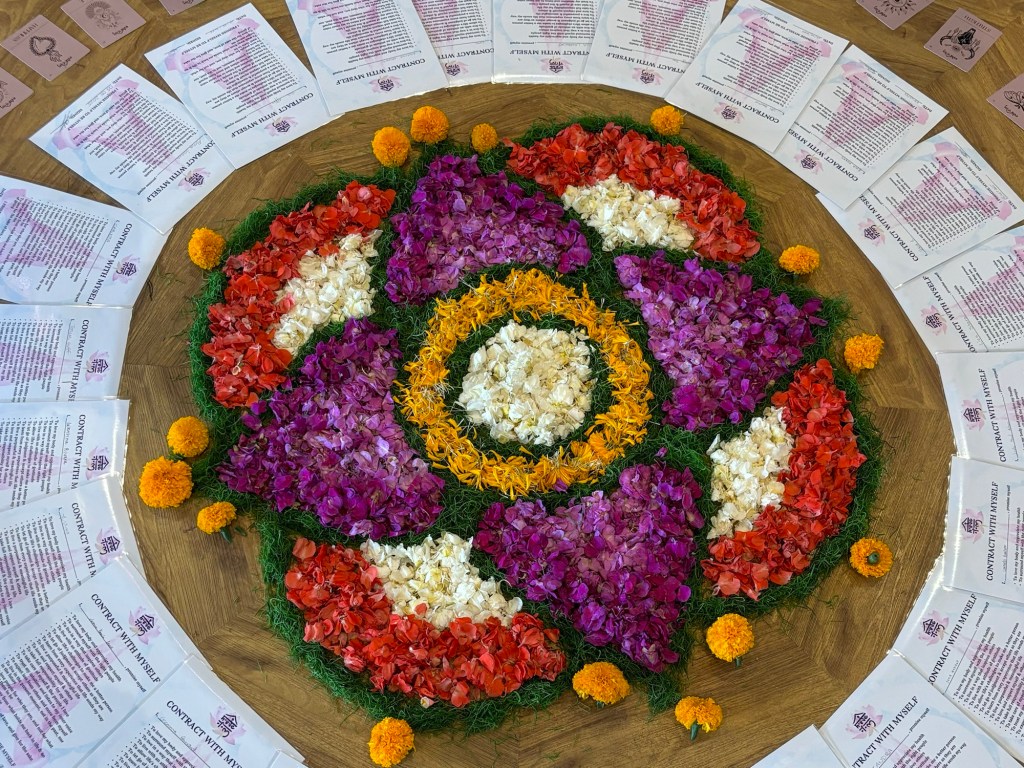
Spending 200 hours in a yoga teacher training program in Bali, Indonesia might sound like a lot of downward dogs, sun salutations, and chanting. And yes, there was plenty of that. But what truly surprised me about this three-week experience was how much deeper it went than just the physical practice. I had signed up expecting to perfect my poses and maybe teach a few classes someday. Instead, I found myself unraveling layer after layer of personal insight, healing, and transformation.
It was as if each day cracked me open just a little more—mentally, emotionally, and spiritually. I was constantly having moments of clarity about my life, my relationships, my purpose, and the way I move through the world. I realized quickly that yoga isn’t just about flexibility or fitness; it’s a way of living, of thinking, and of seeing. What I thought I knew about yoga was only scratching the surface.
This training shifted my entire perspective—not just on yoga, but on life itself. I walked away with lessons that feel deeply relevant to anyone, regardless of whether they practice yoga or not. Some of these lessons are simple and grounding, while others have completely reshaped the way I travel, connect with others, and view the world around me.
So, if you’re curious about what I really learned during my time at yoga teacher training—beyond the asanas and anatomy lectures—keep reading. These are the takeaways that have stayed with me, long after I rolled up my mat in Bali.
Western Yoga Is Not Traditional Yoga
One of the most important—and eye-opening—lessons I learned during my training was this: Western yoga, for the most part, is not traditional yoga. As much as I wanted to believe that the yoga classes I had taken in the U.S. and Europe were rooted in ancient practices, the truth is, they barely scratched the surface. Before arriving in Bali, I thought I had a pretty solid understanding of yoga. I’d taken plenty of classes, followed countless online flows, and learned bits and pieces from friends along the way. But what I came to realize is that most people in the Western world, myself included, have only ever experienced a heavily diluted and commercialized version of what yoga truly is.
Think about all the variations that exist today—puppy yoga, hot yoga, paddleboard yoga, even yoga with weights. These trendy, hybrid classes may be fun or physically engaging, but they are far removed from the essence of yoga. The moment you introduce an external distraction—whether it’s balancing on a paddleboard or petting a puppy—you shift the focus away from what yoga is meant to cultivate: presence, inner awareness, breath, and stillness of the mind. Suddenly, it’s not about finding alignment within yourself; it’s about keeping your balance or entertaining your senses.
In the West, yoga has often been reduced to a fitness class—something to make you sweat, stretch you out, or help you achieve that Instagram-worthy headstand. But traditional yoga is so much more than that. It’s not about how flexible you are, what brand of leggings you wear, or how many chaturangas you can flow through. It’s about living with intention, moving mindfully, and integrating the philosophy of yoga into your everyday life. At its core, yoga is a path to union—of body, mind, and spirit. It’s a lifestyle rooted in discipline, surrender, awareness, and peace.
And while many Western yoga classes still include asanas (the physical postures), they often lack the structure and depth found in traditional lineages like Hatha, Ashtanga, or Vinyasa. Instead, they’re usually a mix of whatever the teacher feels like offering that day—a bit of stretching, a few sun salutations, some upbeat music, maybe a quote at the end. It’s not wrong, but it’s not yoga in the traditional sense either.
This isn’t to say you should stop going to your favorite studio or ditch your local class. Some Western teachers do bring in authentic teachings and a more holistic approach. But I think it’s important—especially if yoga is a meaningful part of your life—to pause and reflect on what you’re practicing, why you’re practicing it, and whether you’re open to learning more about where it came from. That awareness alone is powerful.
Honestly, it was tough for me at first. I felt a little defensive, even disappointed. But as my training went on, I began to feel grateful. Grateful to finally understand the roots of yoga. Grateful to witness its depth, beyond the poses. And grateful to carry this new knowledge forward—not to judge others, but to deepen my own practice with humility, respect, and authenticity.
Next came a lesson so simple in theory, yet incredibly powerful in practice: the answer is always within.
I heard this phrase almost daily from my teachers. At first, I didn’t quite connect with it. It sounded vague—like something you’d see on a motivational poster but not actually live by. But the longer I stayed, the more I slowed down. The more time I spent sitting with my thoughts, allowing myself the space to feel and process without distractions or external input, the more this idea began to click.
We’re conditioned to seek answers outside of ourselves. We turn to friends, teachers, the internet—anyone but ourselves—for validation, advice, and solutions. We want someone else to solve the problem for us, to tell us what to do. Sometimes we even wait, passively hoping the answer will just fall into our laps. But we rarely give ourselves the chance to be still, to sit with the discomfort, the confusion, the uncertainty—and actually listen.
There were so many moments when I found myself caught in a spiral of overthinking. Sometimes the question was small; other times it felt big and overwhelming. But in both cases, when I allowed myself to slow down and truly listen—not to others, but to my own inner voice—I discovered that the answer had been there all along. That quiet knowing, that inner clarity, it just needed space to rise to the surface.
I didn’t need someone else to hand me the solution. I just needed to trust myself enough to listen.
Love is Everywhere
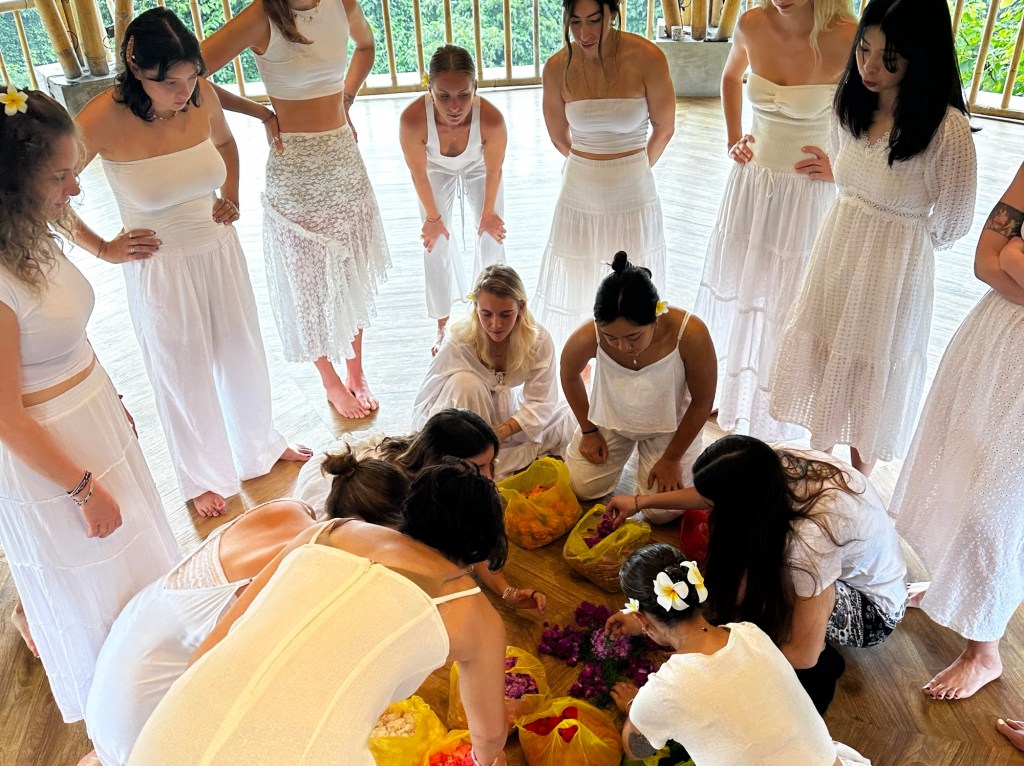
Another simple yet transformative lesson came to me on the very first day. When I arrived at the training, we were asked to throw something into the universe—something we wanted to release—and to declare something we wished to carry with us. Without hesitation, I chose to let go of the hatred I’d held toward myself. In its place, I chose to carry love—love for myself and for others.
That moment planted a seed. It made me realize just how much love is constantly around us, whether we see it or not.
I had spent so long being conditioned to focus on my flaws. I was my own harshest critic, always zeroing in on what I was doing wrong, how I looked, how I measured up. That kind of thinking becomes a habit, and in doing so, I was shutting myself off—from self-love, and from the ability to fully receive love from others.
But something changed during those weeks of training. I found myself surrounded by the purest love I’d ever experienced. Twenty-five women, three teachers, and myself—coming together in vulnerability, acceptance, and deep care. There was no judgment, no competition, no pressure to be anything but yourself. Just love. Real, raw, beautiful love. You could feel it the moment you walked into the room—in the way we hugged, the way we held space for each other’s tears, in our laughter, in quiet moments of connection, in every shared breath on the mat. We didn’t just say we loved each other—we lived it.
And through that, I came to a powerful realization: if I don’t give myself the love I deserve, I’ll never truly be able to accept or recognize the love that surrounds me. We often block ourselves from love—not because it isn’t there, but because we haven’t yet allowed it to begin within.
The love we seek from others becomes so much easier to see, feel, and embrace when we first allow it to exist within ourselves.
Everything is connected, from the inside out.
One of the most eye-opening parts of my training was learning just how deeply connected our physical body is to every single aspect of our lives—our emotions, our thoughts, our habits, our healing.
As we studied physical anatomy and the philosophy of yoga, it quickly became clear that this wasn’t just about memorizing muscle groups or learning how to modify postures for injuries. It was so much deeper than that. We explored the importance of balance—not just in the physical body, but in our nervous systems, our breath, our routines, and our energy. We dove into the autonomic nervous system and how our daily choices—like what we eat, how we move, and how we respond to stress—either support or sabotage our well-being.
We learned about ayurveda—how our personalities and energies (our doshas) influence not only what we eat, but when and how we eat. We studied the chakras, the energy centers of the body, and how imbalances in these areas can manifest physically, emotionally, or energetically.
Through all of this, one truth kept surfacing: everything is connected. And often, we’ve drifted so far from that truth in our modern world.
We live in a society that’s quick to suppress symptoms, to reach for a pill, to search for a fix—but rarely do we pause to ask why the imbalance happened in the first place. We use Western medicine and Western practices to patch up problems that, in many cases, were created by our own disconnection from nature, from our bodies, and from our inner knowing.
This training reminded me that so much healing happens when we return to the basics—to the breath, to natural movement, to whole foods, to honoring the body’s signals rather than overriding them. The human body is profoundly intelligent. It already knows how to heal, how to balance, how to thrive. We just have to relearn how to listen.
When we reconnect with our physical body—not from a place of control or judgment, but from a place of curiosity and respect—we begin to unlock a more balanced, vibrant, and intuitive way of living.
People’s energy is extremely impactful
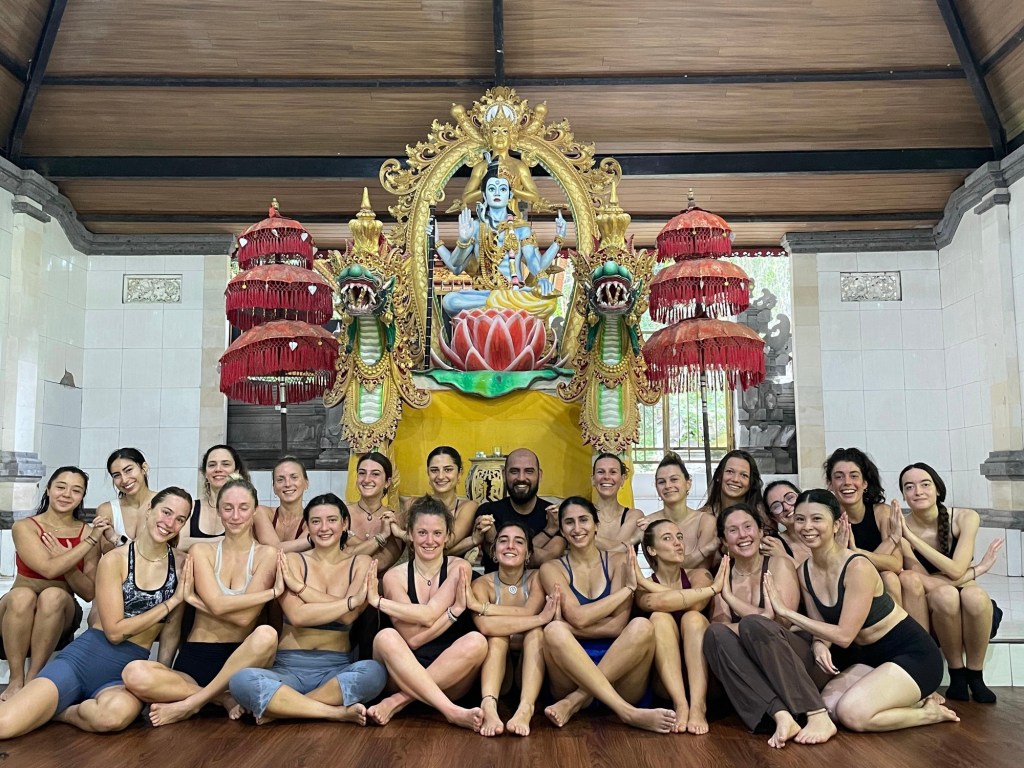
I never expected to become so attuned to the energy of others—but three weeks surrounded by 25 women, each on their own emotional and transformative journey, changed that completely.
Being in such an intense and emotionally charged environment made me realize just how deeply energy affects us, whether we’re conscious of it or not. You could walk into the room and immediately feel it—the collective mood, the unspoken emotional undercurrent. Some mornings, the air was buzzing with excitement, empowerment, and openness, and that energy carried into the entire class. Other days, you could sense something was off. The room felt heavier. Slower. You’d look around and see it in people’s postures, their faces, their silence. It wasn’t dramatic—but it was palpable. The overall energy affected how we moved, how we communicated, and even how we felt within ourselves.
It made me realize how contagious energy can be—how one person’s emotional state can ripple out and influence the entire group. I had never noticed this dynamic so clearly before, but once I did, I couldn’t unsee it. And it wasn’t just about others; I also became more aware of the energy I was bringing into a space. On the days I was holding onto unprocessed emotions or carrying stress, I could feel how that influenced my interactions and even the flow of the group.
That’s why it’s so important to sit with your emotions, to give yourself space to feel, reflect, and process what’s going on inside. When we don’t, that energy doesn’t just disappear—it leaks out, often unconsciously, affecting everything and everyone around us. But when we take the time to be present with ourselves, to move through what we’re feeling, we’re able to show up with more grounded, intentional energy—and that energy can lift and support others, just as theirs can lift us.
Routine and discipline
There’s something surprisingly freeing about knowing exactly how your day will unfold.
At the training, our days were mapped out from sunrise to sunset—early morning wake-ups, scheduled meals, back-to-back classes, workshops, and evening practices. At first, the structure felt intense, especially for someone like me who’s used to a more spontaneous lifestyle. But after a few days, I found myself easing into it. I began to look forward to the flow of the day, to the rhythm of repetition. It became almost meditative.
I realized that routine doesn’t confine you—it grounds you. It creates space for presence. When your schedule becomes familiar, your mind doesn’t have to constantly anticipate what’s next. Instead, you start to sink more deeply into the moment. The practice becomes less about just getting through the day, and more about fully experiencing it.
Discipline, which I used to associate with pressure or control, started to feel like a form of self-respect. It’s a pillar of the yogic lifestyle for a reason—it gives you structure to grow within. In the midst of physically and emotionally demanding days, that routine became my anchor.
It showed me that even when life feels chaotic, having a rhythm you can return to brings peace. And now, I carry that lesson with me: discipline isn’t about restriction—it’s about creating the conditions that allow you to thrive.
Sitting through and processing our emotions
Most of us are taught to keep it together. To stay strong. To move on quickly. But what happens when we never give ourselves permission to actually feel?
Before the training, I didn’t even realize how much I was holding in. I wasn’t facing my thoughts—I was just sitting in the discomfort they caused, hoping it would pass. But the emotions didn’t go anywhere. They stayed buried, quietly shaping how I felt, how I reacted, and how I saw myself.
Throughout the training, I was encouraged to stop suppressing and start releasing. We created space—through meditation, breathwork, movement, and silence—to let whatever needed to come up… come up. And when it did, it felt raw. Sometimes it was uncomfortable. But it was also freeing.
Letting your emotions rise isn’t about being dramatic or overwhelmed—it’s about being honest. It’s about finally facing the weight you’ve been carrying so you can understand it, process it, and move forward from it. That’s where real healing begins. Not in avoiding, but in allowing. Not in fixing everything right away, but in feeling it first.
Now I know: you can’t let go of what you never allow yourself to hold in the first place.
Living somewhere that suits our lifestyle
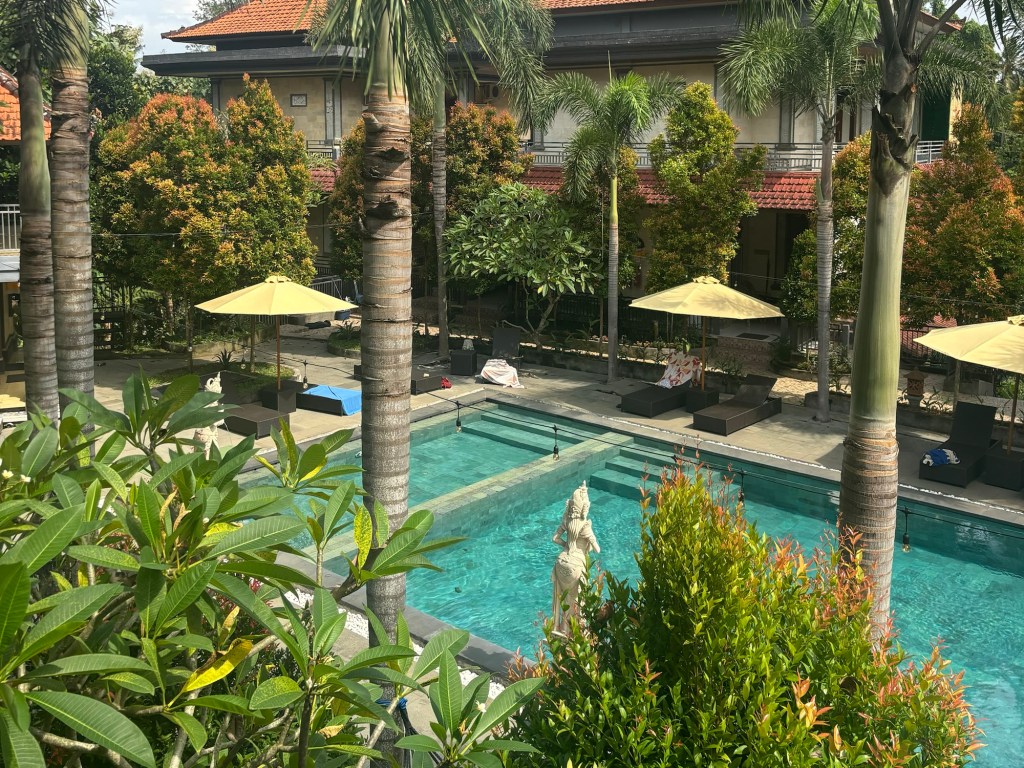
There’s something deeply unsettling about realizing the world you’re living in might be working against you.
We’re constantly bombarded—by notifications, loud cities, endless expectations, and a culture that values productivity over presence. It’s no wonder our nervous systems are shot. The default setting for most people has become fight or flight, and we rarely even notice it because it’s become so normal.
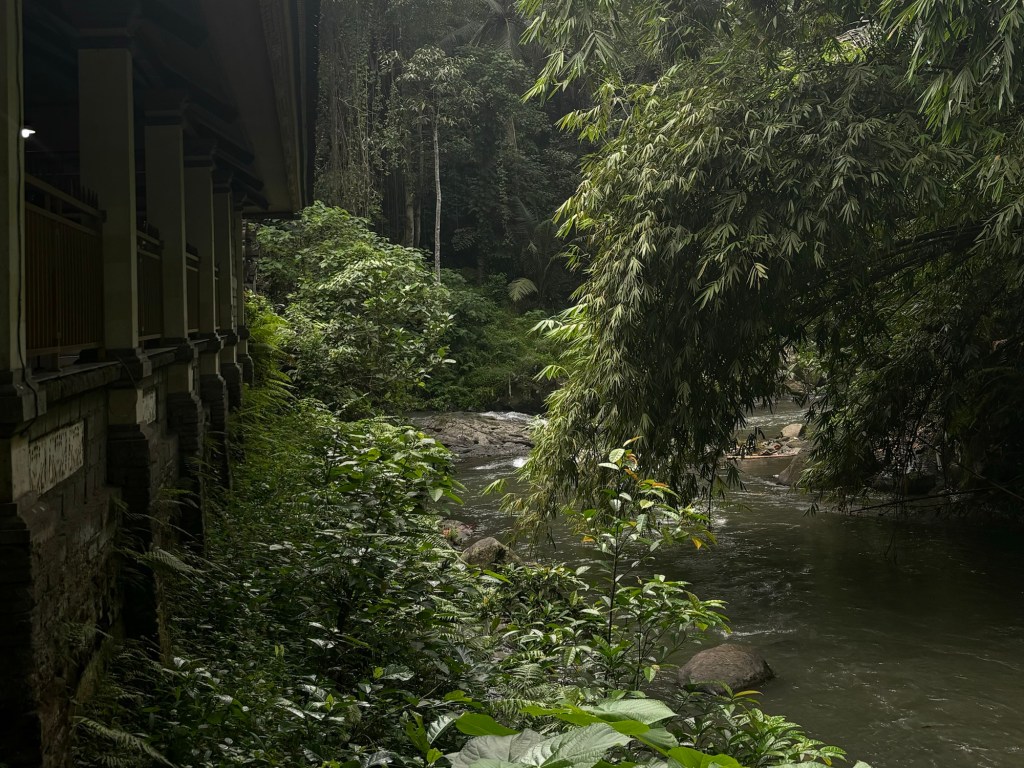
That contrast hit hard in Bali. One moment you’re in the chaos of modern life, and the next, you’re surrounded by quiet jungle, birdsong, and slow mornings. The shift was undeniable. Without the distractions and overstimulation, your body actually begins to settle. Your mind slows down. You finally feel what calm really means—not just as an idea, but as a physical experience.
We talked a lot during training about how environment shapes behavior, mood, and even your ability to heal. And while not everyone can just pack up and move to a peaceful retreat in the jungle, awareness is the first step. If you’re in a space that doesn’t support the life you’re trying to build, you owe it to yourself to start envisioning a way out—or at the very least, finding small ways to bring peace into your current surroundings.
It’s not always immediate. It may take time, planning, sacrifice. But knowing that your environment matters is empowering. Because once you understand how much it influences your state of mind, your health, and your growth—you stop blaming yourself for things that aren’t your fault, and start creating a lifestyle that actually serves you.
Perfection doesn’t exist.
We were reminded of this constantly during training—there’s no perfect pose, no perfect body, no perfect life.
Trying to be perfect only takes us further away from being present. It’s a standard created by society, not something real or achievable. The more we compare ourselves to others or chase perfection, the more we disconnect from ourselves.
In yoga, we learn to accept where we are. Every posture looks different on every body, and that’s okay. What matters is showing up, breathing, and being honest with yourself.
Letting go of perfection creates space for peace, growth, and self-love. That’s what really matters.
Sometimes learning requires unlearning.
It might sound strange, but in order to truly understand something new, you often have to let go of what you thought you knew.
Throughout this training, I realized how many ideas I’d picked up from the Western world—especially around health, movement, and wellness—that weren’t actually serving me. These ideas were so deeply ingrained that they felt normal. But as I started to explore more traditional, Eastern practices, I had to make space for new perspectives. And that meant letting go of some of the beliefs I’d been holding onto.
Even with something like dance—something I loved and had done for years—I discovered that many of the movements and techniques I learned were actually harming my body. I was pushing through pain, forcing alignment, and prioritizing performance over wellness. In yoga, I learned a new relationship with movement—one that’s rooted in care, balance, and awareness. And to fully embrace that, I had to release old habits and ways of thinking.
Unlearning can feel uncomfortable at first. But it’s also freeing. It opens up space for growth, healing, and deeper understanding. Sometimes, the most powerful thing you can do for yourself is to let go of what no longer fits.
It’s not about the end posture—it’s about the journey to get there.
And this doesn’t just apply to the physical practice. Yoga, and life, is not about the final destination. It’s about the process—the moments in between, the lessons we learn, and the growth that happens along the way.
We’re so used to rushing toward the end goal that we forget the value of the path it takes to get there. But if we can’t appreciate the journey—if we don’t slow down and take in what we’re learning, how we’re feeling, and what we’re becoming—then the end posture, or the final result, doesn’t hold much meaning.
Some days in our practice, we’d try a posture and not reach it. But in trying, we learned patience, awareness, and how to listen to our bodies. That’s the real practice. And the same is true in life.
This is something I want to carry with me every day—not just on the mat, but in all areas of life. It’s not about rushing to the next thing. It’s about being present, appreciating the process, and trusting that the journey is just as important—if not more—than the destination.
Silent mornings
One thing we did every day that really stuck with me was silent mornings. From 6 to 10 a.m., we stayed in silence—through our morning asana practice and breakfast. No chatting, no questions, no checking in with others—just quiet time to be with ourselves.
It honestly felt so refreshing. Instead of waking up and instantly going into conversation mode, we got to start the day slowly and mindfully. It gave me the space to really tune into how I was feeling, to be present in my body during practice, and to actually enjoy my breakfast without any distractions.
There was something so peaceful about moving through those first few hours in silence. I didn’t feel the pressure to say anything or respond to anyone—I could just be. It made me feel grounded and clear going into the rest of the day.
I really loved it, and it’s something I want to take with me as I keep traveling. Even if I’m not doing a full four-hour silent window, I’d love to start my mornings with a bit of quiet time—no phone, no talking, just me, my breath, and whatever’s in front of me.
The people make a place.
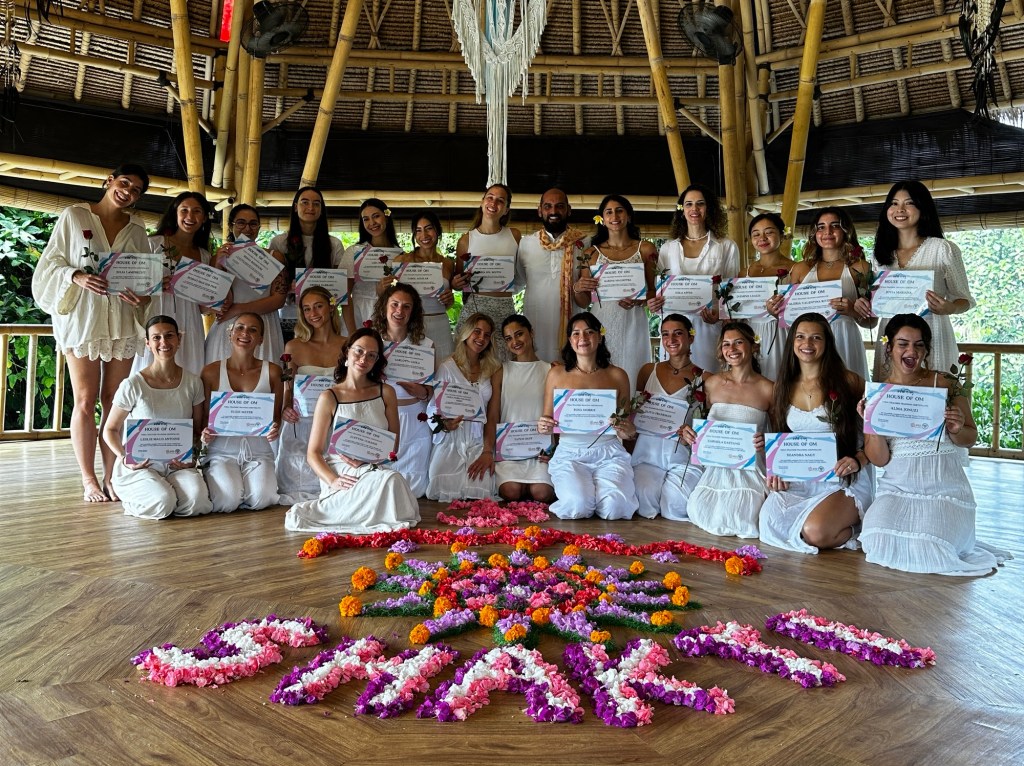
That’s not something new for me—it’s something I’ve always believed. But once again, while traveling, it was reinforced in such a powerful way. An experience, a trip, a journey—it can be life-changing for so many reasons. But when you’re surrounded by genuinely kind, loving, and supportive people, it becomes something even more special.
At teacher training, the people made all the difference. The group energy, the connections, the love we shared—it was so strong and so real. We weren’t just a group of strangers doing yoga together; we were showing up for each other, day after day, in big and small ways. It created this safe space where we could all grow, be vulnerable, and just be ourselves.
And our teachers… wow. Their presence, their compassion, the way they held space for all of us—it was beautiful. You could feel how much they cared, and that love trickled down into everything we did.
The people I met were easily one of the biggest parts of my whole experience. I’m so beyond grateful for each and every one of them. I’ll carry those connections with me for a long time.
 Livslifeoncam
Leave a comment