
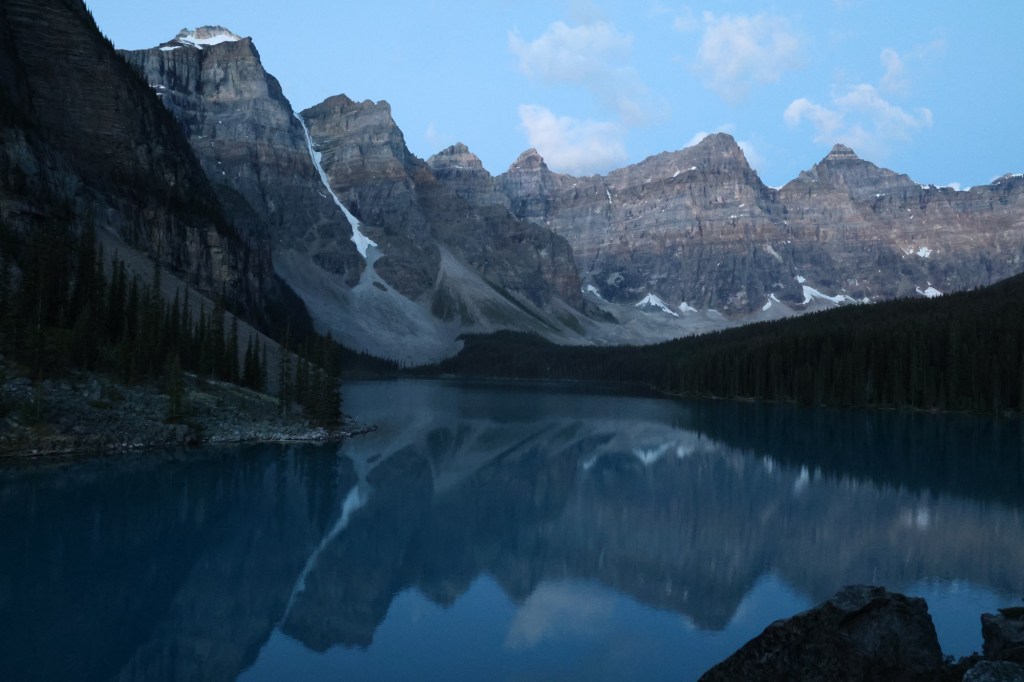
If you are in the Canadian Rockies and looking for an unreal sunrise experience like nothing you’ve ever seen before, there’s one adventure I can’t recommend enough: a morning at Moraine Lake followed by Lake Louise. These two lakes in Banff National Park are among the most iconic and photographed spots in Canada. With their turquoise waters, jagged peaks, and deep green forests, they’re stunning at any hour of the day, but sunrise is when the magic really happens.
The early morning is when the mountains glow with golden light, the water is at its stillest, and you can experience the lakes before the rush of crowds. It takes some effort and planning, especially because of the strict rules around vehicle access and parking, but if you’re willing to wake up early and prepare, it’s an experience you’ll never forget.
In this guide, I’ll walk you through how to experience sunrise at Moraine Lake and Lake Louise, what to bring, how to get there, and why it’s worth the extra effort.
Why Sunrise is So Special
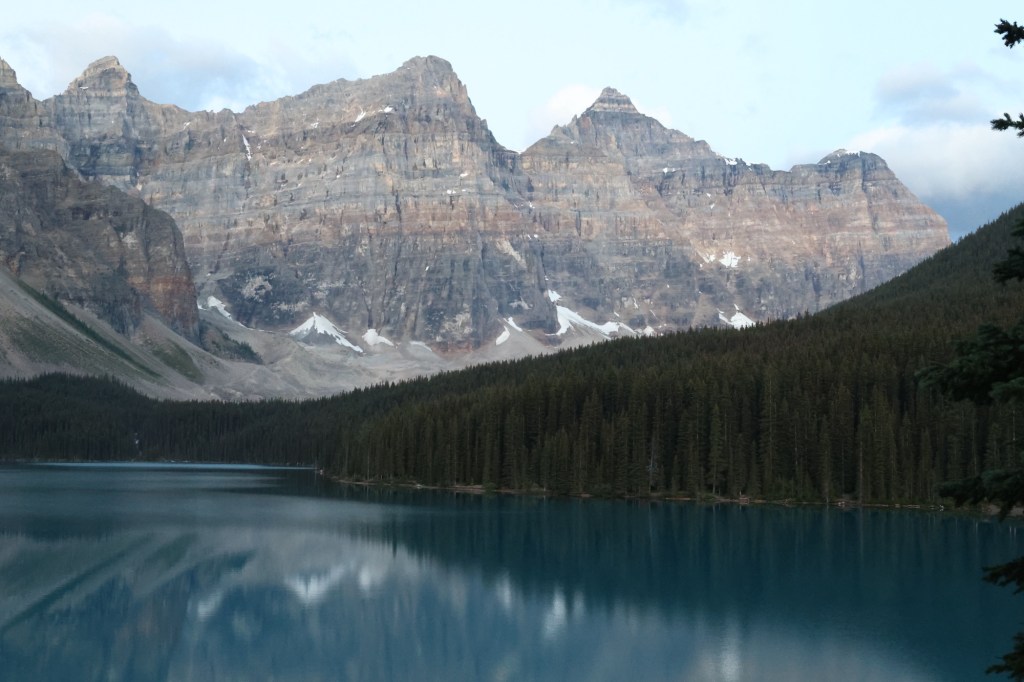
Banff is one of the busiest national parks in North America, and both Moraine Lake and Lake Louise attract thousands of visitors daily in the summer. During the day, parking lots fill quickly, shuttle buses line up, and the trails become crowded. Sunrise is the one window where you can experience these lakes in relative peace.
At sunrise, you’re often sharing the view with only a handful of others. The still water reflects the mountains so clearly it looks like glass, and the morning light paints the peaks in shades of orange, pink, and gold. The air is crisp, sometimes cold, but there’s a calmness that disappears once the day begins.
It’s also worth noting that the weather in the Rockies is unpredictable. Clouds may cover the peaks, or fog may roll across the lakes. But even on those mornings, the quiet atmosphere and sense of solitude are worth it.
Starting at Moraine Lake
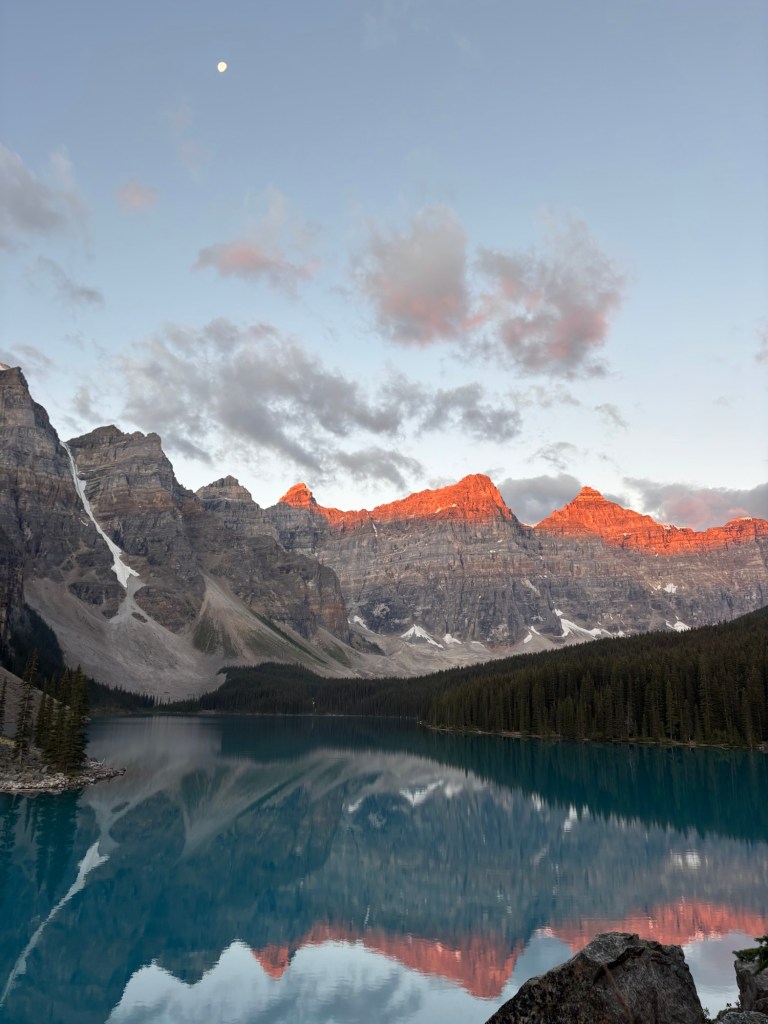
If you only do one thing, make it sunrise at Moraine Lake. The lake is famous for its position at the base of the Valley of the Ten Peaks, a dramatic wall of snow-capped summits that look almost unreal when the sun hits them.
When I visited, I booked a guided sunrise tour that picked us up in Banff at around 4:30 a.m. Even though it was pitch dark and bitterly cold, our guide made the experience so much easier. He was cheerful at that hour, gave us warm drinks and blankets for the ride, and helped us layer up before stepping out of the vehicle. That little bit of comfort set the tone for the morning.
The highlight at Moraine is climbing the Rockpile Trail, a short but rocky path that takes you to the most iconic viewpoint overlooking the lake. We got there early enough to grab a good spot before the sun came up. As we waited, our guide told us about the history of the lake and gave tips on what to do once the light hit.
The sunrise itself was breathtaking. As the sun rose behind us, the peaks across the lake turned golden, then orange, then pink, reflecting perfectly in the turquoise water below. The reflection was so clear that you could make out every detail of the mountains, trees, and shoreline mirrored back at you. I remember standing there, wrapped in a blanket, sipping hot tea, and thinking I’d never seen anything like it.
Our guide gave us around two hours at Moraine Lake, which was plenty of time to both enjoy the sunrise and explore. He suggested we walk the Lakeshore Trail, an easy, flat path that follows the water’s edge. The farther we walked, the quieter it got, until it felt like we had the forest to ourselves. Other options he pointed out included renting a canoe to paddle across the glassy water (expensive, but unforgettable), or hiking higher into the surrounding trails like Larch Valley or Consolation Lakes, which take more time but reward you with incredible views.
Moving on to Lake Louise

After soaking up Moraine, we drove to Lake Louise, arriving mid-morning. Lake Louise is more developed than Moraine, with the famous Fairmont Chateau Lake Louise sitting right on the shore. Some people prefer Moraine’s wilder, untouched feel, but Lake Louise is equally beautiful, framed by dense forest and backed by the massive Victoria Glacier.
By the time we arrived, more people had started to show up, but it was still early enough to avoid the heaviest crowds. Our guide again gave us options: we could rent canoes, hike one of the many surrounding trails, or simply stroll along the lakeshore. He pointed out the Beehive Hike for those wanting a longer challenge, and also the Lake Agnes Tea House Trail, which leads to a cozy mountain tea house overlooking Lake Agnes.
Since we only had a couple of hours, we chose to hike the Lakeshore Trail around Lake Louise and also climb to a viewpoint overlooking the Fairmont hotel. Both were relatively easy but gave us different perspectives of the lake.
The Fairmont itself is a nice stop if you want food or drink. Inside, you’ll find coffee, pastries, and proper meals—perfect if you didn’t pack snacks or just want to warm up. Sitting with a hot drink after walking around the chilly lake felt like a little luxury.
We spent around 2.5 hours at Lake Louise before heading back to Banff. By the time we left, the parking lot was packed, the lakeshore was buzzing with people, and the canoe rental line was long. I was so grateful we’d experienced it earlier.
What to Bring
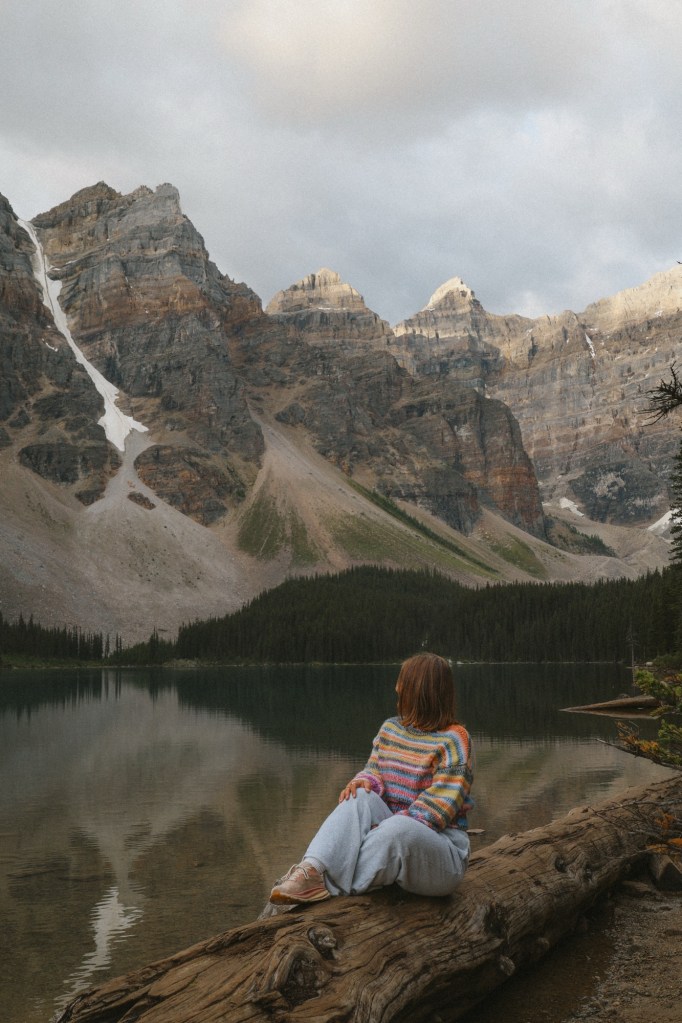
A sunrise adventure in the Rockies requires some preparation. Here are the essentials:
- Layers: Mornings are cold, even in July and August. Wear a base layer, a warm jacket, gloves, and a hat. You can always remove layers as the day warms.
- Good shoes: Hiking boots or sturdy sneakers are best. Trails can be rocky, uneven, or muddy.
- Snacks and water: Tours may provide drinks, but it’s always smart to bring your own.
- Camera gear: The light at sunrise is amazing for photos. Bring your camera, tripod if you have one, and a portable charger so that your devices and cameras can last you all morning.
- Blanket: If you’re waiting on the Rockpile, a blanket keeps you warm and makes sitting on rocks more comfortable.
- Cash or card: If you want to grab food or coffee at the Fairmont, you’ll need it.
Access and Logistics
Because Moraine Lake and Lake Louise are two of the most photographed and visited places in the Canadian Rockies, Parks Canada has put strict systems in place to protect the environment and manage the overwhelming number of visitors. If you’re planning a sunrise visit, it’s really important to understand how access works, this way you won’t waste valuable time or miss the morning light because of unexpected restrictions.
Moraine Lake
Moraine Lake has become so popular in recent years that Parks Canada completely banned private vehicle access in 2023. That means you can no longer just drive up, park, and walk to the shore like people once did. Instead, the only ways to reach the lake are:
- Parks Canada Shuttle: The main option for most visitors. Shuttles leave from the Lake Louise Park and Ride, and tickets must be purchased online ahead of time. These shuttles run frequently during the day, but they do sell out, especially in peak summer months.
- Alpine Start Shuttles: For photographers and sunrise chasers, Parks Canada now runs special early morning departures at 4:00 a.m. and 5:00 a.m. These are specifically designed for people who want to catch the first light hitting the Ten Peaks. They’re extremely popular, so booking as soon as tickets open is crucial.
- Roam Transit: If you’re staying in Banff or Canmore, the regional Roam bus service can get you part of the way, but to access Moraine Lake directly, you’ll need their Super Pass that connects with the Parks Canada shuttle system.
- Commercial Tours: Several companies in Banff and Lake Louise offer sunrise tours to Moraine Lake. While these are more expensive than the shuttle, they can be worth it for the convenience, especially if you want a guide to provide local history and photography tips.
- Cycling: For the adventurous, you can bike up the road before sunrise.
The strict access rules have helped reduce traffic congestion and environmental damage, but they also mean you need to plan well in advance. Do not show up at the road gate expecting to drive yourself, you will be turned away.
Lake Louise
Lake Louise is a bit more flexible, but still very busy. Unlike Moraine Lake, private vehicles are allowed to drive directly to the lakefront. However, there are some things to keep in mind:
- Parking: Paid parking is in effect from spring through fall. Spaces fill up extremely early, sometimes well before sunrise on summer weekends. If you’re determined to drive yourself, you’ll need to arrive in the very early hours, and even then, there’s no guarantee of a spot.
- No Overnight Parking: Some travelers think they can camp out in their car to secure a spot for sunrise, but overnight parking is strictly prohibited.
- Shuttle Options: Just like with Moraine Lake, Parks Canada runs a shuttle service to Lake Louise from the Park and Ride. Many visitors prefer this because it removes the stress of hunting for parking at dawn. Shuttle tickets can be booked online, and some packages allow you to connect Lake Louise and Moraine Lake in one trip.
- Tour Buses: Guided tours are another way to simplify the process. Many companies offer early morning pickups from Banff or Canmore that include Lake Louise. This is a good option if you don’t want to juggle shuttle schedules.
- Walking and Cycling: If you’re staying in the village of Lake Louise, you can actually walk or bike up to the lake.
Because Lake Louise still allows private vehicles, it often feels more accessible than Moraine Lake. But that accessibility comes at a cost, the parking lot can be chaotic, and the lakeshore is usually crowded within minutes of sunrise. Many travelers who want a calmer morning experience find that booking a shuttle or staying in Lake Louise village makes things smoother.
Why It’s Worth the Effort

It may seem like a lot, booking shuttles, waking up at 3:30 in the morning, layering up for the cold, and carrying all your gear. But when you’re standing on the Rockpile watching the first sunlight hit the Ten Peaks, or walking along the turquoise waters of Lake Louise before the tour buses arrive, you’ll understand why people travel from all over the world for this moment.
The restrictions, while inconvenient, are part of what keeps these lakes so pristine. Fewer cars mean less traffic, less pollution, and more protection for wildlife. In the end, it makes the experience better.
For me, this morning at Moraine and Lake Louise was the highlight of my trip to Banff. It’s one of those rare experiences that feels perfectly balanced: a little adventure, a little planning, and a lot of natural beauty. If you prepare well, you’ll not only see two of the most beautiful lakes in the world, and you’ll experience them at their absolute best.
 Livslifeoncam
Leave a comment