
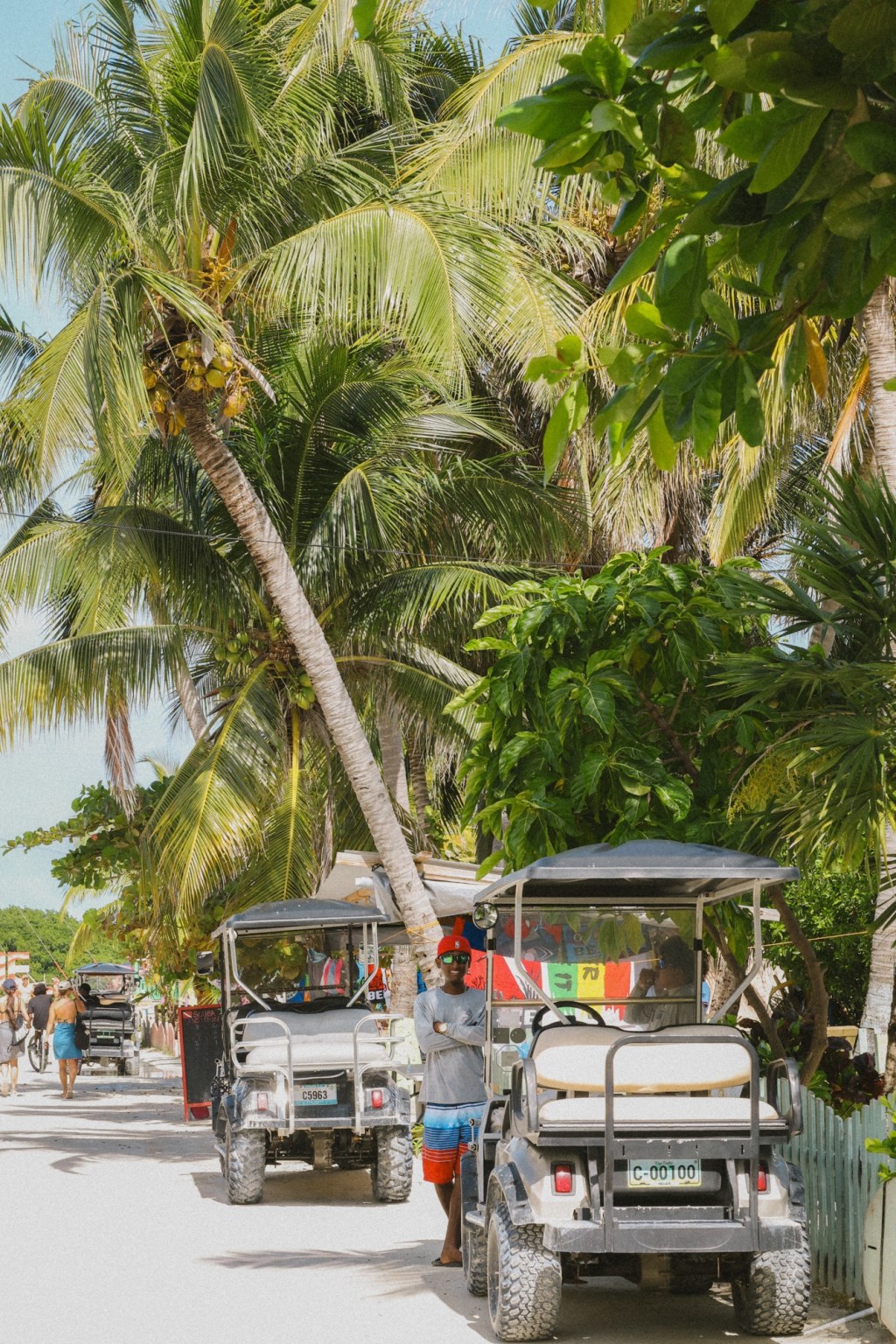
Belize was a country that I honestly didn’t know much about before visiting, and I was genuinely surprised by how rich the culture was and how diverse the population felt once I arrived. From my original perception, I had assumed it would feel closely tied to the cultures of its Central American neighbors. But to my surprise, it felt completely different. If anything, the atmosphere reminded me more of a Caribbean island than mainland Central America.
The culture in Belize is incredibly complex, largely because of its history. What I found fascinating is how that history still shapes the country today. You can see it reflected in everything from the languages spoken, to the food, to the music, and even the pace of daily life. On top of that, there has been a steady influx of expats who now live in Belize, which has added yet another layer to its cultural makeup.
All of these influences have created a population that feels incredibly diverse, and in my opinion, that diversity really shapes the overall vibe of the country. Especially from a tourist perspective, you feel like you’re experiencing a blend of cultures rather than just one dominant identity. It gives Belize a unique energy that sets it apart from anywhere else in the region and makes exploring it feel that much more dynamic.
Location & History
To start off, Belize is located right in Central America, bordered by Mexico, Guatemala, and not far from Honduras. Geographically, it sits right on the mainland. But culturally, it feels much more aligned with the Caribbean islands, especially as it looks out onto the Caribbean Sea. That coastal influence really shapes the lifestyle, energy, and identity of the country in a way I wasn’t expecting before visiting.
Language
Because of Belize’s unique history and past ownership, its culture is incredibly distinct. One of the most fascinating facts is that the official language is actually English, which immediately sets it apart from most of its Central American neighbors. This is because Belize was formerly a British colony, and that colonial influence is still very present today.
What’s interesting, though, is that while English is the official government language and the primary language used in schools and workplaces, most locals are bilingual or even multilingual. English is typically their first language, but in everyday conversations with family and friends, many people speak other languages. The most common ones you’ll hear are Spanish and Creole.
Belizean Creole is especially unique. It has similarities to Jamaican Patois in the sound and the rhythm, but it has its own slang, structure, and identity that’s very specific to Belize. Hearing it spoken throughout the country adds another layer to the cultural experience and reflects just how truly blended the nation’s roots really are.
A lot of this linguistic and cultural diversity comes from Belize’s history tied to trade routes and the slave trade, along with its proximity to Spanish-influenced Central American countries. Over time, these overlapping influences mixed together, shaping the languages, traditions, and cultural norms that now define modern-day Belize.
Cultures
One of the most prominent cultural groups I noticed in Belize was the Creole population, which is rooted in African and Caribbean heritage. Creole culture plays a huge role in shaping the country’s identity, especially along the coast and in urban areas. Many Creole people speak Belizean Creole as their primary conversational language, and their influence is reflected in the laid-back, island-style lifestyle you feel throughout the country. The music, food, humor, and overall pace of life often carry that relaxed Caribbean energy.
Then you have the Mestizo population, which is another major demographic group. Mestizo culture blends Indigenous ancestry with Spanish influence, both culturally and linguistically. Many Mestizo families have roots not only in Belize but also in neighboring Guatemala and Mexico, which makes sense given the shared borders and migration patterns over generations. Spanish is commonly spoken within these communities, and their traditions, cuisine, and celebrations reflect that mixed heritage.
In addition to that, there are several Indigenous Maya communities still living throughout Belize and the wider Central American region. These communities are especially prevalent the closer you get to the Guatemalan border. Many Maya groups continue to speak traditional languages and maintain long-standing cultural practices that have been preserved for generations. Some of the Maya groups you’ll find in Belize include the Yucatec, Mopan, and Q’eqchi’. Visiting areas where these communities live gives you a deeper look into the country’s ancient roots and living history.
On top of these groups, Belize also has a significant population of immigrants whose families have lived in the country for decades. This includes East Indian, Chinese, and Middle Eastern communities. In many of the islands and more tourist-heavy destinations, you’ll notice that a large number of shops, restaurants, and markets are run by these families. They’ve become an integral part of the local economy and daily life, often having been in Belize for multiple generations.
Another unique group that plays a major role in Belizean society is the Mennonite population. They are a substantial part of the country’s agricultural and labor workforce and contribute heavily to the national economy. Many Mennonite communities still live very traditional lifestyles, similar to what you might picture in more conservative settlements. However, there are also more modern Mennonite groups who engage more directly with the broader community and have integrated into the national culture while still maintaining aspects of their heritage.
Across the country, despite Belize being relatively small, these cultural groups are both regionally concentrated and intermixed. As you get closer to certain borders or rural areas, you’ll find more dominant cultural presences, like Maya communities near Guatemala. Meanwhile, along the coastline and in larger cities, the population tends to be more blended. What stood out to me most is that while communities maintain their distinct identities, there’s still a visible mix of cultures everywhere you go, which is what makes Belize feel so uniquely diverse for its size.
Personal Experiences
What stood out most to me were the conversations I had with locals. So many people spoke multiple languages, had parents from different cultural backgrounds, or had family ties to entirely different regions of the world. Every person seemed to have a different story, a different heritage, and a different connection to Belize. As a traveler who didn’t previously realize how diverse the country was, it made the experience feel even more eye-opening.
In terms of day-to-day culture, the Creole influence, especially on the islands, felt the most prominent to me. You really feel that laid-back, reggae-influenced, go-slow lifestyle. The energy is relaxed, social, and rooted in enjoying life. That Caribbean influence shows up strongly not only in the pace of life but also in the music and, especially, the food.
The cuisine felt far more Caribbean than Central American in many places I visited. Of course, you can still find traditional Central American dishes, but I was surprised by how dominant Caribbean flavors and cooking styles were, particularly along the coast and islands.
Expats
On top of the diverse communities of people who are native to Belize, there’s also a large population of expats living there. Many come from North America, especially Canada and the United States, as well as various European countries. But the most prominent expat groups I came across were definitely Americans and Canadians, and there are a few clear reasons why.
First, Belize is geographically close to both countries, making it an easy relocation option without feeling too far from home. It’s also an English-speaking country, which removes one of the biggest barriers people often face when moving abroad. Expats can integrate into daily life, run businesses, and build communities without needing to learn a new language, while still feeling like they’re getting that tropical Caribbean lifestyle.
Another major draw is the lower cost of living, especially compared to other Caribbean destinations. People are able to live along the coastline or near the jungle, surrounded by incredible nature, while maintaining a more affordable lifestyle than they might back home. Belize also has residency programs that make long-term stays more accessible, which has encouraged even more foreign investment, homeownership, and business development over the years.
Final Thougts
I found it really fascinating learning about this additional layer of Belize’s demographic makeup because I truly had no idea how internationally influenced the country was before visiting. When you combine the already diverse local population with the volume of expats living there, it creates an incredibly mixed cultural landscape
Now, I didn’t spend enough time in Belize to form a fully comprehensive perspective on this, but I did find it interesting speaking with locals about foreign ownership of land and businesses. I saw many homes, resorts, and developments that were clearly built and owned by expats. Some of them felt very separate from local communities and didn’t reflect traditional Belizean architecture or lifestyle.
On Caye Caulker especially, a large portion of businesses appeared to be American-owned rather than locally owned. There were rows of massive homes set back from the main areas that felt disconnected from the island’s overall vibe. Architecturally and culturally, they didn’t really blend into the local environment, and it gave the impression that some expats were living in Belize without fully immersing themselves in Belizean life.
It made me curious to spend more time in the country to better understand the impact of expat living on local communities, particularly for Belizeans trying to run their own businesses. I can imagine it creates both opportunities and challenges.
So if you do find yourself traveling to Belize, I’d definitely recommend seeking out locally owned restaurants, accommodations, and tour companies when possible. Supporting local businesses helps keep the culture and economy rooted in the people who call Belize home.
Overall, Belize is an incredibly fascinating country that I knew very little about before visiting. I’m so glad I took the time to speak with locals and learn more about the history, cultural diversity, and lived experiences that shape the country today. Understanding how its past has influenced its demographics, languages, food, and music made the trip feel so much more meaningful and gave me a deeper appreciation for just how layered Belize’s identity really is.
 Livslifeoncam
Leave a comment