
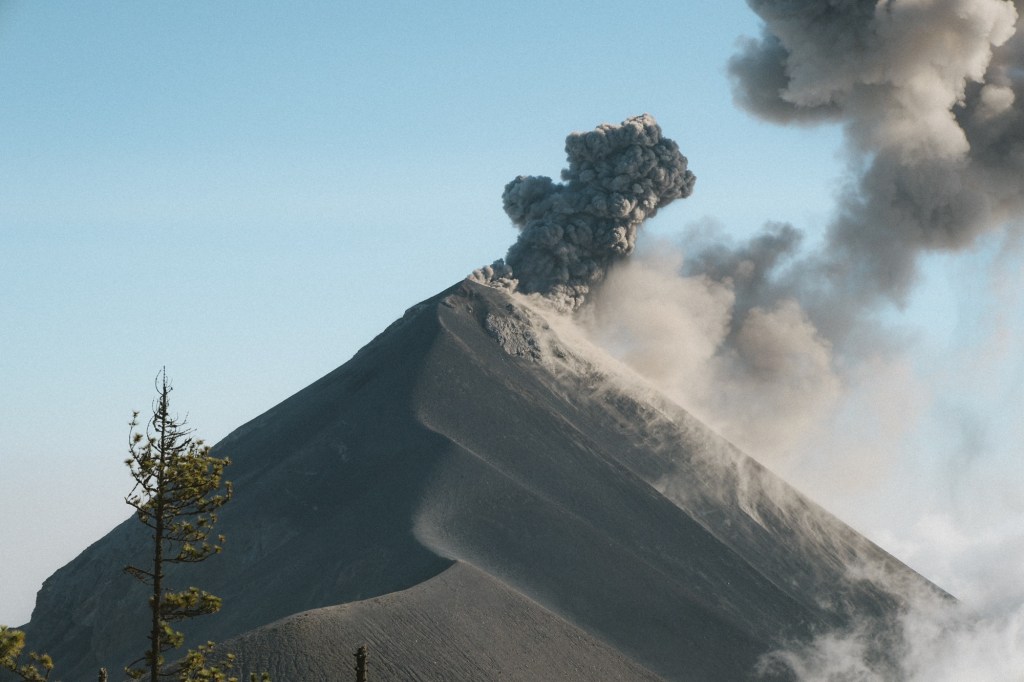
If you spend any time online, whether on travel blogs, TikTok, Instagram, Pinterest, or even just checking the weather, you have probably seen the iconic hike of the active volcano in Guatemala. This hike has gone super viral, and it is worth all of the hype. It is an absolutely unreal experience, but there are some things you should know before going, including how to prepare and what to expect from this adventure.
Starting with what this hike actually is, where it is located, and what it includes. This is the summit of Acatenango, an overnight two days one night experience. The hike involves reaching the summit, as well as sleeping at base camp a few dozen meters below it. During these two days and one night, you also have the option to do an additional evening hike to the active volcano, Volcán de Fuego.
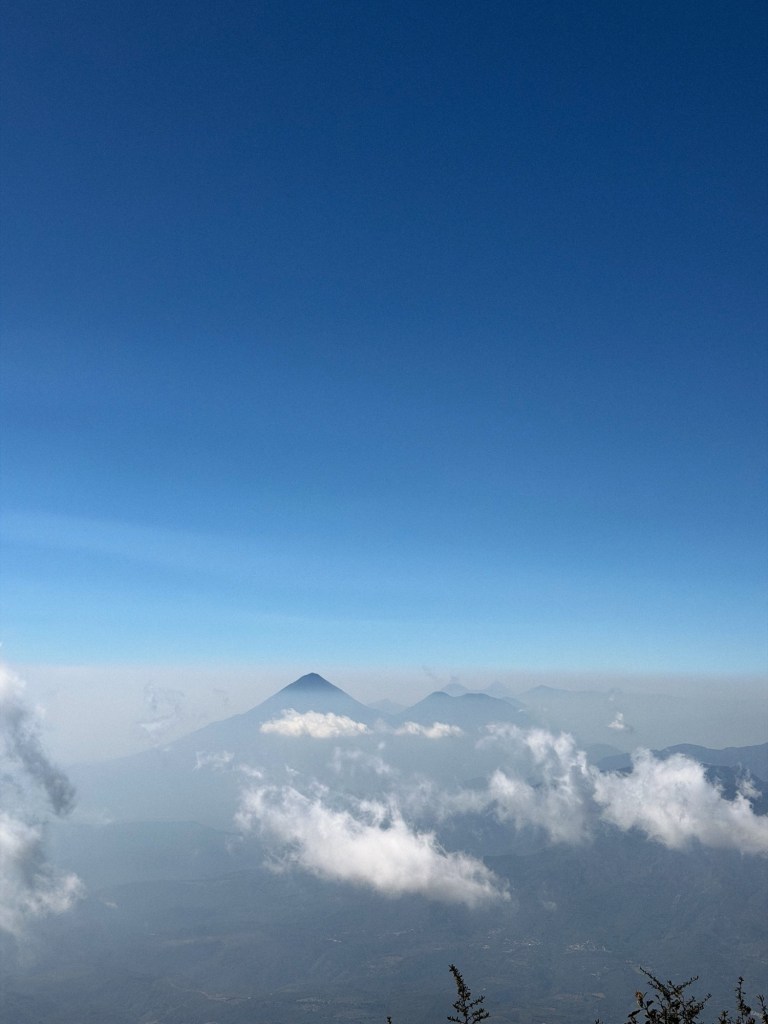
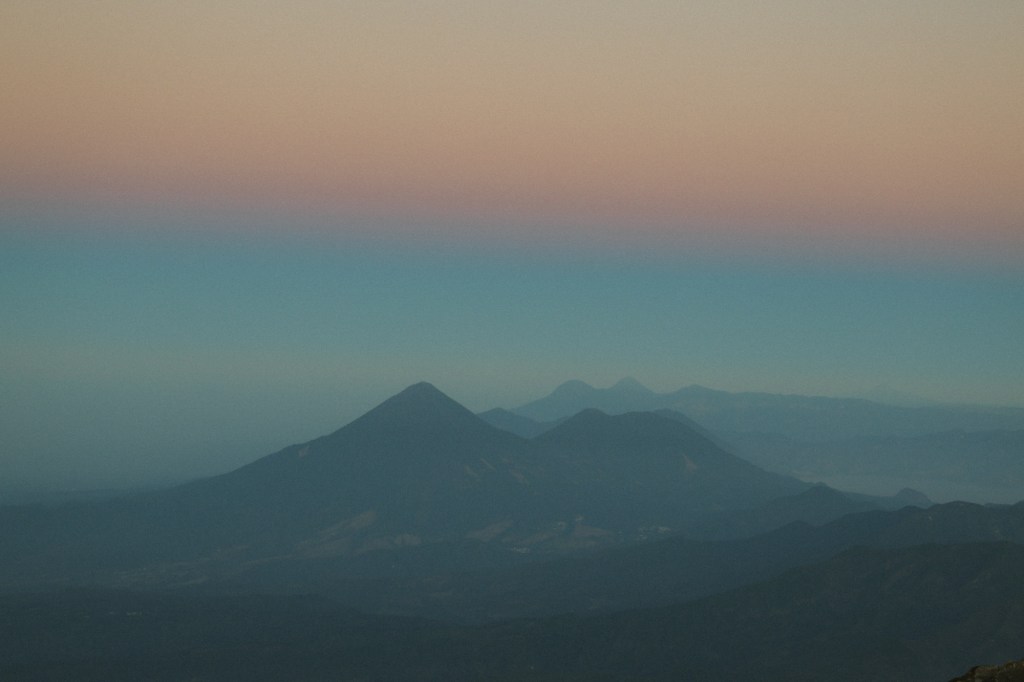
This hike is undeniably beautiful from every direction. The entire way up, the way down, around base camp, at the summit, and across toward Fuego, the views are incredible. It is located about an hour and a half from the old capital city of Antigua Guatemala. From base camp, you can see multiple volcanoes scattered across the country, as well as the famous Lake Atitlán, which is only a couple of hours away. If the weather is clear, you can also see the entire city of Antigua and other surrounding towns. You will experience both a stunning sunset and sunrise, and at night you will see some of the most beautiful stars and constellations while watching an active volcano erupt every few minutes.
Sounds incredible, right? Let me explain what it actually takes to reach base camp, hike Fuego, watch the sunrise summit, and return down the mountain, along with how I recommend preparing.
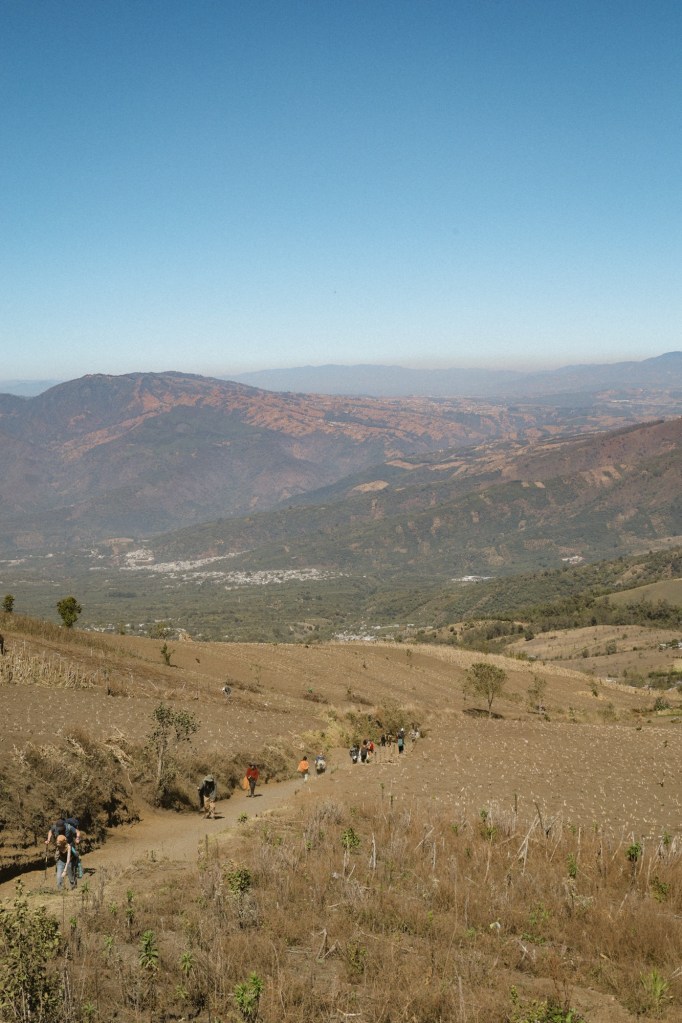
The hike to base camp takes roughly 4 to 6 hours from the trailhead, which is about an hour and a half outside of Antigua. This hike is not easy. The entire climb is uphill on a very steep incline with uneven and unstable ground. You are hiking up a dormant volcano, and the landscape reflects that reality. The terrain is mostly loose rocks, dirt, gravel, and shifting footing. Every step you take uphill means you are also fighting the surface beneath you.
The ascent is truly a mind over matter experience. It is difficult because it is long, steep, and can be very hot, especially during the first couple of hours. But it is not impossible. You just have to stay mentally focused, pace yourself, and use the resources around you. Throughout the hike to base camp, the guides will stop frequently. These breaks are partly because of the incline and length of the hike, but the most important reason is the altitude change. You are climbing to around 13,000 feet in elevation and gaining thousands of feet over the course of the hike. Taking breaks, drinking water, and giving your body nutrients is extremely important at this elevation.
The distance to base camp is about 6.5 km. It is almost completely uphill until the final few minutes when you reach camp. So yes, the hike to base camp is hard and long, but it is also completely doable and incredibly rewarding. I will talk later about how I recommend preparing and what I suggest bringing to make it more comfortable.
The hiking does not stop at base camp if you want more.
This part is slightly more opinionated, and I may write another article about it, but for me the decision was simple. I was already on the mountain. When else would I stand on top of a dormant volcano looking directly at an active one while having the opportunity to hike it?
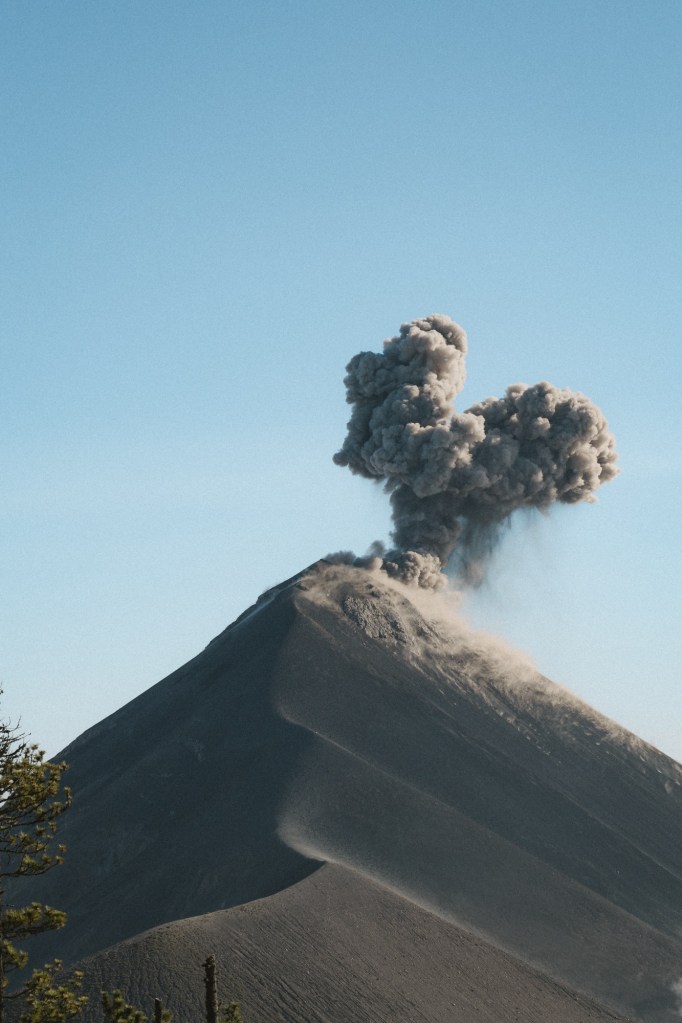
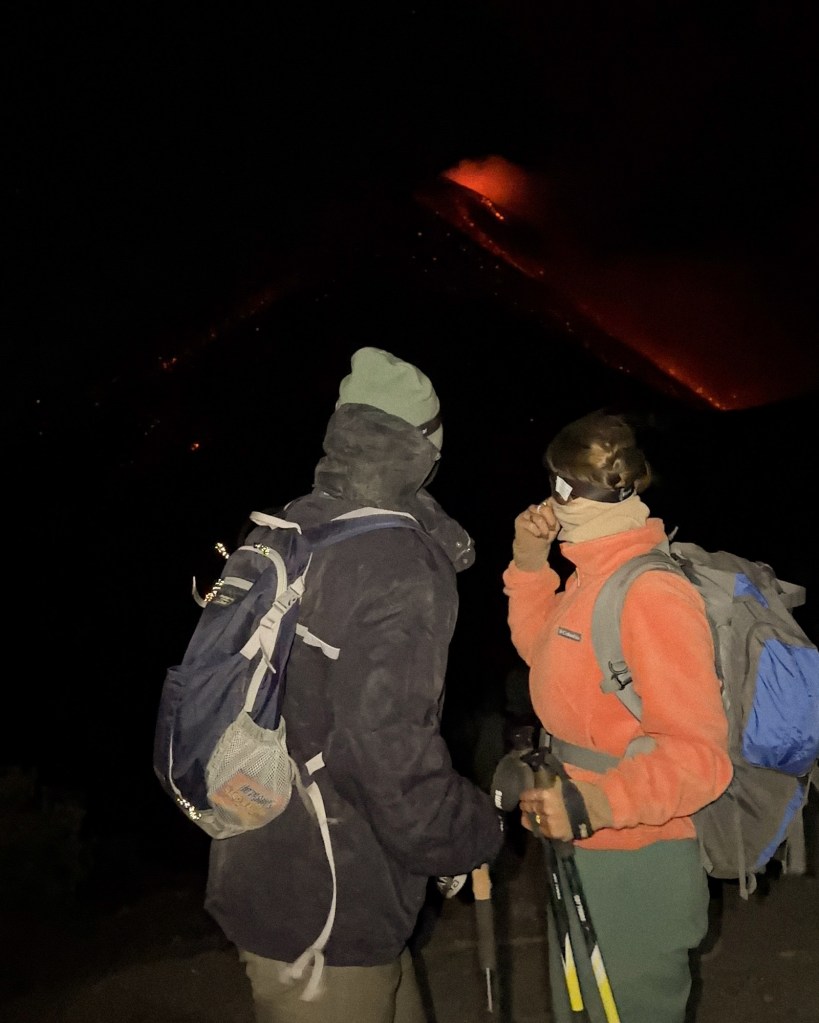
Many people in our group stayed at base camp. We arrived around 4 PM, and most people relaxed, had dinner, and went to bed early. If you want something more, you can do the additional hike to Volcán de Fuego and reach the ridgeline area where it is considered a safe viewing distance from eruptions that occur every few minutes.
This hike is shorter but more strenuous and slightly more technical. By this point, your body is already fatigued from the base camp ascent. The route begins by descending Acatenango into the valley between Acatenango and Fuego. After descending, you begin ascending Fuego. Once you reach the top ridge of Fuego, you have time to watch eruptions before descending again and then climbing back up Acatenango to base camp.
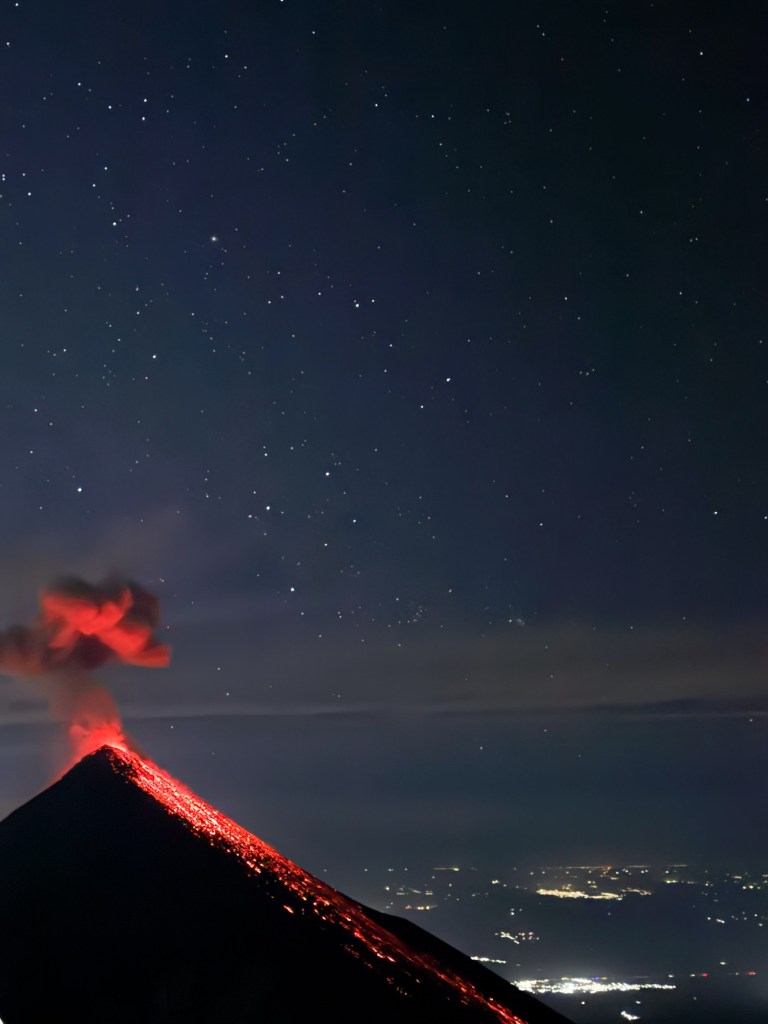
The sequence is essentially up, down, up, down, finishing with an uphill climb back to camp. The majority of this hike is done in darkness. Timing depends heavily on when your group reaches base camp and weather visibility.
Our group had excellent weather conditions. After arriving at base camp, we left about an hour later for Fuego. Our group was large, roughly 35 to 40 people, with a wide range of fitness levels. It was clear early on who would lead the group and who would trail, but there was no pace separation.
Because of this, we had to wait frequently during breaks. This extended the hike duration significantly. We left base camp at 5 PM and returned around 10:30 PM. For many groups this hike takes about 4 to 5 hours, but ours was longer due to group pace.
We descended Acatenango during sunset, which was absolutely beautiful. When we reached the base of Fuego and prepared to ascend, it became dark and headlamps were necessary. The temperature dropped very quickly after sunset, and everything afterward was done in complete darkness.
After returning to camp, you eat, rest, and have the option to wake up around 4:15 AM to 4:30 AM to summit Acatenango again to watch sunrise.
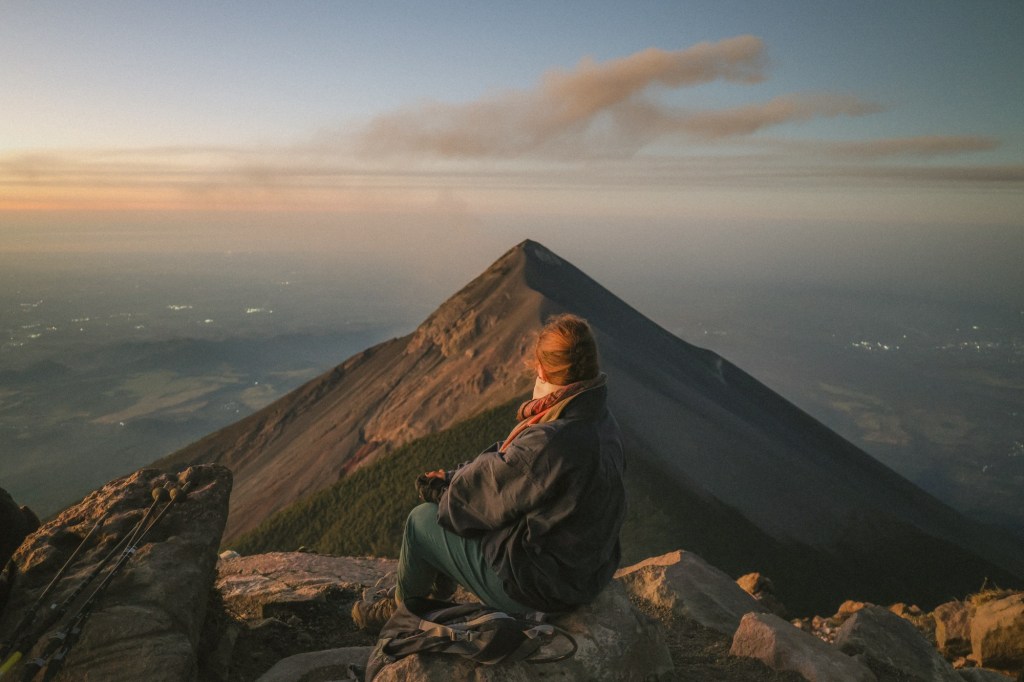
Only about 12 people in our group chose to do this, which honestly surprised me. If you are hiking all the way to base camp, I strongly believe you should attempt the sunrise summit. It was hands down the most beautiful moment of the entire experience.
The summit climb takes about 30 minutes with breaks. It is steep but not nearly as physically demanding as the base camp ascent. It is done in darkness, but it is manageable. Once at the summit, you watch sunrise while still seeing eruptions in the distance. The visibility across the country was incredible. It felt truly magical.
After the summit, you hike back down to base camp, gather your belongings, eat, and begin descending the mountain.
For me, this was the hardest part.
The first hour of descent feels amazing because you are moving faster and enjoying going downhill. But eventually you realize just how steep the ascent truly was and how intense the descent becomes. The terrain is loose gravel and unstable. Carrying a backpack while descending places significant strain on your body.
On the way up, I felt strong and confident. But on the way down, I started feeling real discomfort in my body because of the angle, balance, and constant downward pressure.
At certain points, we were almost running downhill because it was easier than carefully stepping on deep gravel sections. My toes were pushed against the front of my boots, and my knees and hips were very uncomfortable.
I do not hear many people talk about this part of the hike, but I was extremely sore the next day purely because of the descent alone. If you have knee or hip issues, be cautious.
You will probably think during the ascent about how steep the trail feels and wonder how you will descend later. It is not the most enjoyable section, but it is absolutely worth it.
If you are fit and capable, I truly recommend attempting all three parts: base camp, Fuego, and sunrise summit. I cannot imagine my experience if I had skipped any of them.
There are many tour companies offering the same two days one night itinerary to Acatenango. You will find options throughout Antigua Guatemala and online. I chose Soy Tours because of good reviews and slightly better accommodation options.
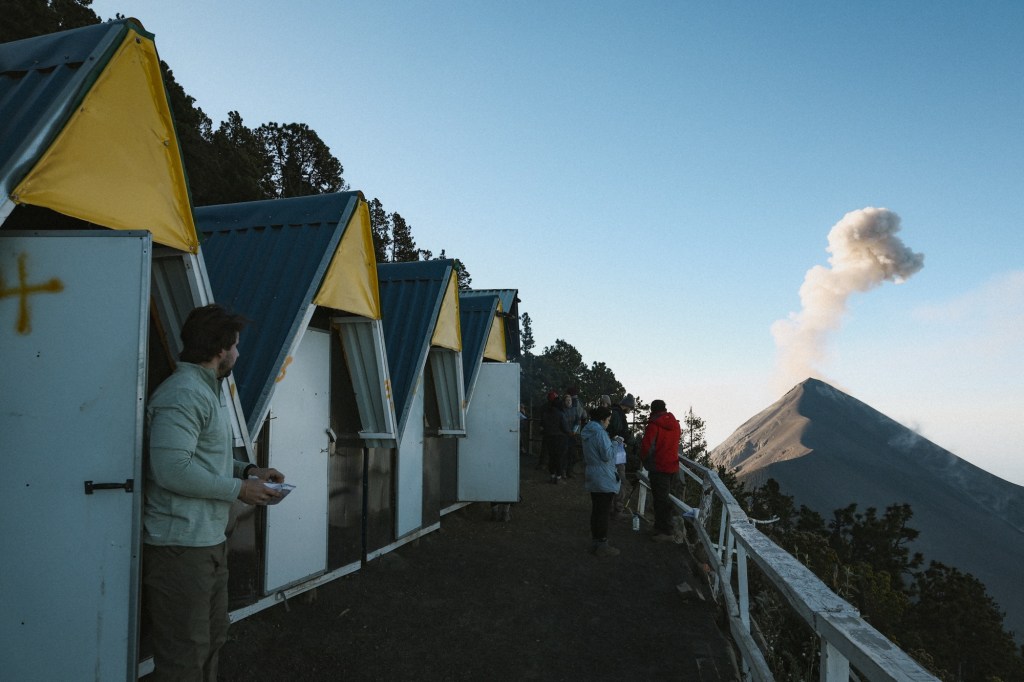
We selected the simple package, and it was perfect. We stayed in a two person cabin at base camp with a thin mattress and sleeping bags. It was exactly what you need when sleeping at high altitude.
The cost was 660 quetzales per person (about 86 USD). This included transportation from Antigua, hiking services, accommodation, and meals. Rental items such as scarves, heavy jackets, pants, and gloves were included. Hiking poles and backpack rentals were additional.
I cannot recommend hiking poles enough. Some companies provide only basic walking sticks instead of real poles. Make sure you get proper hiking poles because they are essential for safety, especially on the descent. I genuinely believe I would have fallen without them.
The group size was my only real complaint. There were about six guides for 35 to 40 hikers, and there was no separation between faster and slower hikers. Within the first 20 minutes it was already clear who would be leading and who would be trailing. We had to wait frequently, which made the hike longer and reduced sleep time. Smaller group tours may be better if you prefer a faster pace.
You must carry your own water, about 4 liters per person. Make sure your backpack can handle that plus your layers and personal items. We left our larger luggage at the office overnight.
The Fuego hike costs an additional 250 quetzales and is worth every penny. The sunrise summit is included in the base price.
Pack smart and pack light. I hiked in hiking pants, boots, and a short sleeve workout shirt. Inside my backpack I carried thermal layers, extra merino wool socks, a fleece jacket, and a heavier jacket rented from the tour company. I also brought gloves, a hat, and a face or neck covering.
Bring something to cover your face. Wind at the summit and gravel dust during descent make this very helpful. Hiking boots or proper trail runners are highly recommended. Sneakers tend to slip on the gravel terrain.
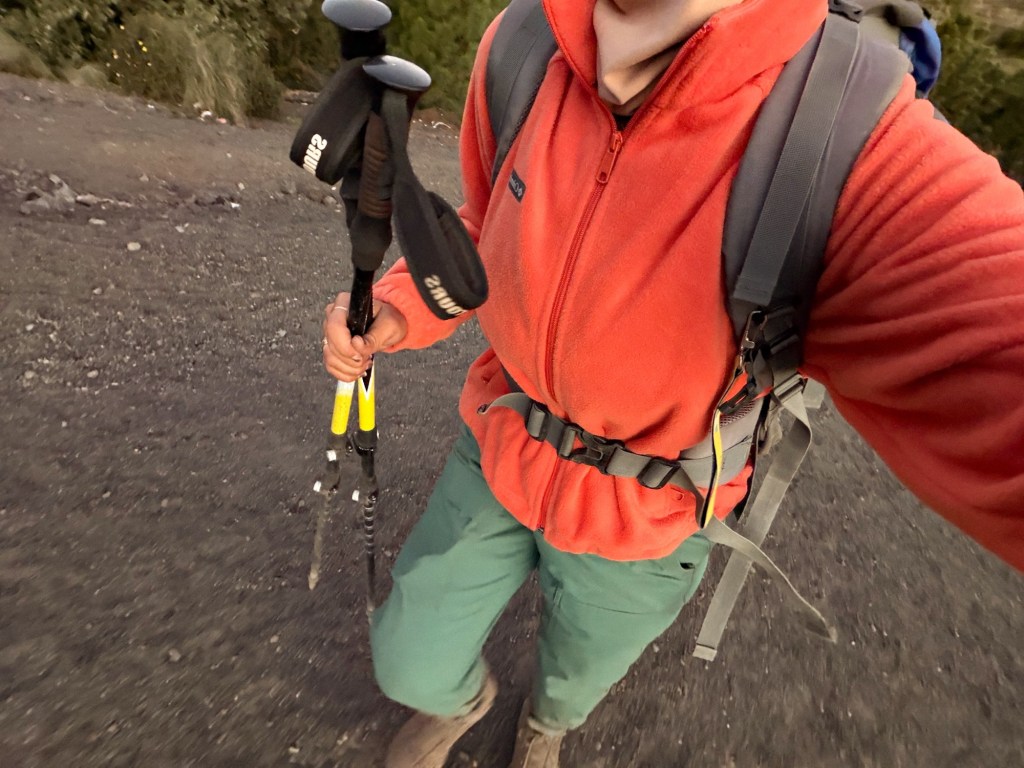
I carried 4 liters of water, snacks, and electrolytes. Between me and my significant other, we packed candy, nuts, and trail mix for quick energy boosts. We also brought simple toiletries, sunscreen, baby wipes, portable chargers, and camera equipment.
We did not bring unnecessary items because you carry your backpack the entire hike unless you hire a porter. Personally, I chose not to hire a porter. For someone active and in shape, this hike is very manageable. I noticed many people using porters were still struggling even without their bags, which made me feel they might not have been fully prepared. That is just my opinion.
If you are fit and prepared, carrying your own bag is absolutely possible. As you drink your water, your pack will become lighter.
I did not specifically train for this hike, but I maintain an active lifestyle. I run regularly, walk often, and do strength training focused on legs and cardio. This helped significantly.
In the days before the hike, stay hydrated and eat well. Drink electrolytes and fuel your body properly. I recommend flying into Guatemala City and spending at least two nights in Antigua Guatemala before hiking to adjust to altitude.
If you are sensitive to altitude, you can consider altitude sickness medication. I did not take any and only experienced a mild headache, which was likely from dehydration. The guides also carry medication in case of emergencies.
Know your limits in terms of cardio, strength, and comfort outside your zone. This hike is not luxurious. It is physically demanding. It is cold at the summit. You will likely sleep in multiple layers inside your sleeping bag and may not sleep well.
But if you are fit, capable, and looking for a real adventurous experience, this hike is completely worth it. It was one of the most authentic experiences of my life, and I highly recommend it for anyone who feels ready to summit a difficult but achievable volcano.
 Livslifeoncam
Leave a comment