
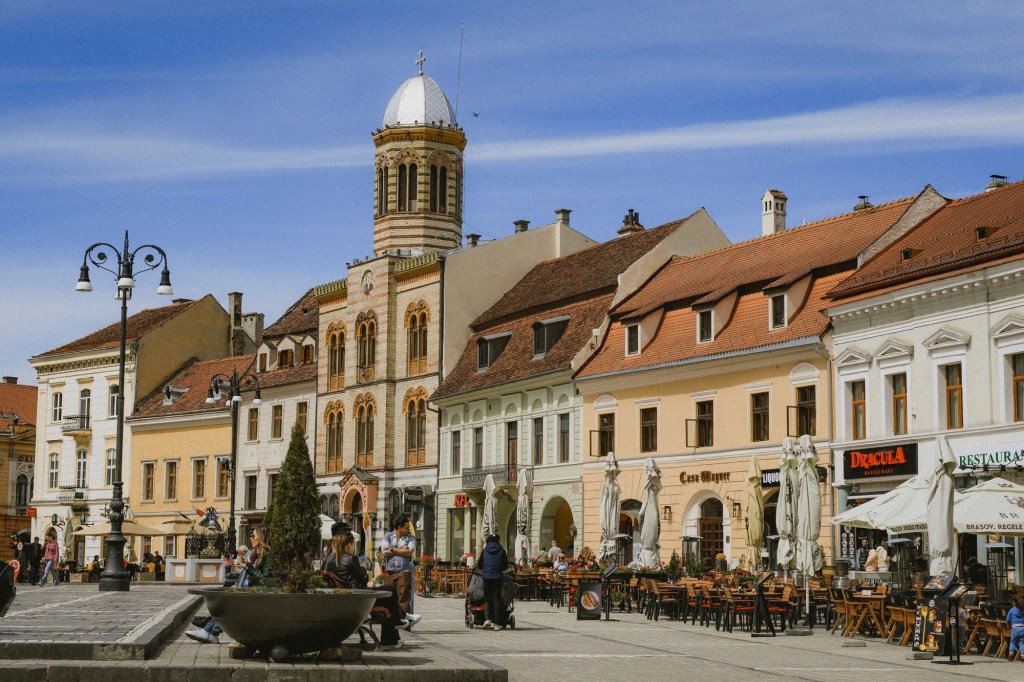
If you are looking for a fairytale European destination, but you are tired of the crowds, the high costs, and the congestion of the more popular cities, then Transylvania might honestly be the perfect place for you.
I recently traveled through parts of Romania, and it ended up being one of the biggest surprises of my time in Europe. Romania blends together so many of the things people love about European travel: beautiful old towns, café culture, mountain scenery, history, nightlife, walkable cities, and affordable prices. It is a region I honestly did not know much about before visiting, but after spending time there, I realized how overlooked it really is compared to many of the more famous destinations around Europe.
So let’s dive into the unique, slightly spooky, but incredibly charming region of Transylvania.
Transylvania genuinely feels like stepping into a storybook, but without the overwhelming tourism that often comes with many Western European cities. You still get the European café culture, the huge open squares, outdoor restaurant seating, cobblestone streets, and beautiful architecture, but everything feels calmer, slower, and more authentic. There is a peacefulness to the region that makes it really enjoyable to explore.
At the same time, Transylvania has a very distinct atmosphere compared to other places in Europe. The gothic and medieval history throughout the region creates this dramatic, mysterious feeling almost everywhere you go. Between the old churches, colorful buildings, castle towers, foggy mountain scenery, and centuries of history, the entire region has this whimsical energy that makes it feel very different from the rest of Europe.
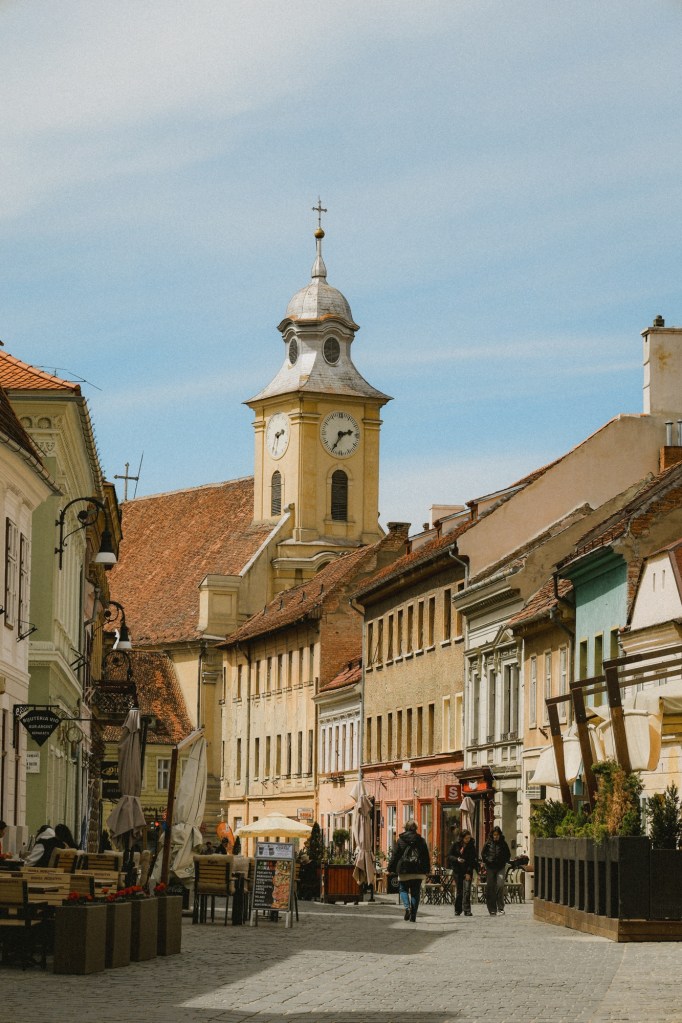
One of the best parts about Romania overall is how affordable it is compared to much of Europe. You can actually enjoy yourself without constantly worrying about prices. Whether it is food, coffee, drinks, transportation, or accommodations, everything feels much more manageable financially. You can sit in a beautiful town square, order dinner, drinks, dessert, and coffee, and still spend far less than you would in places like Paris, Amsterdam, or London. It allows you to slow down and really enjoy the experience rather than rushing through it.
Romania also surprised me because it felt like so many different worlds blending together at once. In one moment you are surrounded by centuries-old architecture and medieval squares, and in the next you are sitting in a modern café or walking through a more contemporary city center. Some places feel lively and developed, while others feel untouched and almost frozen in time. That contrast is part of what makes the country so interesting to explore.
Traveling Through Romania by Train
One of the easiest and most enjoyable ways to get around Romania is by train. From Bucharest heading into Transylvania, the routes are simple, well connected, and make it easy to move between the main cities in the region.
What really stands out is the journey itself. As you leave Bucharest and head north, the landscape slowly begins to shift. You move from a busy capital into open countryside, passing small villages, farmland, and forested areas before eventually reaching the mountains. The closer you get to Transylvania, the more dramatic the scenery becomes, with the Carpathian Mountains starting to frame the horizon.

It is not a high-speed, ultra-modern rail system, and that is actually part of the experience. The trains feel more local and grounded, and you get a real sense of the country as you travel through it. Instead of being isolated from the landscape, you are constantly moving through it, watching Romania unfold outside your window.
On top of that, train travel in Romania is extremely affordable compared to Western Europe, which makes it easy to explore multiple cities without thinking too much about transportation costs.
Bucharest
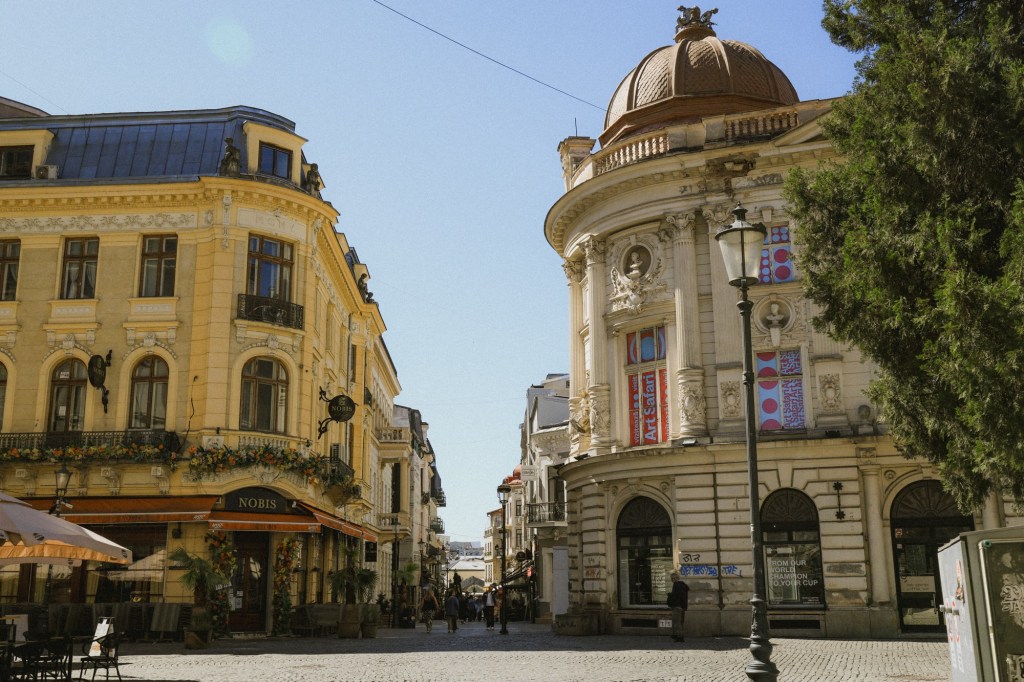
Most likely, your journey through Romania will begin in the capital city, Bucharest. Bucharest is a really interesting city because it feels like a blend of multiple different eras all at once. You can see traces of Parisian inspired architecture, communist history, modern nightlife, and Eastern European culture all mixed together throughout the city.
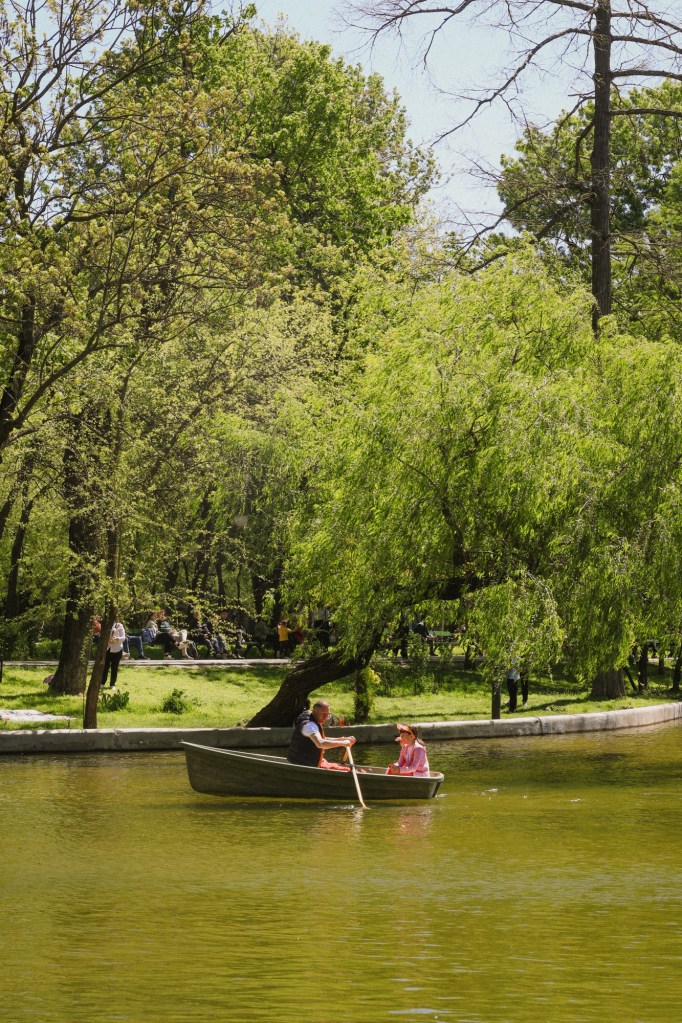
The city has huge parks, wide boulevards, old buildings, trendy cafés, local bakeries, nightlife, and beautiful open squares. There is a nice balance between old and modern throughout Bucharest, which gives it a very unique atmosphere compared to many other European capitals.
The Old Town area is especially lively at night, filled with restaurants, bars, outdoor seating, and narrow streets packed with energy. During the day, the city feels much calmer and more relaxed, making it a great place to wander before heading deeper into Transylvania.
One of the best parts about Bucharest is how easy it is to get into the city from the airport. It makes for a smooth start to your trip before heading north. From Bucharest North Station, you can easily take trains directly into Transylvania.
Brașov
From Bucharest, I would highly recommend heading to Brașov first. After about a 2.5 hour train ride through the mountains, you arrive in one of the most charming cities in Romania.
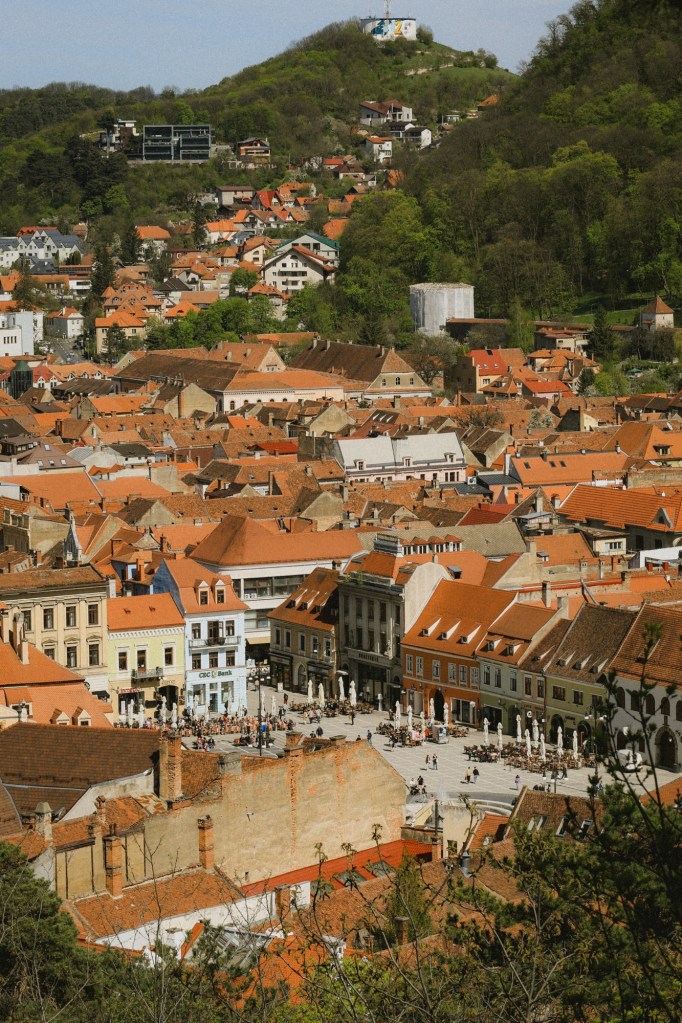
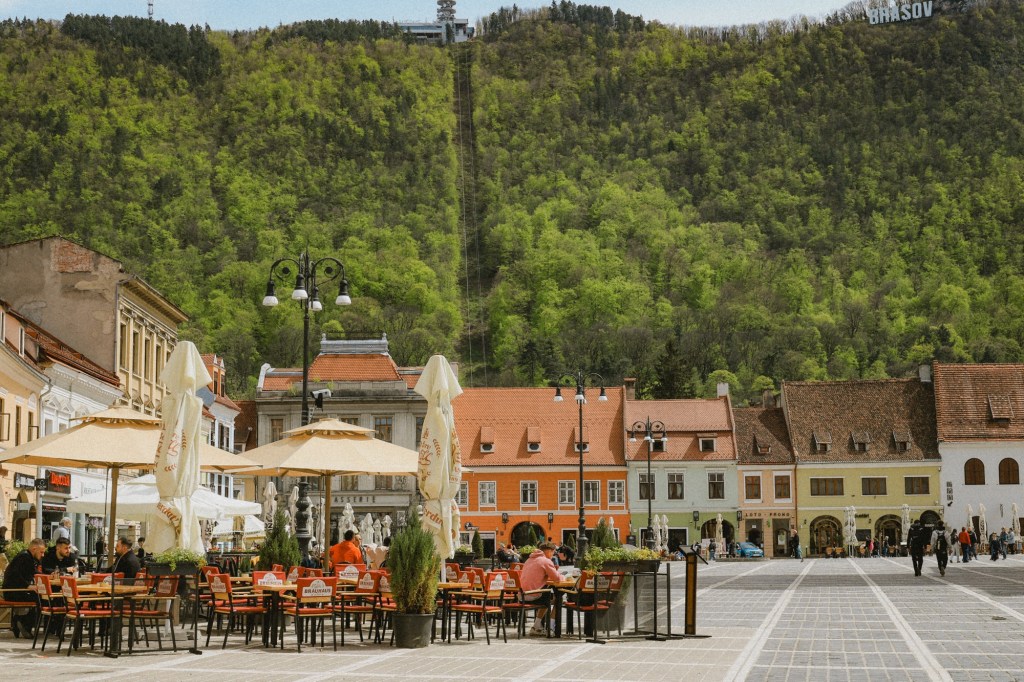
Brașov is honestly stunning. Surrounded by the Carpathian Mountains, the city has colorful buildings, medieval streets, and some of the best old town scenery in the region. The atmosphere is lively but still relaxed, which makes it a really easy place to slow down and spend a few days. The main square is full of cafés, bakeries, and restaurants with outdoor seating, and it is the kind of place where you can sit for hours just watching the city move around you. Everything feels very aesthetic and walkable.
Some highlights include Council Square, the Black Church, the narrow alleyways hidden throughout the old town, and the viewpoints overlooking the city. Nearby, Tampa Mountain adds even more to the scenery and gives you a great perspective over Brașov.
Brașov is also a great base for exploring the surrounding area. You can take day trips into the mountains, go hiking depending on the season, or visit Bran Castle, which is often associated with the Dracula legend. While it is more touristy, it is still an interesting stop if you are already in the region. Another unique experience nearby is the Libearty Bear Sanctuary, one of the largest bear sanctuaries in the world, located around 40 minutes from the city.
But honestly, one of the best parts of Brașov is simply slowing down. Sitting in the square, grabbing a coffee or pastry, and taking in the mountain town atmosphere is what makes it feel so special.
Sibiu
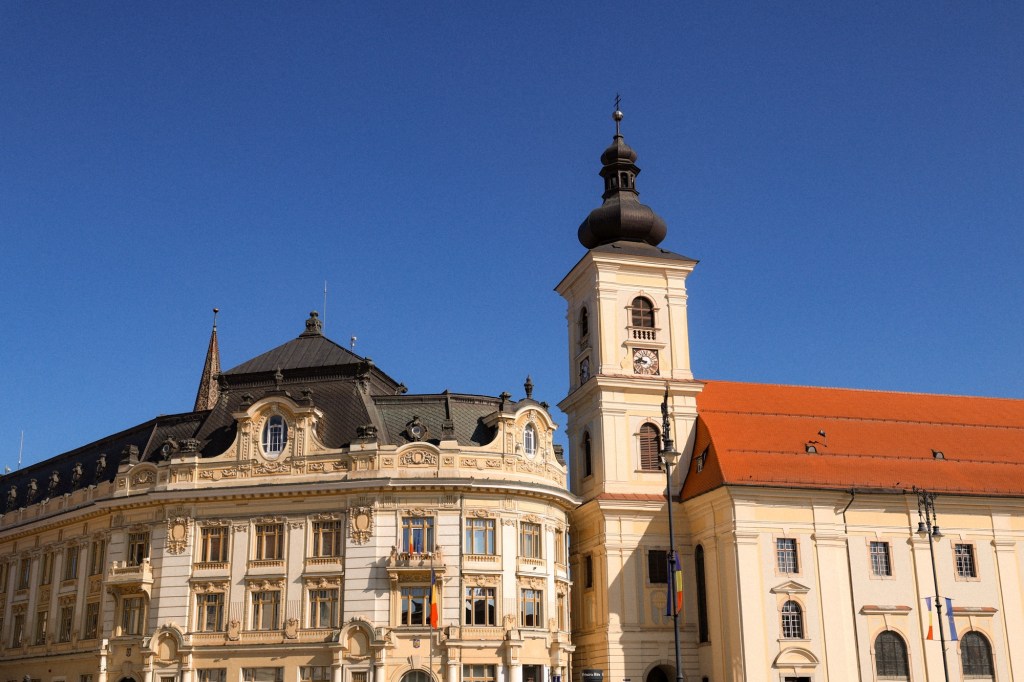
After Brașov, continuing toward Sibiu is absolutely worth it. Sibiu feels a bit quieter and even more peaceful, with a slower rhythm that makes it incredibly easy to relax into.
The city is known for its unique rooftops, where small attic windows are built into the slanted roofs in a way that makes them look like eyes watching over the streets below. It is a strange but memorable detail that gives Sibiu a very distinct identity.
Beyond that, Sibiu is just incredibly beautiful. The pastel colored buildings, cobblestone streets, open squares, and historic architecture make it feel almost like a living museum. It is extremely walkable and very photogenic in every direction.
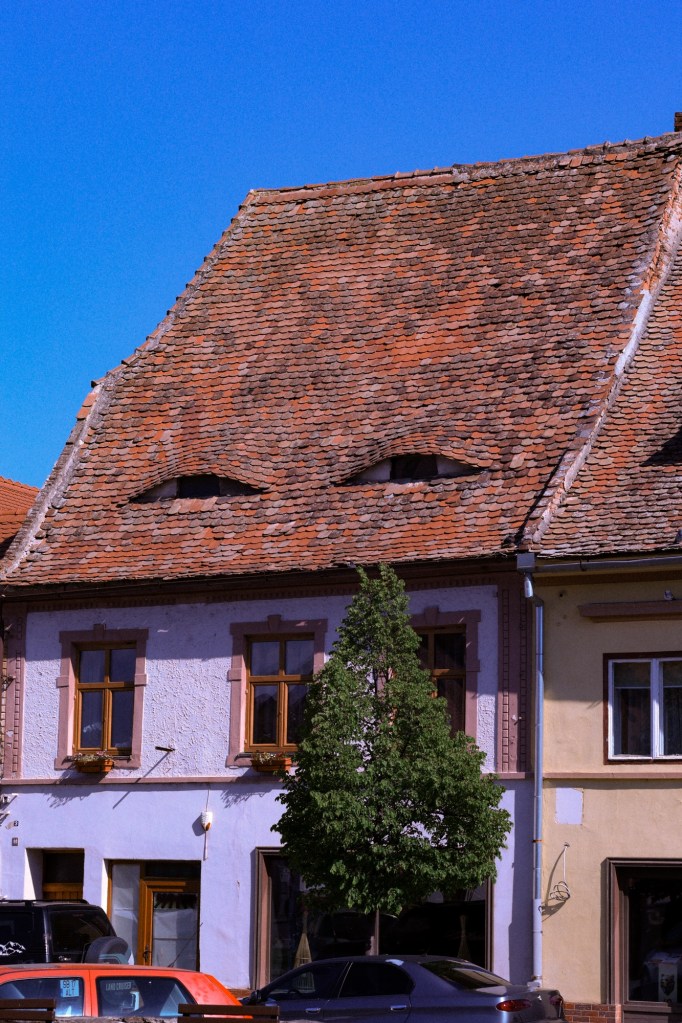
Compared to larger cities, Sibiu feels much more calm and grounded. The café culture here is strong, and the open squares make it easy to sit outside, eat, and just enjoy the atmosphere without feeling rushed.
It is also a great base for exploring nearby towns and countryside areas, with plenty of easy day trips around the region.
Food, Cafés, and Atmosphere
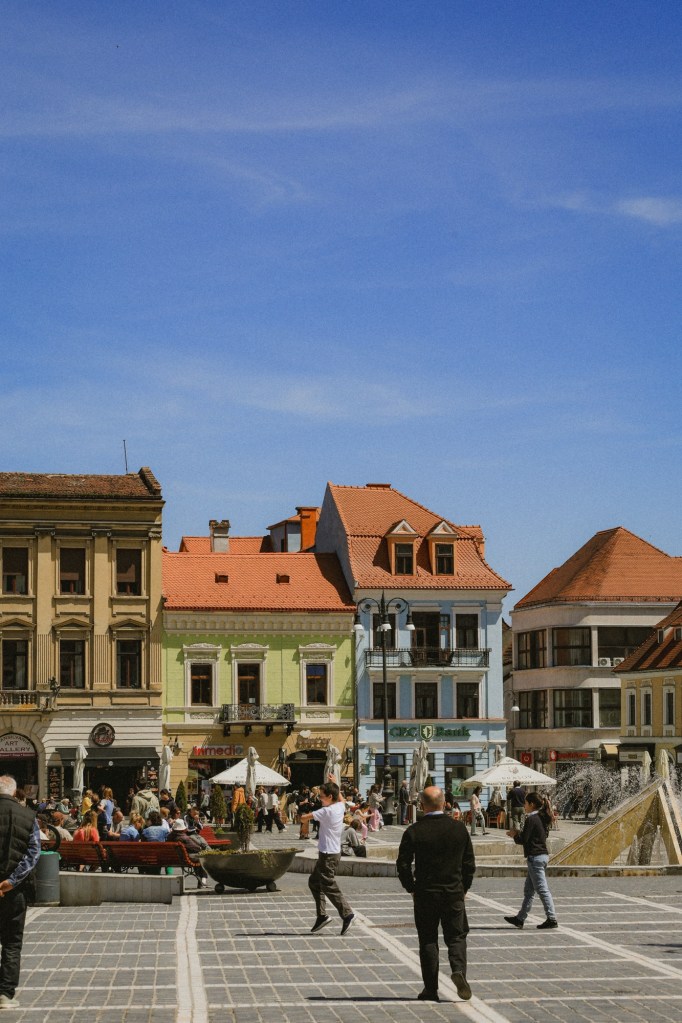
One thing that really stood out throughout Transylvania was the food and café culture. Every city had cozy bakeries, warm cafés, and outdoor seating areas that matched the slower pace of life in the region.
Especially in colder weather, there is something really comforting about stepping into a warm bakery after walking through medieval streets all day. Romania has a strong bakery culture, and you see it everywhere, from fresh bread to pastries and traditional desserts.
The café culture also adds so much to the experience. Sitting outside in a square with a coffee, surrounded by colorful buildings and mountain air, became one of the simplest but most memorable parts of the trip.
Final Thoughts
Overall, Transylvania is one of those regions that feels unexpectedly special in a way you do not fully anticipate before visiting. It blends history, landscapes, architecture, and culture in a very natural way, without feeling overly curated or commercialized.
What stood out most to me was the contrast. Medieval towns sitting just a short distance from mountain landscapes, quiet squares that suddenly come alive at night, and cities that feel both historic and lived in at the same time.
It is the kind of place that does not try too hard to impress you, but ends up doing exactly that anyway.
If you are looking for a European trip that feels a bit slower, more affordable, and less crowded than the usual hotspots, Romania and Transylvania are absolutely worth exploring.
 Livslifeoncam
Leave a comment