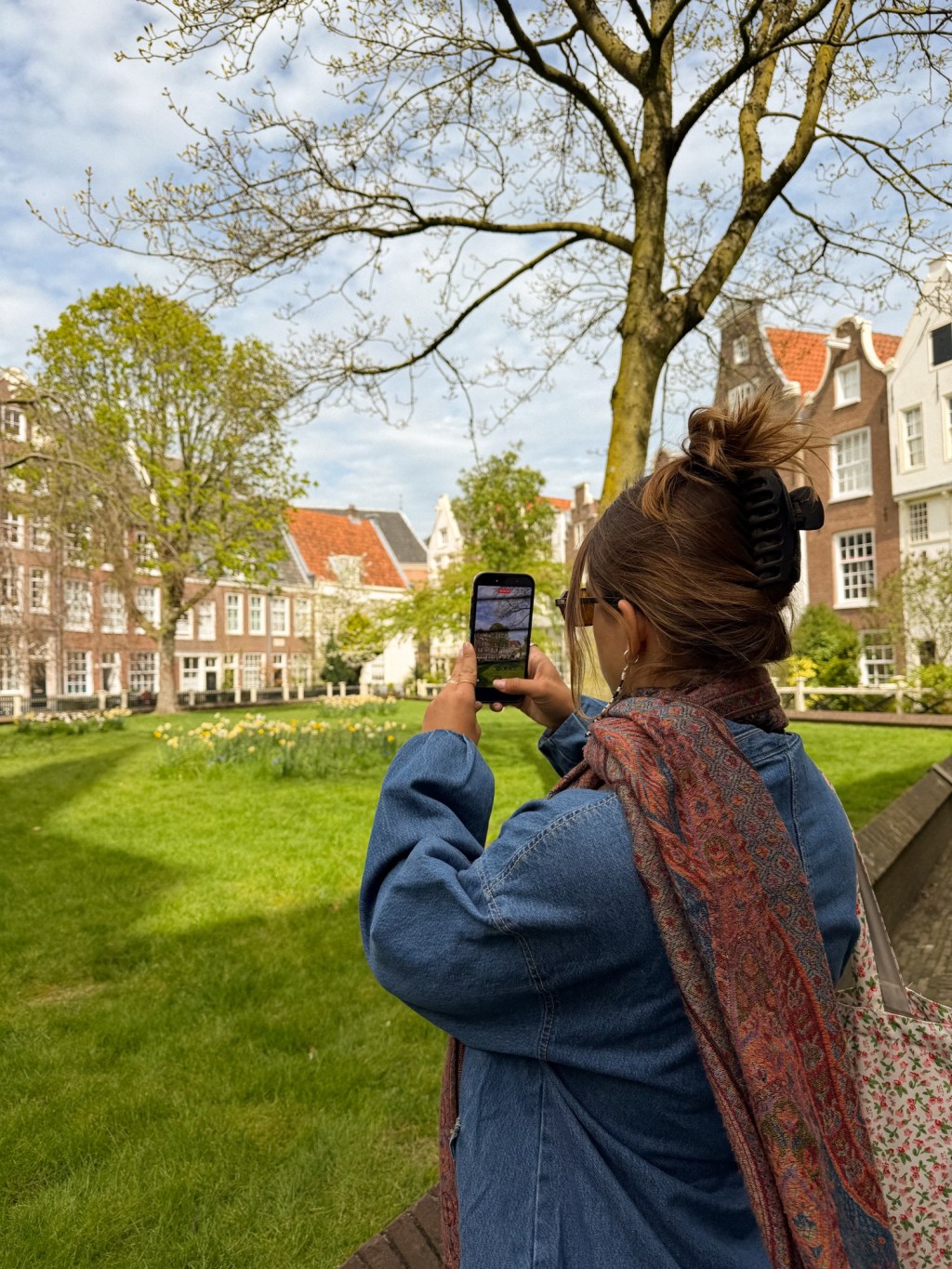
How many times have you walked into a “hidden gem” only to find hundreds of other people there too, all waiting in line to take the exact same photo in the exact same spot? Influencers with tripods, drones hovering overhead, selfie sticks everywhere.
Not so hidden anymore, right?
This has become the new reality of travel. People capturing everything. From the second they wake up to the second they go to sleep. Photos, videos, photos, videos, repeat over and over again. Every meal documented. Every outfit planned. Every view turned into content before it is even experienced.
We live in a time where moments almost feel incomplete unless they are shared somewhere online. A sunset is no longer just a sunset. It becomes a story post. A beach day becomes a reel. A dinner becomes content before it becomes a memory. Sometimes it feels like people are curating their experiences in real time instead of actually living them.
But at the same time, we all know the benefits of it too.
How many times have you scrolled through Instagram or TikTok and discovered an amazing rooftop bar in a city you were about to visit? Or found a hidden beach, a café, a hiking trail, or a local experience you never would have known existed otherwise? How many times has travel content inspired you to book a trip, explore somewhere new, or step outside your comfort zone?
Probably more than you realize.
Social media has made travel more accessible. It has opened people’s eyes to places they may never have considered before. It allows people to share experiences, cultures, recommendations, creativity, and inspiration with the world. For many people, it has created curiosity about places and lifestyles they may have never been exposed to otherwise.
Travel content can be beautiful. It can motivate people to see more of the world, appreciate different cultures, and romanticize life in a positive way. It can create connection between strangers from opposite sides of the world. It can teach people things. Inspire them. Push them outside their comfort zones.
But somewhere along the way, the line between experiencing travel and performing travel started to blur.
At some point, documenting our lives slowly became more important than living them. It made me start questioning whether people are actually traveling to see the world, or simply to prove to the internet that they did.
And honestly, sometimes I question it in myself too.
Through Instagram, TikTok, Pinterest, YouTube, and every other platform built around visuals, travel has become incredibly trend driven. Destinations do not just become popular naturally anymore. They go viral. One video turns into ten thousand itineraries. One influencer finds a “hidden” spot, and within months it becomes overcrowded and commercialized.
Places are no longer discovered slowly. They are consumed rapidly.
People recreate the same trips they saw online. The same cafés trend. The same photo locations trend. The same poses trend. Entire destinations become recognizable because they fit an aesthetic people already associate with “good travel content.”
Sometimes I find myself wondering:
Would this place still be famous if Instagram never existed?
Am I curious about this destination because I genuinely want to learn about it, or because I have seen it online so many times that it feels familiar to me already?
That is the strange thing about social media exposure. Familiarity starts to feel like curiosity. We see something enough times online that eventually we convince ourselves it has personal meaning to us, even if our connection to it was built entirely through repetition and algorithms.
And it is not just destinations that are becoming trends. Cultures are too.
Certain lifestyles, foods, cafés, neighborhoods, and traditions are now packaged into aesthetics. Everywhere starts to feel visually connected to the internet rather than connected to itself. You can travel across the world and still find the exact same minimalist cafés with oat milk lattes, avocado toast, smoothie bowls, white walls, hanging plants, film cameras on tables, and neon signs glowing in the background.
The world starts looking filtered before you even arrive.
Places slowly adapt to what tourists want to consume visually. Cultures become curated. Local traditions become photo opportunities. Everyday life becomes something visitors observe through a camera lens instead of truly participating in.
Something deeply human starts turning into performance.
And sometimes, in trying so hard to create spaces that appeal to global audiences online, destinations begin losing the small imperfections and unique details that once made them feel authentic in the first place. Cities begin blending together visually. Cafés begin looking identical. Travel becomes less about discovering difference and more about finding familiarity in a prettier setting.
Then comes the part that feels the saddest to me. The inability to fully experience moments without interrupting them to document them.
People stop in the middle of beautiful experiences for photoshoots. They retake videos over and over until frustration replaces the joy of the moment itself. Meals go cold while people rearrange plates for pictures. Conversations pause for content. Sunsets become backdrops instead of experiences.
Sometimes it feels like people are viewing life through a screen before they ever allow themselves to view it with their own eyes.
We have forgotten how to experience things privately.
Not every beautiful moment needs an audience. Not every memory needs proof.
Sometimes the most meaningful experiences are the ones nobody else ever sees. The quiet train rides. The conversations with strangers. The moments where nobody reached for their phone. The moments too personal to capture properly anyway.
And the truth is, all of us are guilty of it to some extent. Including me.
As someone who works within travel and content creation, I see this constantly. I love storytelling. I love photography, creativity, filmmaking, writing, and sharing experiences with people. It is genuinely one of my biggest passions.
But the deeper I have gotten into this world, the more I have noticed how easy it becomes to start viewing experiences through the lens of content value first.
I catch myself noticing “photo opportunities” before I notice how a place actually feels. I think about what would make a good article or a good video before I fully absorb what is happening around me. Social media starts shaping expectations before reality even gets a chance.
And that can be incredibly disappointing.
There have been so many times where I arrived somewhere with impossibly high expectations because of how perfect it looked online. Then I get there and feel underwhelmed at first. Not because the place is ugly or disappointing, but because it does not feel like the edited version I had built up in my head.
Then usually, after I put my phone away and actually become present, I start appreciating the destination for what it truly is instead of what I expected it to be. That realization says a lot.
Social media often sells us edited emotions instead of reality. Carefully selected moments instead of truthful experiences. We compare our real lives to everyone else’s highlight reels and then wonder why reality sometimes feels dull in comparison.
But reality was never meant to compete with edited perception.
And on a larger scale, this affects more than just individual experiences.
The hidden gems become crowded. Quiet places become commercialized. Destinations lose the very atmosphere that made people fall in love with them in the first place. A peaceful mountain viewpoint becomes an overcrowded photo line. A local neighborhood becomes an aesthetic hotspot. A cultural tradition becomes something performed for tourists holding cameras.
Popularity changes places.
Overtourism rises. Costs increase for locals. Environmental damage grows. Authenticity slowly fades as destinations adapt themselves to what performs best online. Some places begin feeling more like sets designed for visitors than real living communities.
And the irony is that the internet often destroys the exact magic it originally helped people discover.
Social media has changed travel forever. In many ways, it has changed it for the better. It inspires people to explore, connect, create, and experience parts of the world they may never have otherwise seen.
But it has also changed human behavior.
Travel content is beautiful. Inspiring. Creative. Emotional. But sometimes it is also artificial.
Documenting our lives is not inherently bad. Capturing memories is human. Wanting to share beautiful experiences is human too.
But maybe the bigger question we should ask ourselves is this:
Would we still do these things if nobody else could see them?
Would we still travel there?
Would we still go to that café?
Would we still hike that mountain?
Would we still watch that sunset as carefully?
What parts of our lives are truly for us anymore, and what parts are performances for everyone else?
Because maybe the real luxury today is not discovering hidden places.
Maybe it is still being able to experience something fully without feeling the need to prove you were there at all.


Leave a Reply