
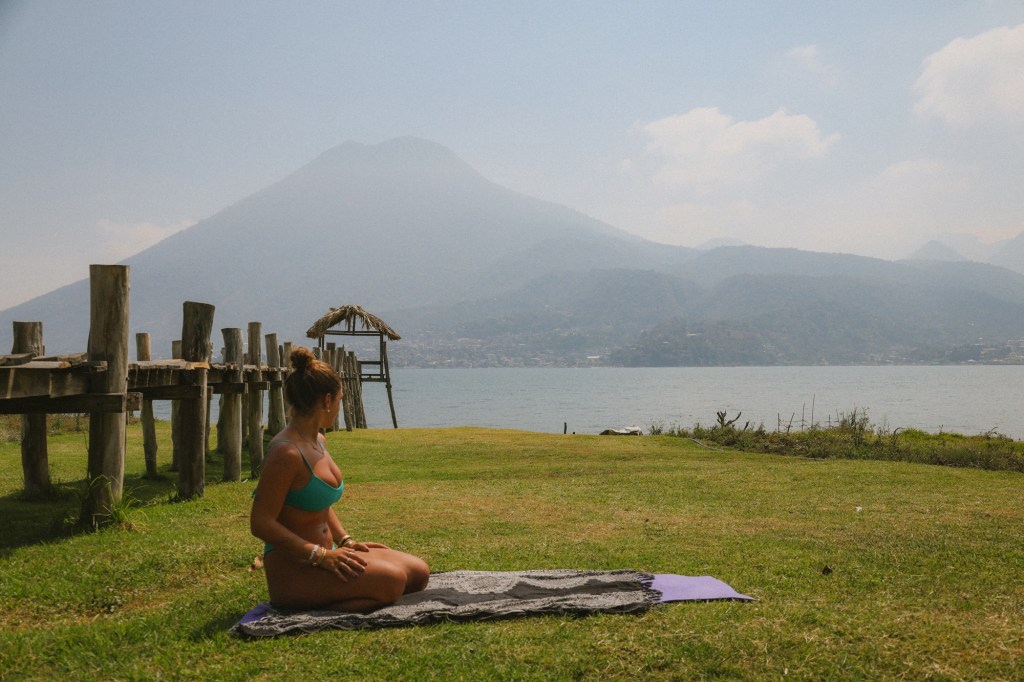
When I first left the United States, my home country, to travel the world and experience different cultures, I was not trying to escape anything. I did not leave because I believed something was deeply wrong with life in the US. It came from a place of curiosity. I wanted to see more, feel more, and understand how other people lived.
But after spending extended time outside of the United States, and now having traveled to more than 40 countries, something shifted. When I returned home, I started noticing things I had never questioned before. Certain aspects of daily life in the US began to stand out, and not always in a positive way.
As someone who values a healthy, active, present, and intentional lifestyle, and who is always trying to grow physically, mentally, and emotionally, I have realized that this way of living can feel more difficult to maintain in the US compared to many other places. This realization did not come from one defining moment, but from an accumulation of small, everyday observations.
It shows up in what we consume, how we structure our days, how we move through our environments, and how we connect with others. In the pace of life, the priorities we are surrounded by, and the systems we have normalized. Almost daily, I catch myself thinking something felt easier somewhere else, or that I have seen a better way of living in another country.
Before I get into the specifics, I want to acknowledge something important. I fully recognize the privilege of having grown up in the United States. When it comes to my upbringing, education, and family, I feel incredibly grateful. I also understand why so many people around the world dream of building a life here. The opportunities for work, financial growth, and stability are real, and they matter.
At the same time, two things can be true. For someone like me, seeking a slower, more intentional, and globally influenced lifestyle, the US can feel misaligned in certain ways. This is not a criticism of the people, but a reflection of the systems and culture that shape daily life.
You might not fully relate to this perspective, especially if you have not spent much time outside of the US or immersed yourself in other cultures, and that is okay. This is not about being right or wrong. It is simply what travel has quietly revealed to me.
And if you take even one small thing from this, that is more than enough.
Food products
Starting with one of the most talked about, and honestly one of the most frustrating topics for me. I am very intentional with what I eat, how I eat, where my food comes from, and the overall quality of it. And this has consistently felt challenging in the United States for many reasons.
What you eat becomes everything. It affects your health, energy, appearance, skin, hair, mood, and hormones. Food is not just fuel, it is the foundation of how you feel day to day. And in many ways, the way food is produced and consumed in the US is working against us instead of supporting us.
When it comes to ingredient quality versus quantity, the difference is clear. Large food companies prioritize shelf life, mass production, and convenience, leading to heavily processed products with long ingredient lists full of additives. Instead of focusing on simple, real ingredients, food becomes engineered.
In many other countries, the approach feels very different. Food is simpler, with fewer and more natural ingredients. Because of this, your body is actually being nourished rather than just filled. In the US, this shift toward processed food has also contributed to a larger issue. Many people are not getting the nutrients they need from their diet alone, leading to a heavy reliance on supplements. Even fruits and vegetables can feel less nutrient dense.
And you can taste the difference. Produce often tastes richer, fresher, and more vibrant outside of the US, which reflects how it is grown and handled.
Another thing that stood out to me is portion size. In the US, portions are significantly larger than in most other countries. It normalizes overeating in a way people do not question. What should feel excessive starts to feel standard, and over time, that becomes the baseline.
Then there is sugar, which seems to be added to almost everything. Bread, sauces, dressings, and products that do not need it are often loaded with sugar. In many other countries, those same products would not contain added sugar at all. This creates a completely different baseline for taste.
For people who want to make a change, cost becomes another challenge. Whole, organic, unprocessed foods are often more expensive and less accessible in the US, making healthy eating feel like a privilege rather than the default.
There is also a noticeable disconnect from where food comes from. In many countries, local markets are part of daily life. You see the people growing your food, and the produce looks real, not perfectly shaped or overly polished. In the US, reliance on large supermarkets creates distance. Everything is packaged, uniform, and removed from its source.
Looking at it more broadly, many food products in the US still contain additives and chemicals that have been restricted or banned in other countries. It raises important questions about priorities and what is being protected when it comes to public health.
Finally, there is how we eat. In the US, meals are often rushed and centered around convenience. Eating becomes something to get through. In many other cultures, food is a social and mindful experience. You sit longer, slow down, and give it your attention. That shift alone changes your relationship with food in a meaningful way.
Lifestyle
One of the biggest shifts I have noticed is the contrast in lifestyle, especially when it comes to work and how success is defined.
In the United States, hustle culture runs deep. There is a strong connection between self worth and productivity. Achievement, income, and status often become how people measure their value.
There is constant pressure to keep moving. To get the better job, the raise, the promotion. While ambition is not inherently bad, it often comes at the cost of balance. The pace becomes so fast that people forget how to slow down or even question it.
Working long hours, staying connected at all times, and even working through weekends is normalized. Over time, work is no longer just a part of life, it becomes the center of it, and everything else starts to take a back seat.
In many other parts of the world, this feels different. People work to support their lives, not define them. There is a clearer separation between work and personal time. When the workday ends, it actually ends. There is more space for living, whether that is time with family, long meals, being outside, or simply doing nothing without guilt.
In the US, that boundary is often blurred. Many people struggle to fully step away from work, even when they technically have the time. There is a lingering pressure to always be available, which makes it difficult to truly rest.
This leads directly into the lack of a strong vacation culture. Paid time off is limited, and even when people take it, there is often an expectation to remain somewhat reachable.
I have seen people take vacations only to spend part of that time answering emails or thinking about work. It becomes hard to fully disconnect, even when you are physically away.
In other countries, time off is treated very differently. Longer breaks are more common and encouraged, and there is less guilt around stepping away. Rest is seen as necessary, not something that has to be earned.
When you experience that, it shifts your perspective. You start to realize how much of your time and energy is being consumed by work, and how little space is left for simply living.
Walkability
Another thing that has become very noticeable is the lack of walkability across most of the United States.
I genuinely love walking. It clears your mind, adds movement, and creates space to think and reflect. It is something I would love to be a natural part of everyday life.
But in the US, that lifestyle can be surprisingly difficult to maintain.
Daily life is built around cars. Even simple tasks require planning and driving, removing the ease of stepping outside and going. Errands become something scheduled rather than naturally part of your day, which can create a more isolated way of living.
There is also the financial side. Owning a car is expensive, and those costs add up quickly. In many other parts of the world, reliable public transportation makes daily life easier and more affordable.
Across Europe and Asia, transportation systems are efficient and seamless, giving people flexibility in how they move through their day.
Infrastructure also plays a role. Sidewalks are often inconsistent, and bike lanes are limited or unsafe. In many other places, walking feels natural and supported, with clear paths and active public spaces.
In contrast, in many parts of the US, walking can feel inconvenient or unsafe. And when something as simple as walking is removed from daily life, you also lose small moments of connection, movement, and presence that quietly make a difference.
Community
Another area that has stood out is the sense of community.
The people around you shape so much of your life. Humans are meant to connect, but in the US, there can be a sense of disconnection.
A big part of this comes from the emphasis on individualism. While independence is valuable, when it becomes the priority, it can come at the expense of community.
In many countries, communities feel deeply connected. Neighbors help each other, families stay involved, and there is a shared sense of care. People are not just living next to each other, they are living with each other.
In the US, that closeness can feel less common. Families often live far apart, and connection becomes less frequent over time.
At the same time, there is a growing sense of loneliness. Despite being digitally connected, many people feel isolated. Interactions can feel transactional, and meaningful conversations become less common.
We order food without speaking, work behind screens, and spend more time on our phones than engaging with people around us.
In contrast, many cultures prioritize everyday interaction. People connect in cafés, markets, and public spaces. There is a natural openness that makes life feel more connected.
Even small gestures like eye contact or saying hello can feel rare in the US, while in other places they are normal. That openness creates a sense of belonging, even in unfamiliar environments.
There is also a difference in how older generations are treated. In many countries, elders are respected and integrated into daily life. In the US, they can feel more separated, with care often placed into systems rather than within families.
When you look at all of this together, it becomes clear how much community shapes quality of life.
Healthcare
In a country where so much of the food system already works against health, it is hard to ignore how that connects to healthcare.
One of the biggest differences is the fear around getting sick in the United States. People are not just worried about their health, but the cost of it.
Medical care can feel overwhelming, leading many to delay or avoid seeking help. Even simple visits come with uncertainty around cost and insurance.
Situations that should feel urgent become complicated, with people hesitating because of financial consequences.
In many other countries, healthcare feels more accessible and straightforward. People can seek help when they need it without the added stress of cost.
Another difference is the approach. In the US, healthcare often feels reactive rather than preventative. The focus is on treating problems after they appear rather than preventing them.
This can mean managing symptoms instead of addressing root causes. Combined with lifestyle and food systems that already make health harder, it creates a cycle that is difficult to break.
When you step back, it becomes clear how interconnected everything is. Food, lifestyle, and healthcare all influence each other.
Consumerism culture
Another shift that has become impossible to ignore is the culture of constant consumption.
Everything is designed to make buying easy and fast. It creates a cycle of constant purchasing, often without much thought.
There is convenience, but also overconsumption. We are pushed to want more, which leads to excess and waste.
I have seen this reflected in other countries, where thrift stores are filled with items from the US that were barely used.
In many places, people are more intentional. They use things longer, repair them, and value longevity.
In the US, satisfaction is often tied to upgrading. The newest phone, better car, next trend. It creates a cycle where the feeling never lasts.
Over time, this can shape identity. What you own starts to define how you see yourself.
In many other countries, that pressure feels smaller. People place more value on how they live, not what they own.
Safety
Lastly, safety.
Before leaving the United States, I was constantly warned about how unsafe other countries were. It was made to seem like I was leaving a protected bubble.
But that has not been my experience.
Much of this comes from how media shapes perception. We are often fed negative narratives that create fear around places that are actually welcoming and safe. Some of the places I have felt most at ease were places where I knew no one.
At the same time, returning to the US has made me more aware of safety concerns here. Whether it is gun violence, crime, or unpredictability, there is a level of unease that feels more present than in many other places.
It has become normalized, but when you step away and come back, it stands out.
Final Thoughts
Like I said at the beginning, the United States has many great things. Opportunity and education are two I value deeply.
But there are also downfalls that are easy to overlook if this is all you have known.
Spending time outside the US has given me a different perspective. It has shown me what could be improved, and what I am grateful for.
It is not about saying one place is better, but about being aware of the differences and learning from them.
I am not saying you need to leave the United States, but there is value in stepping outside of it, even briefly. Experiencing other cultures and ways of living has a way of opening your mind.
It allows you to see both sides. And that is where real understanding comes from.
 Livslifeoncam
Leave a comment