
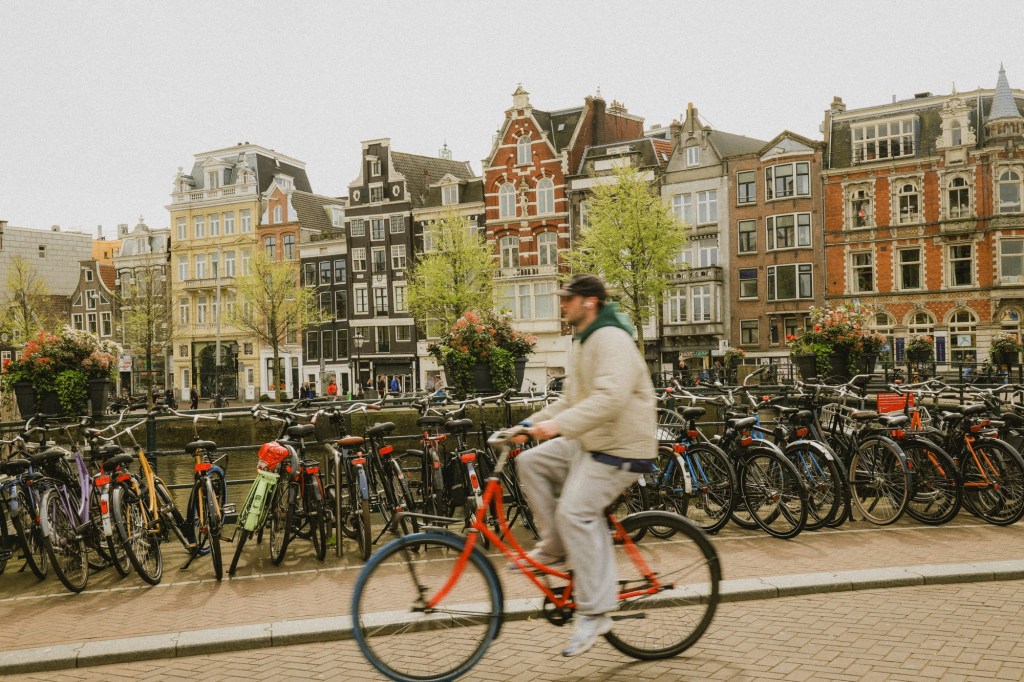
If you’ve ever traveled to Amsterdam, or anywhere in the Netherlands, you’ve definitely noticed the bikes. It’s hard not to. They are everywhere. Bikes almost feel more present than people. There are more bikes than there are people, and when you walk down the streets of Amsterdam you see bike after bike after bike. Not just one person on a bike, but multiple people sharing one, kids sitting in little carriages on the front, dogs riding along, and even people cycling side by side holding onto their friends or partners as they move through the city.
The traffic in Amsterdam is busy, but have you ever seen bike traffic. Hundreds of bikes lined up at a red light, all waiting, all moving together once it turns green. The bike culture in the Netherlands is unlike anything I have ever seen. After spending time in the city, and observing the biking culture both in and outside of Amsterdam, I started to notice patterns in how it works, why it works, and what it says about the lifestyle there.
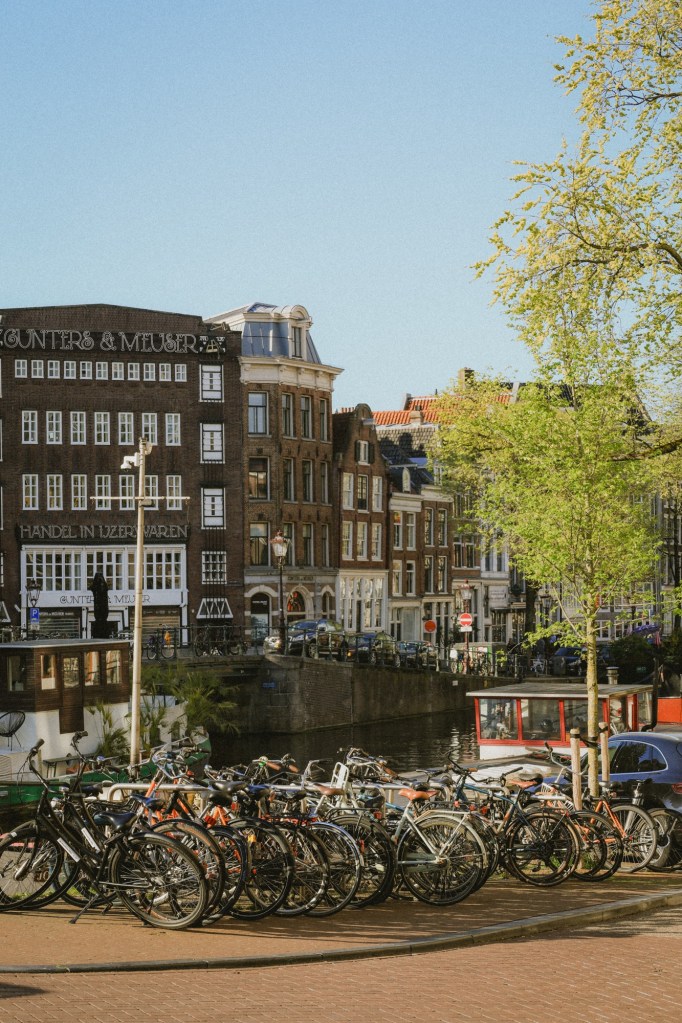
At first glance, a few things stand out right away. There are far more bikes than cars. It is clearly the dominant form of transportation. Even the people who do drive tend to use very small cars, often electric, since gas is expensive. Biking is simply the most practical and affordable option. But it is more than just practical. It is normalized in a way that feels deeply built into everyday life.
Another thing you notice quickly is who is biking. Everyone. Young children, older generations, and everyone in between. And they are not dressed like they are going for a workout. No one is in gym clothes or athleisure. People are wearing their normal, everyday outfits. School uniforms, business attire, dresses for a night out. It does not matter where they are going, they are getting there by bike. That alone shifts your perspective. Biking is not seen as exercise, it is simply how you move through the world.
Then there is the variety of bikes themselves. You have your standard single rider bikes, but that is just the beginning. There are electric bikes that are bulkier and faster, cargo bikes designed to carry heavy loads, family bikes with built in seating for children, and all kinds of creative attachments. You see people transporting groceries, pets, furniture, and just about anything you can imagine. It feels like the bike has been adapted to fit life, rather than life being forced to fit around transportation.
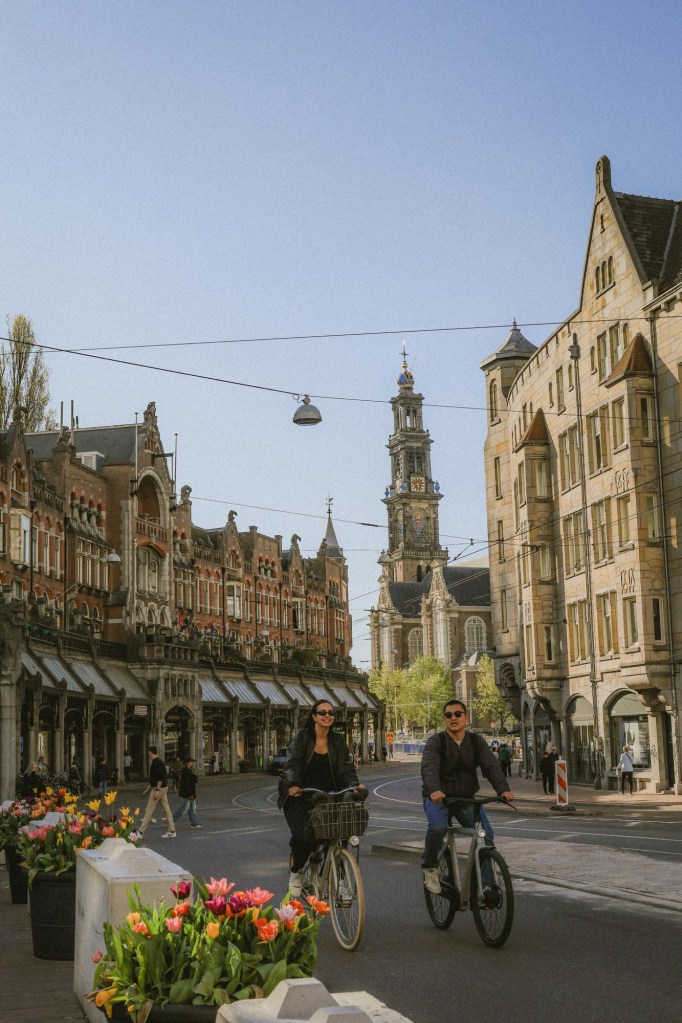
One of the more surprising things is that almost no one is wearing helmets. The only people who tend to wear them are tourists. From the outside, the entire system can look overwhelming, even a little chaotic. And yes, accidents do happen. But for locals, it all seems incredibly natural. They move through the streets with ease, like it is second nature.
That ease might be the most striking part. People are not just biking to get somewhere, they are living while they bike. They are talking to each other, laughing, riding side by side, sometimes even holding onto each other to stay together. It turns transportation into a shared experience. You see people casually checking their phones, riding with one hand, moving through the city with a kind of relaxed confidence. It feels effortless, almost like walking, just faster.
Beyond the obvious, there are deeper takeaways from this culture. Even though biking is not framed as exercise, it naturally builds movement into daily life. Instead of sitting in a car for long periods of time, people are constantly in motion. They are outside, breathing fresh air, feeling the weather, getting sunlight. Physical activity is not something they have to schedule or make time for. It is simply part of their routine.
This creates a very different relationship with health and wellness. It feels less forced, less like a task on a to do list. Movement is built into the structure of everyday life, which makes it more sustainable and more natural. There is also a social element that you do not get with car based transportation. When you are in a car, you are in an enclosed, isolated space. When you are on a bike, you are part of your environment. You see people, you interact, you feel connected to what is happening around you.
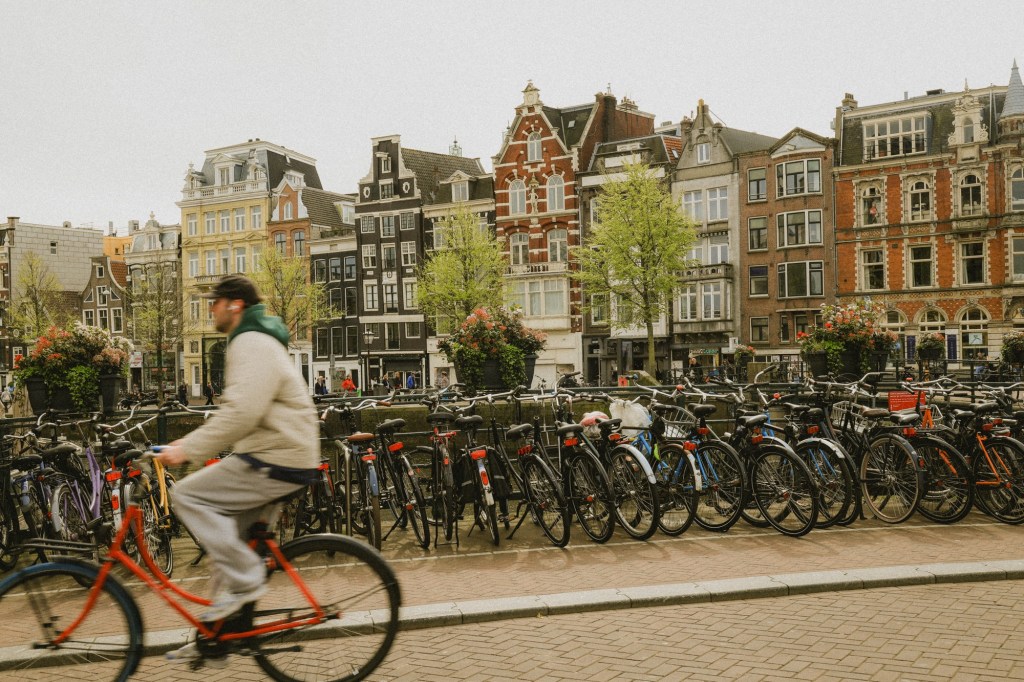
Another thing that stood out is the independence given to younger generations. It is very common to see kids biking to school on their own. At an age where in many places they would be driven everywhere, here they are navigating the city independently. This builds confidence, but it also reflects a level of trust. Trust in the safety of the infrastructure, trust in the community, and trust in the children themselves. It says a lot about the culture as a whole.
So why does this work so well in Amsterdam and throughout the Netherlands, but not in so many other places. A big part of it comes down to design. The country has invested in infrastructure that prioritizes bikes and pedestrians. There are clearly marked bike lanes, often separated from cars, traffic lights specifically for cyclists, and endless places to park and lock bikes. The system is intentional. It was built to make biking easy, safe, and accessible.
When you compare this to more car dependent places like the United States, it raises some interesting questions. What does the way we move say about our values. How does city design shape our daily habits, our health, and even our social lives. Is this something that could be recreated elsewhere, or is it too deeply tied to culture and history.
I would love to see more places move in this direction, especially cities with flat landscapes where it feels possible. But realistically, it would require a major shift. Not just in infrastructure, but in mindset. In many places, especially in the United States, cars are deeply embedded into daily life. They offer convenience, privacy, and a kind of personal space that people have grown used to.
At the same time, it makes you wonder if that trade off is really worth it. The quiet, enclosed space of a car can feel comfortable, but it also disconnects you from the world around you. Biking, on the other hand, brings you into it. It makes you part of the environment, part of the community, part of the movement of the city.
So the question becomes, which lifestyle actually serves us better. And if given the option, would more people choose to move through their lives a little differently.
 Livslifeoncam
Leave a comment