
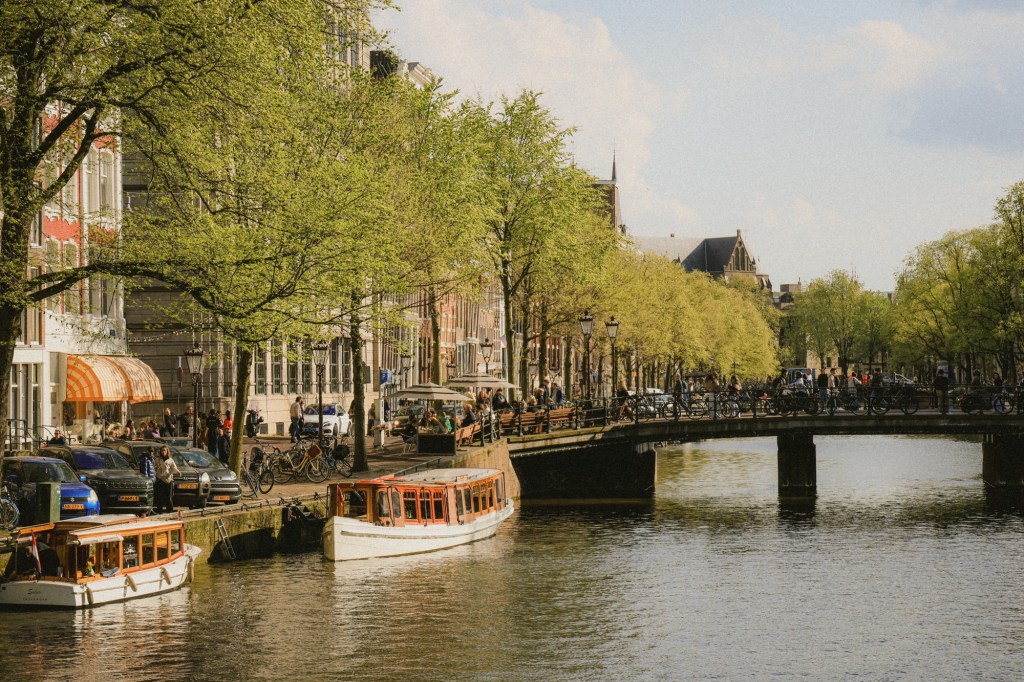
Every time I travel to Europe as someone born and raised in the United States, I notice things about the lifestyle and culture that feel both fascinating and eye opening. Some differences are simple, others a bit more layered, but all of them highlight parts of daily life that we often do not have in the same way back home. It sometimes makes me reflect, not in a harsh way, but in a curious way, on how our culture in the United States has been shaped around work, routine, and pace. And in doing so, what we might be missing out on.
Each country has its own rhythm, but on a recent trip to the Netherlands, especially in Amsterdam, the contrast felt especially strong. The lifestyle, the energy of the city, and the way people move through their days stood out immediately. It is different in a way that feels intentional, and in many ways, it seems to add to an overall higher quality of life.
Biking culture

Starting with the most obvious and easily one of my favorite parts, the biking culture. From the moment you step into Amsterdam, the rhythm of the city feels different, and a huge part of that comes from the bikes. They are everywhere, completely woven into daily life to the point where it almost feels like there are more bikes than people.
At intersections, you do not just see traffic, you see waves of cyclists moving together, waiting, then flowing through the streets in sync. Biking is not treated as exercise or even a lifestyle choice, it is simply transportation. Everyone does it. Children, professionals, older generations, all in their everyday clothes, not workout gear. The bikes themselves reflect this too, from cargo bikes carrying kids and groceries to electric bikes and customized setups built for daily life.
What stands out most is how natural and effortless it all feels. From an American perspective, it can look a bit chaotic at first, but for locals it is completely second nature. And underneath that, there is something even more important happening.
Movement is built into everyday life without needing to think about it. People are outside, getting fresh air, staying active, simply by going about their day. It is not something they have to schedule, it just exists within their routine. There is also a strong sense of safety and trust that makes this possible. The infrastructure is designed for it, with protected bike lanes, clear systems, and streets that prioritize people over cars.
Because of that, you will regularly see young children biking to school on their own, navigating the city independently. From an American perspective, that can feel surprising at first, but it speaks to something deeper. There is a trust in the environment, in the systems, and in the community itself. It creates a sense of freedom and independence that feels both rare and incredibly valuable.
Eating outside and cafe culture

In the Netherlands, eating is not just something to check off during the day, it is something to experience. It is a time to sit, to enjoy the food, the people around you, and the atmosphere.
People are almost always eating outside when they can, and it is not just reserved for perfect weather. Cafes and restaurants are set up to make outdoor dining possible year round, with heaters, blankets, and covered seating. There is a real effort to stay connected to the outdoors, even in colder months.
You will see people having coffee and a pastry with friends in the morning, coworkers sitting down for lunch during the day, and groups gathering for dinner or drinks in the evening. Meals are not rushed. People linger. They sit, they talk, they take their time.
Even when places offer takeaway, there are always spaces nearby to sit and enjoy your food. Public benches, outdoor tables, open areas. It is not designed to just grab something and go, it is designed to pause.
In restaurants, there is also a noticeable difference. The staff is not rushing to turn over tables quickly. There is no pressure to leave as soon as you finish. You are allowed to stay, to enjoy, to exist in that moment. It creates a sense of presence that feels very different from the faster, more transactional dining culture in the United States. It encourages connection, conversation, and a slower, more intentional pace.
Park culture and public space

This is something that can be easy to overlook, especially because we do have parks in many American cities, but not quite in the same way.
In Amsterdam, public parks and outdoor spaces are a true extension of everyday life. They are not just places you go when the weather is perfect or when you have a plan. They are places people naturally pass through, spend time in, and return to regularly.
You will see people working out, reading, meeting friends, walking their dogs, having picnics, or simply sitting and enjoying the day. It is a constant flow of activity, but in a very relaxed and unforced way.
There is also a strong sense of safety in these spaces. People of all ages are there, alone or with others, and there is a general feeling of ease. You do not feel like you need to be on high alert. That comfort allows people to actually relax and enjoy where they are.
What stands out is how effortlessly these spaces are used. There does not need to be a plan. People just end up there, incorporating fresh air and nature into their day without even thinking about it. It becomes part of the rhythm of life.
Friendliness, directness, and honesty

Both in the Netherlands and in other places I have traveled, I have consistently found Dutch people to be incredibly enjoyable to interact with. They are easy to talk to, easy to connect with, and there is a relaxed openness to them.
One thing that really stands out is their directness. They are honest and straightforward, but not in a way that feels harsh or offensive. It is simply how they communicate. It feels efficient, clear, and refreshing.
There is something really nice about knowing where you stand in a conversation without needing to read between the lines. It creates space for more real and meaningful interactions. At the same time, that honesty is balanced with a friendly and easygoing energy.
From an American perspective, where communication can sometimes feel either overly softened or overly blunt in an unkind way, this in between feels refreshing. It makes conversations feel more genuine and less complicated.
Work life balance and pace of life

There is a clear boundary between work and personal life that feels very respected. Work stays at work. It does not follow people into every part of their day.
You see it in the way people spend their time outside of work. They enjoy their meals, their evenings, their weekends. There is less of a constant pressure to be productive at all times. Less of the hustle mentality.
People are not living just to work. They are working as a part of their life, not the center of it. And that shift, even though it seems subtle, changes a lot about how people experience their day to day lives.
Quality of life mindset
Overall, what stands out most is that the culture in the Netherlands feels designed around the people. Around making life feel manageable, enjoyable, and balanced.
There is a level of thought put into both infrastructure and daily habits that supports this. Small details that make everyday life easier and more pleasant. Whether it is how cities are designed, how public spaces are used, or how people interact with one another, it all seems to work together.
Instead of just moving through the day to get through it, there is a sense that people are actually living through their day. Enjoying it, being present in it, and making the most of the small moments that often get overlooked.
And from an American lens, that difference is hard not to notice.
 Livslifeoncam
Leave a comment